
 Search Articles


WASHINGTON (CN) — The Senate on Wednesday scuttled an attempt to force a vote on a Democrat-led resolution aimed at halting recent military strikes on vessels the Trump administration has claimed were operated by Venezuelan drug smugglers.
But lawmakers behind the measure said they hoped that the failure would not spell the end of efforts to rein in what they called “plainly unconstitutional” actions by the White House — but rather increase momentum for asserting Congress’ power to approve the use of military force.
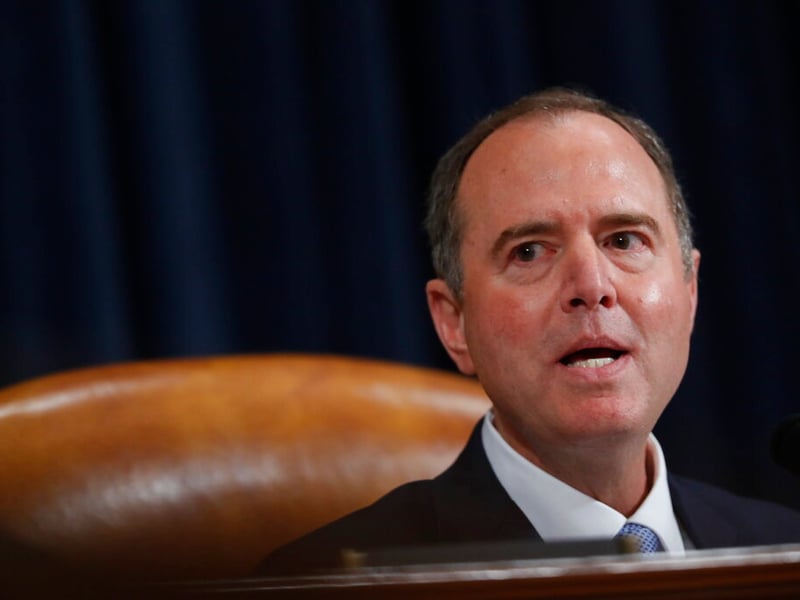
The upper chamber Wednesday afternoon voted down a petition that would have required senators to immediately take up a war powers resolution, offered by a bipartisan group led by California Senator Adam Schiff. The measure failed on a 51-48 vote.
Schiff’s proposed resolution comes as the Trump administration has escalated military action against so-called “narco-terrorists” it believes are smuggling drugs into the U.S. from Venezuela.
Defense Secretary Pete Hegseth announced last week that the military had destroyed a boat off the South American country’s coast. That strike, Hegseth said, was conducted in international waters and U.S. intelligence had determined that the vessel’s occupants were “narco-terrorists.”
The Oct. 3 attack, the latest in a series of similar strikes, came just hours after President Donald Trump informed Congress that the country is now at war with drug cartels the administration considers to be terrorist organizations.
The administration has also said that it has compiled a list of drug cartels and other groups it considers terrorists, but the exact number of organizations is unknown.
Senate Democrats, however, have argued that the White House does not have the power to unilaterally conduct military strikes against targets, such as the supposed Venezuelan drug-trafficking vessels, without congressional approval.
“There has been no authorization to use force by Congress,” Schiff told reporters Wednesday morning. “In this way, I feel it is plainly unconstitutional. The fact that the administration claims to have a list and has put organizations on the list does not somehow empower the administration to usurp Congress’ power of declaring war or refusing to declare war.”
Under the 1973 War Powers Resolution, the president may commit military forces for a limited period of time so long as the White House notifies Congress within 48 hours of deployment. But the measure also hands lawmakers the power to disapprove of such action.
“What we’re doing is a very straightforward resolution that just says: let Congress be Congress,” said Virginia Senator Tim Kaine, who co-sponsored Schiff’s war powers measure. “These military actions should stop unless authorized by Congress.”
Kaine and Schiff were joined on the resolution by Kentucky Senator Rand Paul, Oregon Senators Ron Wyden and Jeff Merkley and Vermont Senator Bernie Sanders.
Still, some Republicans argued that Trump and the White House were within their constitutional authority.
“The president’s strikes were lawfully sound and extremely limited,” Arkansas Senator Tom Cotton said on the Senate floor Wednesday evening. He added that the attacks took place within the 60-day window the War Powers Resolution affords the White House to take military action without congressional approval.
Idaho Senator Jim Risch argued that Trump’s actions were “fully compliant and fully justified” under the Constitution and that it was “unreasonable” to demand that he defer to Congress. The Republican lawmaker contended that the president had a “duty” to defend Americans from drug traffickers even if the proposed resolution passed.
“He’s not going to obey this order,” said Risch. “He can’t obey this order.”
But while the proposed resolution faltered in the Senate, the lawmakers were clear that its failure would not signal the end of congressional efforts to claw back its authority over warmaking. Schiff told reporters that Congress has a history of taking up resolutions which don’t pass on the first try but “gain momentum over time.”
The Senate’s inability to pass the resolution, he contended, also doesn’t hand the White House a blank check to continue striking Venezuelan vessels. “The failure of the war powers resolution … doesn’t somehow convert into an authorization to use force,” said Schiff.
Kaine added that the push to assert Congress’ constitutional authority shouldn’t be limited to war powers.
“In my views, congressional oversight over the executive is a muscle — and it’s a muscle that’s atrophied,” he said. “It’s atrophying in war; it’s atrophying in trade; it’s atrophying now, before our eyes, in the appropriations process. The only way to make a muscle stronger is to exercise it.”
Meanwhile, Democrats have fumed that the Trump administration has provided only limited information to lawmakers about its strikes against supposed Venezuelan drug traffickers, including about the victims. Schiff said that the White House has not held an all-member briefing with the Senate on the attacks and that he had “no idea” about the precise identities of the people the U.S. military has killed.
“It is very difficult to be assured that we know these were all traffickers,” he said. “Setting aside the legality and constitutionality, are they killing people who were not engaged in trafficking?”
Kaine added that the administration has not shown lawmakers the list it’s compiled of drug cartels and other organizations it has labeled as terrorist groups.
Though the Democrats were concerned about the Trump administration’s unilateral use of force, they did not preclude the possibility that the Senate could support authorizing the military to strike Venezuelan drug trafficking operations.
Kaine told reporters Wednesday that he could see a number of senators voting for such a measure if it was “carefully drafted,” adding that the military’s Southern Command already conducts interdiction operations against drug traffickers and that the U.S. is training foreign militaries to do the same.
“If you had a debate on the floor of the Senate about an [authorization for use of military force] that was carefully limited, I could see a lot of support for something like that,” said the Virginia Democrat.
 Follow @BenjaminSWeiss
Subscribe to our free newsletters
Our weekly newsletter Closing Arguments offers the latest about ongoing trials, major litigation and rulings in courthouses around the U.S. and the world, while the monthly Under the Lights dishes the legal dirt from Hollywood, sports, Big Tech and the arts.