
 Search Articles


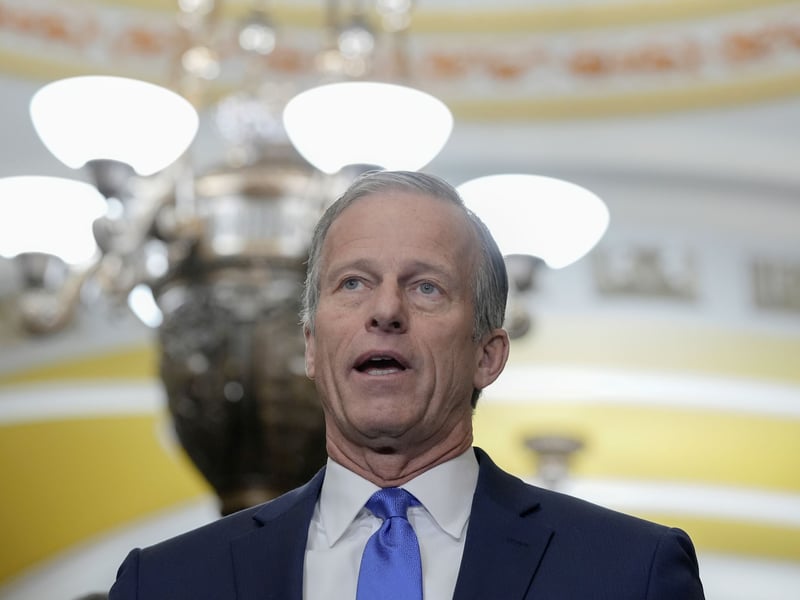
WASHINGTON (CN) — Senators hoping to head home for August recess next week might instead find themselves trapped in Washington voting on President Donald Trump’s nominees for federal judgeships and other positions, the upper chamber’s top lawmaker signaled to reporters Monday.
It would be an unusual development on Capitol Hill, which traditionally goes eerily quiet in the late summer as members of Congress from both chambers flee town for a monthlong vacation. But Senate Majority Leader John Thune has said that Republican leadership is “thinking” about cancelling August recess amid pressure from the president.
“We want to get as many nom[inee]s through the pipeline as we can,” Thune told reporters at the Capitol Monday afternoon. “We’re going to be looking at all the options in the next weeks to try and get as many of those across the finish line as we can.”
The Senate, charged with confirming the White House’s appointments to certain executive agencies and Trump’s picks for vacancies on the federal judiciary, would have its work cut out for it if lawmakers were required to stay in Washington next month.
The chamber has particularly lagged in its confirmation of judicial nominees — confirming Trump’s first federal court appointment just last Monday.
And the president himself over the weekend leaned on Thune and Senate Republicans to do whatever they needed to to catch up on nominations.
“Hopefully the very talented John Thune, fresh off our many victories over the past two weeks and, indeed, six months, will cancel August recess … in order to get my incredible nominees confirmed,” Trump wrote Saturday in a post on his social media platform Truth Social. “We need them badly!”
The president also suggested that the Senate could call off long weekends, such as the upcoming Labor Day break in September, to get that job done.
Despite Trump’s pressuring, however, Republican leadership has yet to formally cancel the Senate’s August recess, which is slated to begin next week. Thune told reporters on Monday that it was important for GOP senators to use that time to connect with constituents on the party’s accomplishments, such as the president’s recently-signed budget reconciliation package.
Among the White House nominees still awaiting a confirmation vote are a handful of federal judges, including several appointees for federal court vacancies in Missouri. The Senate Judiciary Committee last week also advanced Emil Bove’s nomination to the U.S. Court of Appeals for the Third Circuit and another slate of district court nominees.
Though Democrats have suggested those votes were invalid after they walked out of last week’s explosive Judiciary meeting, Senate Republicans are still expected to bring Bove and the other nominees to the floor for a final vote.
The Senate has confirmed just one federal judge in Trump’s second term, Whitney Hermandorfer, nominated to the Sixth Circuit and approved by the upper chamber last Monday. But lawmakers in recent weeks have been dialed in on some of the president’s other legislative goals, such as budget reconciliation and a spending recissions package which the Senate passed on Friday.
In addition to floor delays, some of the administration’s judicial nominees have also faced setbacks on the committee level. A handful of Trump’s picks for U.S. attorney positions, such as New Jersey’s acting lead federal prosecutor Alina Habba, have been effectively blocked by Democratic senators exercising their traditional authority to disapprove of nominees in their home states.
The Judiciary Committee last week also walked back its votes on another slate of U.S. attorney nominees, including Jeanine Pirro, tapped by Trump to become top prosecutor in D.C. Thanks to the Democrats’ walkout, the committee determined that it lacked a voting quorum to advance the group of appointees.
The panel is slated to hold a redo vote on Pirro and the other U.S. attorney nominees this week.
 Follow @BenjaminSWeiss
Subscribe to our free newsletters
Our weekly newsletter Closing Arguments offers the latest about ongoing trials, major litigation and rulings in courthouses around the U.S. and the world, while the monthly Under the Lights dishes the legal dirt from Hollywood, sports, Big Tech and the arts.