
 Search Articles


Users of crack versus powder cocaine typically receive more prison time under a decades-old sentencing scheme long reviled for its racially discriminatory outcomes.
WASHINGTON (CN) — In 1986, then-Senator Joe Biden helped craft legislation that made it so someone would need to own 100 times the amount of powder cocaine to trigger the same minimum sentence for crack. Today, he wants to do away with the policy, since deemed the “100-to-1" rule.
The Senate Judiciary Committee met early Tuesday to examine how users of crack and powder cocaine are sentenced for possession. During his opening statement, Chairman Dick Durbin pointed out a New York Times story about a “new, purified form of cocaine” hitting the streets in November 1986. “The article characterized the drug as the ‘wave of the future’,” the Illinois Democrat recounted, “and quoted a doctor who claimed that anyone who used it would be addicted almost instantaneously.”
The article triggered constant news coverage of the emerging drug epidemic, “predicated on an outright falsehood, such as the notion that crack is more addictive than powder cocaine, or that it’s more likely to make its users violent,” Senator Durbin said.
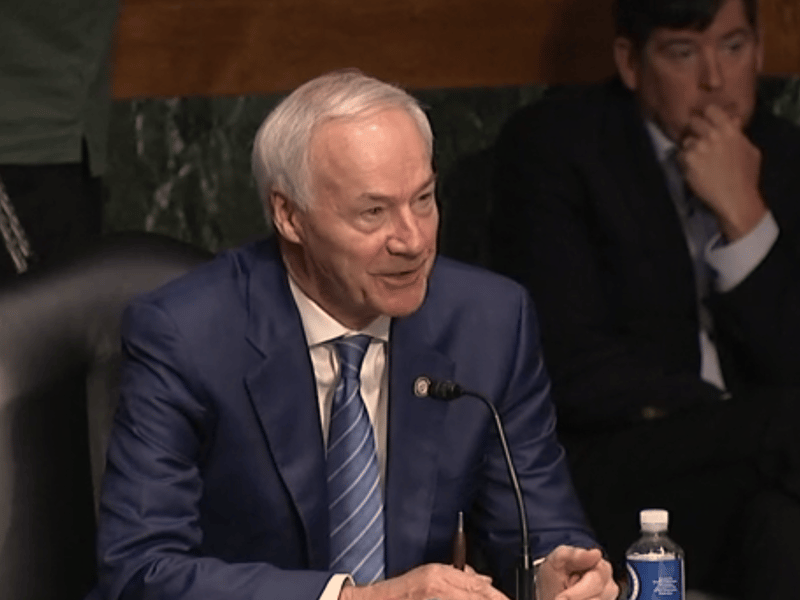
Among two panels of witnesses invited to testify at Tuesday’s hearing was Arkansas Governor Asa Hutchinson, who was a federal prosecutor in the Reagan years head of the Drug EnforcementAdministration under President George W. Bush.
“Back then, the news frightened us each night with images of the harm that this drug — one that many of us had never heard of — was causing to our communities,” said the Republican Hutchinson. “Congress felt compelled to act and to act quickly to do something to ameliorate this harm.”
This myth has since been debunked: Crack and powder cocaine are different forms of the same drug, and consumption rates of both drugs are highest among white users. Black men nevertheless soon became incarcerated at higher rates than whites after the Senate passed the 100-to-1 rule in 1986 — responding to what former Nixon domestic policy chief John Ehrlichman would later admit was a war on drugs designed to vilify Black Americans and hippies.
From then onward, courts imposed mandatory five-year sentences whether a person was caught holding at least 5 grams of crack or 500 grams of powder cocaine.
“But while the scientific consensus on crack has evolved over the years,” Durbin continued, “our nation’s drug sentencing policy has not.”
The disparity was reduced to 18 to 1 in 2010 with the passage of the Fair Sentencing Act.
“The continuation of this sentencing disparity is a significant injustice in our legal system, and it is past time for it to end,” testified Regina LaBelle, the acting director of the White House Office of National Drug Control Policy, who echoed the Biden administration’s call to eliminate the sentencing disparity.
LaBelle said that the administration backs the swift passage of the the EQUAL Act, short for Eliminating a Quantifiably Unjust Application of the Law Act.
The legislation hopes to eliminate the disparity altogether and retroactively allows those convicted for a federal drug offense to be resentenced. It was introduced by New Jersey Senator Cory Booker in January, and has since gained bipartisan support.
“In communities of wealth and privilege, I saw drug use,” the Democratic Booker said at Tuesday’s hearing, recalling his own upbringing, “but the consequences for those lawbreakers has been very different.”
President Biden’s support for the bill continues his decades-long mea culpa tour for crafting aggressive criminal-justice legislation in the 1980s and 1990s. After the Anti-Drug Abuse Act passed in 1986, he co-sponsored a similar bill that strengthened prison sentences for drug possession, and infamously penned part of the Violent Crime Control and Law Enforcement Act in 1994 that has since come under fire for causing drastic growth of the U.S. prison population.
But Biden has since expressed his regret for such harsh legislation, and LaBelle described his efforts to “address racial inequities in the criminal justice system."
“For example, he has been clear that people should not be incarcerated for drug use alone but should be offered treatment instead,” LaBelle testified.
He also introduced legislation to eliminate the disparity 14 years before the EQUAL Act, she noted. “It is long past time to do this.”
Subscribe to our free newsletters
Our weekly newsletter Closing Arguments offers the latest about ongoing trials, major litigation and rulings in courthouses around the U.S. and the world, while the monthly Under the Lights dishes the legal dirt from Hollywood, sports, Big Tech and the arts.