
 Search Articles


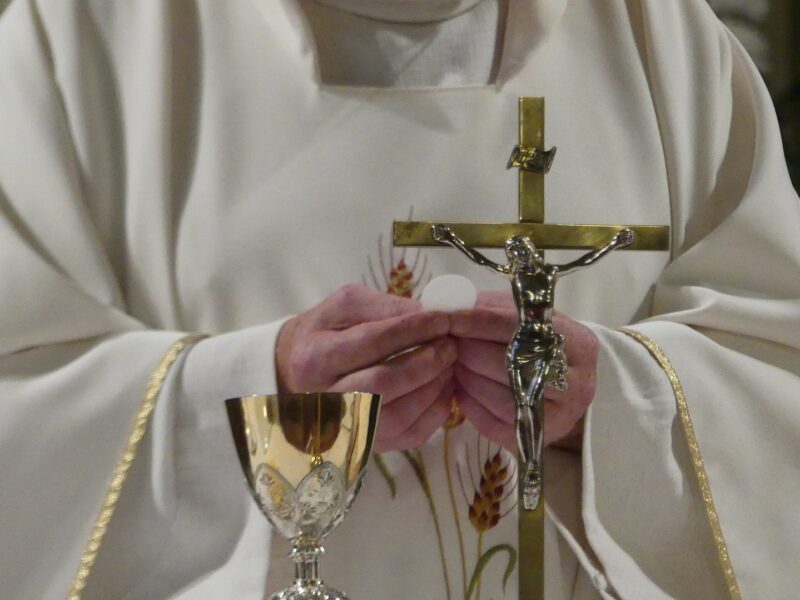
ATLANTA (CN) — The Georgia Court of Appeals on Monday shot down lawsuits filed by a group of 12 men who wanted the Catholic Church held responsible for concealing the sexual abuse they suffered as children by priests.
“In sum, we are certainly mindful of the grievous circumstances involving heinous conduct which led to the filing of these cases,” Judge Jeffrey Davis wrote in the unanimous ruling.
But the three-judge panel upheld a lower court’s order, finding the men’s complaints were time-barred and that their claims of fraud by the church were insufficient to toll the limitation period.
Under Georgia law, if a minor is subjected to sexual abuse, the general two-year statute of limitations is tolled until they turn 18. But if the plaintiff has been deterred from bringing an action, the period of limitation runs from the time they discovered the defendant’s fraud.
“Here, the plaintiffs have failed to point to any evidence that the defendants’ actions concealed the plaintiffs’ claims and prevented or hindered them from filing their lawsuits,” Davis wrote.
Judges Brian Rickman and Elizabeth Gobeil concurred in the judgment.
The plaintiffs claimed Saint Joseph’s Catholic Church knew its priests belonging to archdioceses across the country had a history of sexually abusing children, yet engaged in a “systematic cover-up effort” to conceal the danger the priests posed to minor parishioners, even as they encouraged them to serve as altar boys under the supervision of such priests.
Specifically, the complaints name former priests within the Archdiocese of Atlanta, John Douglas Edwards and Jorge Humberto Cristancho, who committed numerous acts of sexual misconduct against the 12 victims when they were minors in the early 1960s, 70s, 80s and early 2000s at various parishes or other locations.
Edwards passed away in 1997, and Cristancho was removed from the ministry in 2003.
According to the Archdiocese’s records, the Archdiocese knew that Edwards had engaged in “sexual misconduct” with young males 18 months after his ordination in 1961, and had engaged in other acts of improper sexual conduct in the years thereafter, which resulted in Edwards having to be transferred to various parishes.
The Archdiocese also knew that Cristancho had engaged in sexual misconduct on multiple occasions in the 1980s, and the Archdiocese also transferred him to multiple parishes.
However, the plaintiffs claimed they had no knowledge the church knew its priests had been accused of molesting children until Nov. 6, 2018, when Archbishop Wilton D. Gregory formally acknowledged it by releasing a list of priests with “credible” accusations of sexual abuse of minors since 1956, which included Edwards and Cristancho.
Catholic regulations previously required documentation pertaining to sexual abuse accusations to be kept in secret archives, which was a “secure[d] place.”
“But the fact that the Archdiocese kept files pertaining to sexual abuse in secret archives, did not publish the list of priests who had been credibly accused of sexual abuse before 2018, and transferred Edwards and Cristancho between multiple parishes does not show that some trick or artifice was employed that hindered the plaintiffs’ investigation to toll the statute of limitation,” Davis wrote in the order.
“Indeed, the plaintiffs do not point to any evidence in the vast record on appeal to show that they ever requested information from the defendants about their knowledge and involvement in the abuse, or that the defendants refused to provide information,” Davis added.
The judges pointed to a 2004 report from the United States Conference of Catholic Bishops of sexual abuse of minors by clergy members from 1950 to 2002, which stated the Archdiocese had received accusations from 25 people regarding sexual abuse by 13 clergy members. The report did not list the names of the clergy members involved, but it listed the status of those clergy members, any disciplinary action that had been taken and the total fees that had been paid to the victims.
Fourteen years later, just months before Gregory released the priests’ names, Georgia lawmakers sought to allow more victims of childhood sexual abuse to file civil lawsuits by extending the statute of limitations.
But amid lobbying efforts to kill the legislation from the archdiocese and the Boy Scouts of America, the bill was watered down and ultimately failed to be enacted into law in its intended form.
Last week, the Georgia House of Representatives passed legislation that would void any lawsuit settlements that seek to silence victims of childhood sexual abuse.
Representatives of the plaintiffs and the Catholic church did not immediately respond to a request for comment.
 Follow @Megwiththenews
Subscribe to our free newsletters
Our weekly newsletter Closing Arguments offers the latest about ongoing trials, major litigation and rulings in courthouses around the U.S. and the world, while the monthly Under the Lights dishes the legal dirt from Hollywood, sports, Big Tech and the arts.