Search Articles


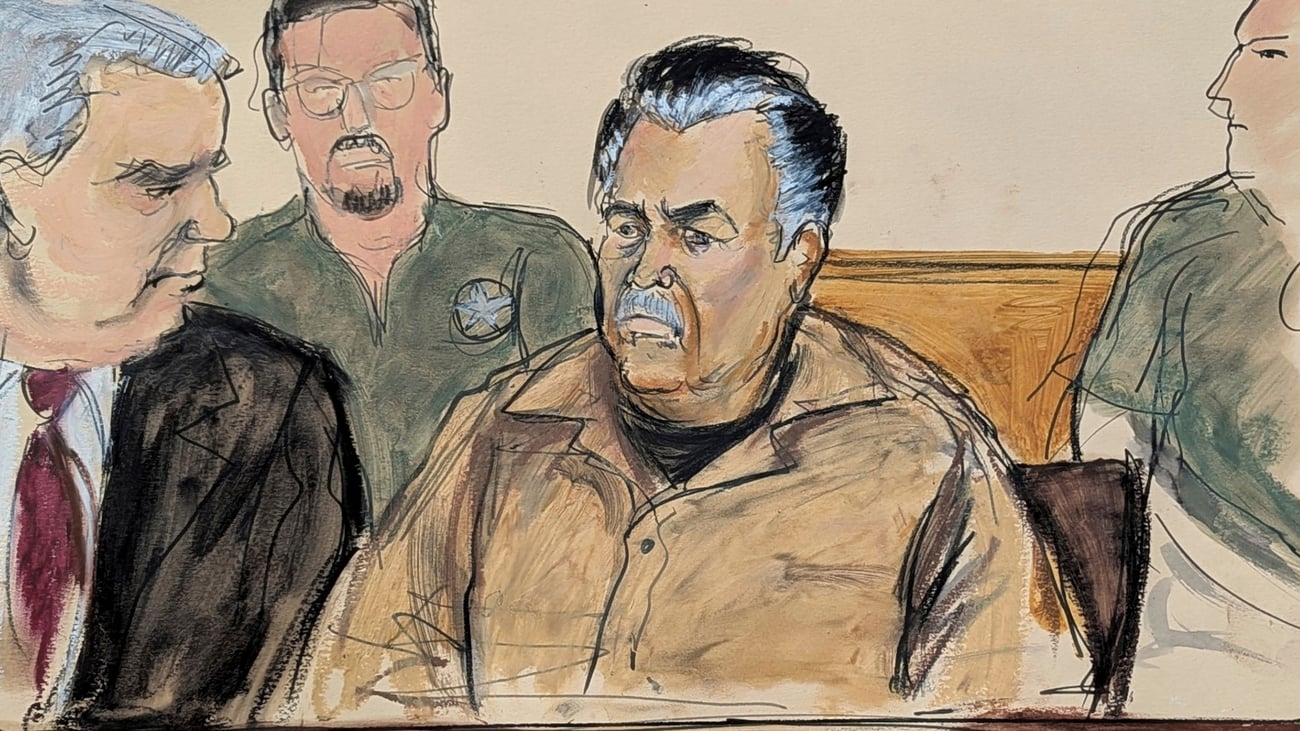
BROOKLYN (CN) — A federal judge on Monday sentenced Ismael “El Mayo” Zambada García, one of the most powerful drug lords in the world and the violent Sinaloa cartel’s strategist, to a mandatory minimum of life in prison after Zambada pleaded guilty in a drug trafficking case.
Zambada, one of the longest-surviving capos in Mexico, directed murders, kidnappings and a massive illicit drug operation, prosecutors say. The 76-year-old pleaded guilty in July 2025 after prosecutors said they would not seek the death penalty, which was abolished in New York but remains legal in federal cases. Had the case gone to trial, defense attorneys said it would have been one of the most complex federal trials in U.S. history.
The mandatory life minimum is tied to the amount of drugs trafficked, including at least 1.5 million kilograms of cocaine. Zambada admitted to dealing in drugs for more than 50 years, helping to create what would become the Sinaloa cartel.
“I stand before you today knowing that my actions caused harm — real harm — to individuals, families, and communities. I take full responsibility for what I did,” Zambada told U.S. District Judge Brian Cogan.
“I accept my punishment. I am not here to ask for compassion. I am here to take responsibility and to say I’m sorry for the harm I caused and for the example I set,” he continued.
Zambada also spoke about growing up in a violent environment — he stopped school at age 12, his attorneys say, and was introduced to the drug trade at age 19 — and encouraged young people not to follow his trajectory.
“The violence must end in Mexico and elsewhere … No one wins in a war like this,” he said. “To the next generation, I say: Choose a different path.”
At a press conference following the sentencing, U.S. Attorney for the Eastern District of New York Joseph Nocella Jr. detailed how Zambada and Joaquín “El Chapo” Guzmán — whose 2016 arrest and prosecution in the same Brooklyn courthouse ended with a life prison sentence — built a drug empire over three decades.
“El Mayo was the world’s single biggest drug trafficker this century,” Nocella said, calling the Sinaloa cartel the “largest drug trafficking organization that the world has ever seen.”
“This criminal empire flooded the United States and the world with deadly drugs, earned billions of dollars in profits and then laundered those billions through the financial system,” he continued.
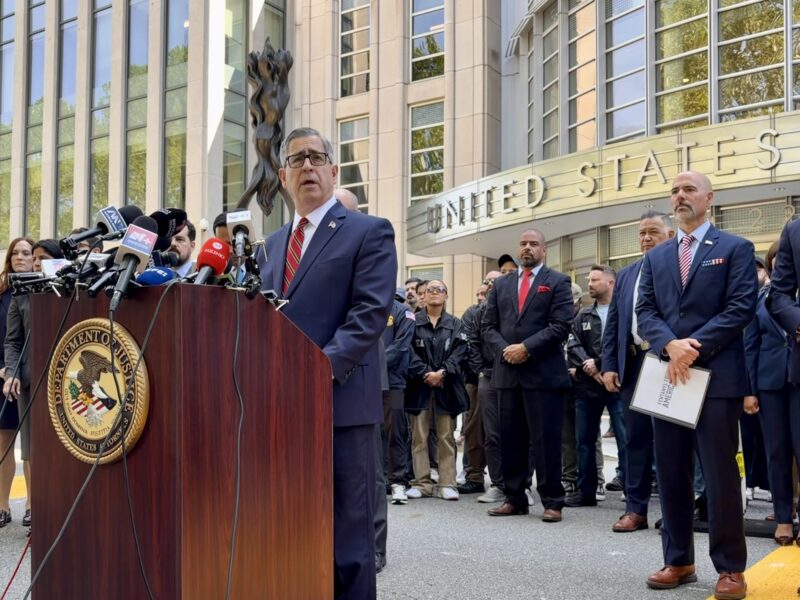
The U.S. attorney noted that the cartel also worked with numerous corrupt political figures who protected the cartel from prosecution, and that the drugs trafficked — cocaine, heroine and fentanyl — led to tens of thousands of overdose deaths.
Zambada’s plea agreement also includes a $15 billion forfeiture order. Prosecutors said they have not yet identified any assets, but are working to do so.
“That is an ongoing matter and I cannot elaborate any further, other than to say we are doing all that we can,” Nocella said following the hearing.
Joaquín Guzmán López, a son of El Chapo facilitated Zambada’s arrest by kidnapping Zambada, who was then flown across the border to the U.S. and arrested in New Mexico. Joaquín Guzmán López pleaded guilty to the kidnapping, plus federal drug and criminal conspiracy charges, in Chicago federal court last year. According to Nocella, said in his allocution that he was hoping to receive credit from the U.S. for the kidnapping.
“The United States made perfectly clear that we do not condone kidnapping and that he would receive no credit for anything that he did along those lines,” Nocella said Monday.
Zambada has been indicted at least 16 times over two decades in districts across the U.S., prosecutors said.
The septuagenarian cartel leader didn’t seek a sentence below the mandatory minimum, but requested that the judge recommend he serve the life sentence at a prison facility equipped to treat medical conditions that were redacted from court papers. Prosecutors did not object to the request.
Zambada’s attorney Frank Perez said Monday that his client is not cooperating with the U.S. government.
In a statement to Courthouse News following the hearing, Perez said, “Mr. Zambada’s decision to plead guilty was his own. He wanted to accept responsibility. If there is one lesson from this case, it is this: there are no winners in the drug trade. It destroys lives, tears families apart, and ultimately leads to prison, violence, or death. Mr. Zambada hopes young people see this case as a warning, not something to admire.”
 Follow @NinaPullano
 Follow @ninapullano.bsky.social
Subscribe to our free newsletters
Our weekly newsletter Closing Arguments offers the latest about ongoing trials, major litigation and rulings in courthouses around the U.S. and the world, while the monthly Under the Lights dishes the legal dirt from Hollywood, sports, Big Tech and the arts.