
 Search Articles


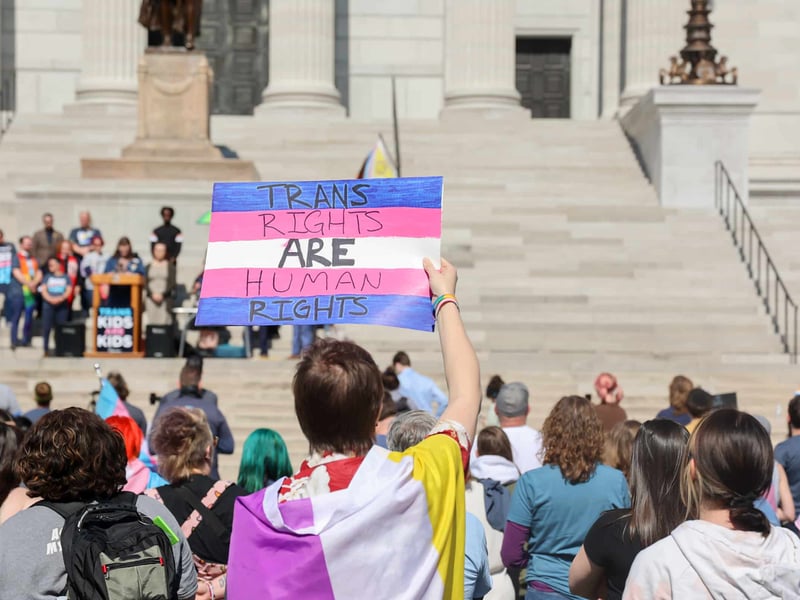
CINCINNATI (CN) — A Sixth Circuit panel upheld 2-1 a Tennessee statute barring transgender people from changing the sex listed on their birth certificates on Friday, dismissing the constitutional equal protection and due process challenges.
A group of transgender women born in Tennessee say in a 2023 suit that that the law — which only allows for amendments to sex on birth certificates with proof of an error — specifically bars transgender people from having the sex amended to conform with their gender identity.
The plaintiffs, represented by LGBTQ+-rights nonprofit Lambda Legal, said that the inability to change their birth certificate sex designations meant they had to disclose their transgender status to obtain other identification documents. They weren’t, attorney Omar Gonzalez-Pagan said at oral arguments in May, seeking to interfere with the state’s collection of vital records or statistics.
The three-judge appeals panel, however, found that collection of those statistics was an adequate justification to require birth certificates to include biological sex — and to make that sex determination nigh-impossible to change. Statutory language specifically prohibiting individuals from changing their listed sex “as a result of sex change surgery” was also not sufficient to render the rule discriminatory.
“The law simply clarifies Tennessee’s use of ‘sex’ as speech about a biological and historical fact of birth and ensures a uniform practice across Tennessee birth certificates,” U.S. Circuit Chief Judge Jeffrey Sutton wrote in the court’s opinion. “On the plaintiffs’ theory, birth certificates would refer to biological sex for some Tennesseans but to gender identity for others.”
Sutton also noted that the policy “long predates medical diagnoses of gender dysphoria,” and that the plaintiffs could not show that they were members of a ‘suspect class,” meaning one likely to experience discrimination, because they “do not exhibit obvious, immutable or distinguishing characteristics that define them as a discrete group.”
Rather than looking to the Constitution, Sutton suggested that transgender people could appeal to their state legislatures.
“For the fleeting present, eleven states provide individuals with this option, and all of them embraced these innovations through the democratic process in just the last seven years,” he wrote. “The Equal Protection and Due Process Clauses of the United States Constitution do not suddenly require the remaining thirty-nine states, including Tennessee, to do the same.”
“Any other approach would impede legislative compromise over the many settings in which these issues appear: sports, bathrooms, pronouns, medical treatments for juveniles and birth certificates. Why build a consensus among the competing constituencies if the Fourteenth Amendment, as interpreted by life-tenured judges, waits in the offing to provide total victory?” Sutton added.
Sutton was joined in his opinion by U.S. Circuit Judge Amul Thapar, also a Trump appointee. U.S. Circuit Judge Helene White, a George W. Bush appointee, penned a dissent in which she found fault in Tennessee’s claims that the policy was not discriminatory.
“The majority looks past the fact that the policy classifies people as male and female in deciding whether individuals may receive amended birth certificates indicating one sex or another,” White wrote. On that basis, she argued, the majority had erroneously decided that the policy did not require intermediate scrutiny.
White also had little patience for Tennessee’s assumptions about the immutability of sex.
“The state denigrates those who do not conform to societal assumptions about what it means to be male or female, like transgender individuals, conveying that they are somehow less male or female because of the accidents of their birth — that no matter what, in the eyes of the state, their genitalia at birth alone determine their identities forevermore,” she wrote.
Subscribe to our free newsletters
Our weekly newsletter Closing Arguments offers the latest about ongoing trials, major litigation and rulings in courthouses around the U.S. and the world, while the monthly Under the Lights dishes the legal dirt from Hollywood, sports, Big Tech and the arts.