
 Search Articles


(CN) — The U.S. Court of Appeals for the Sixth Circuit ruled Tuesday that Tennessee’s licensing requirements for online auctioneers do not violate the First Amendment. The order dealt a blow to a group of auction professionals who argued the law unlawfully restricted their free speech rights.
In a unanimous decision, the three-judge panel affirmed a lower court’s dismissal of the case, finding that the state’s regulations target professional conduct, not protected speech. The panel added that the law serves a legitimate public interest in preventing fraud.
Writing for the panel, U.S. Circuit Judge Eric L. Clay rejected the plaintiffs’ core argument, holding that Tennessee’s law regulates economic activity, not expression.
“The Online Auction Law does not censor plaintiffs’ freedom to advertise or describe items,” Clay wrote. “It simply prevents unlicensed members of the profession from transacting with consumers.”
The court leaned heavily on its 2014 precedent, Liberty Coins, LLC v. Goodman , which upheld Ohio’s licensing scheme for precious metals dealers under rational basis review. Like the Tennessee law, Ohio’s rules were designed to curb fraud, and the Sixth Circuit found the speech burdens incidental. In Tuesday’s opinion, Clay echoed that reasoning, noting that auctioneers act as fiduciaries, handling clients’ money and property — a role Tennessee has authority to oversee.
The opinion also dismissed comparisons to Billups v. City of Charleston , a Fourth Circuit case that struck down tour-guide licensing laws. Unlike tour guides’ “public sphere” commentary, the court said, auctioneers engage in “private sphere” transactions with tangible financial consequences.
“Auctioneers do not engage in public commentary; they facilitate binding sales transactions as agents for sellers,” Clay wrote. “Their speech — whether describing items or soliciting bids — is inextricably tied to commercial outcomes. While tour guides in Billups disseminated ideas in streets and parks, auctioneers operate in a proprietary context where the state’s interest in regulating fiduciary conduct outweighs incidental speech burdens.”
The lawsuit, McLemore v. Gumuccio , was filed by Will McLemore, a licensed auctioneer, and three unlicensed colleagues who conduct extended-time online auctions through McLemore Auction Company. They challenged Tennessee’s 2019 updates to its auctioneering laws, which require licensing for online auctions that mimic live, bid-based sales while exempting fixed-price platforms like eBay.
This was the plaintiffs’ second attempt to overturn the regulations. In 2023, the Sixth Circuit dismissed an earlier lawsuit on jurisdictional grounds, prompting the auctioneers to refile with a new First Amendment claim.
At oral arguments in March 2025, they claimed auctioneering is inherently speech-driven, involving curated product descriptions, promotional videos and real-time bid negotiations — all of which, they claimed, are stifled by the licensing mandate.
Attorney Wencong Fa, Vice President of Legal Affairs at the Beacon Center of Tennessee, insisted that auctioneers’ work is “speech-centric,” but Clay questioned whether the law targeted expression at all.
“The state doesn’t regulate how auctioneers speak,” he observed. “It requires a license to protect the public from fraud.”
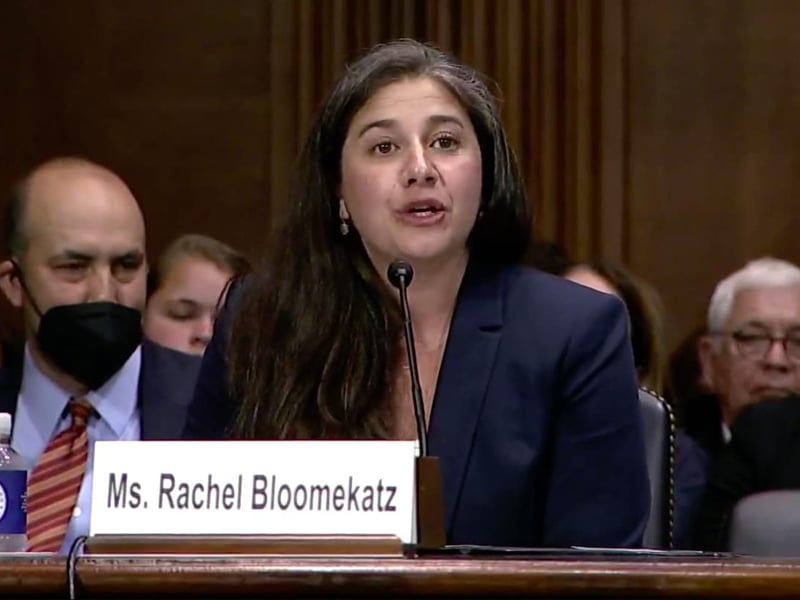
U.S. Circuit Judge Rachel Bloomekatz pressed Fa on the slippery slope of his argument: If auctioneering merits strict scrutiny, what about doctors or lawyers, whose work also involves speech? Fa struggled to articulate a limiting principle, while the state’s attorney, Gabriel Krimm, stressed Tennessee’s rules were “conduct-focused” and neutrally applied.
After the panel’s ruling Tuesday, Fa said he believes the plaintiffs’ argument remains strong and they plan to seek Supreme Court review. Fa said the court’s opinion is inconsistent with decisions from other circuit courts and the Supreme Court, creating a circuit split. He specifically cited a conflict with the Fourth Circuit’s tour guides case and references the Supreme Court’s decision in NIFLA v. Becerra, which rejected the idea that people lose First Amendment rights when speaking as part of their profession. Fa argues this is an issue of nationwide importance affecting many Americans who speak for a living.
“Online auctions are very different from traditional auctions, in a sense, in that you advertise your products online, and the online auction takes place online, so you’re not in an environment with a lot of people," Fa explained. “You’re relying on advertisements that are both precise but also enticing. So a lot of speech even goes into online auction that do not go to traditional auctions.”
“It’s First Amendment law, black letter law," he continued. “If you say that speech is not protected just because you’re doing it in a professional context… the government could perhaps just regulate people from talking to each other on the street … people who engage in core First Amendment activities.”
U.S. Circuit Judge John K. Bush filed a concurring opinion emphasizing the long history of auctioneer licensing, dating to colonial America. By the 1790s, he noted, at least eight states required auctioneer licenses, and the First Amendment’s framers evidently saw no conflict.
“The Constitution’s ratifiers did not consider auctioneering a protected speech right,” Bush wrote, citing early state laws and treatises.
Clay, Bush and Bloomekatz are Bill Clinton, Donald Trump and Joe Biden appointees, respectively. Representatives of neither party immediately responded to inquiries on Tuesday.
On Thursday, a spokesperson for the Tennessee Attorney General Office released the following statement:
“The speech-conduct distinction sets an important limit on government authority. American consumers have depended for centuries on regulation of certain commercial speech acts. We were glad to bring additional clarity to the doctrine and bring home a win for Tennessee. Our office is proud of the team of attorneys and their hard work on this case.”
The article was updated Wednesday, August 13, 2025 to include comments from Wencong Fa and Thursday, August 14, 2025 to include a statement from the Tennessee Attorney General’s office.
 Follow @gabetynes
Subscribe to our free newsletters
Our weekly newsletter Closing Arguments offers the latest about ongoing trials, major litigation and rulings in courthouses around the U.S. and the world, while the monthly Under the Lights dishes the legal dirt from Hollywood, sports, Big Tech and the arts.