
 Search Articles


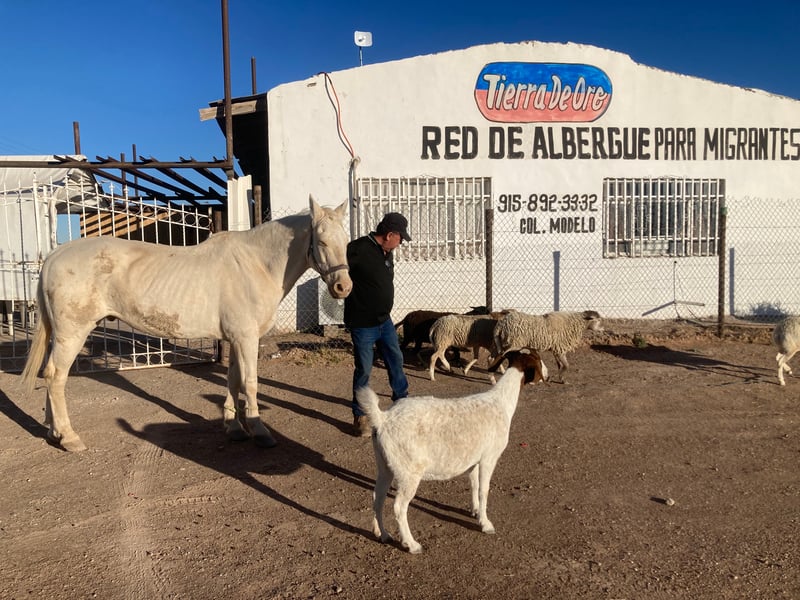
CIUDAD JUÁREZ, Mexico (CN) — One fateful night in November, Pastor Rosalío Sosa meandered his truck down a rural road off Mexican Federal Highway 2 in the Chihuahuan Desert.
He headed into Victoria Guadalupe, looking for a location he was tipped off about earlier that day. Entering the small town, his headlights lit up pockmarks of bullet holes on the town sign.
Sosa was looking for a soccer game — but as he rummaged on his dashboard for his phone and a bag of sunflower seeds, he admitted he wasn’t exactly sure where he was going. “We’re going to have to ask someone,” he said as he hit the accelerator.
He drove around town, passing a church. He asked some passersby where to go, but they had no idea. Finally, he got directions from a store clerk, who paused from weighing eggs on a countertop scale to show him the way.
A Baptist pastor at the Iglesia Bautista Tierra de Oro in El Paso, Texas, Sosa is director of the Migrant Shelter Network — a network of 20 shelters in El Paso and Chihuahua state.
One of Sosa’s shelters in Chihuahua is in this region, in the neighboring town of Modelo. It’s been around for a year and a half. The rural area, about 20 miles south of New Mexico, is primarily agricultural, featuring chile and alfalfa farms. In the mountains above town, cartels fight for territory along highly valuable trafficking routes.
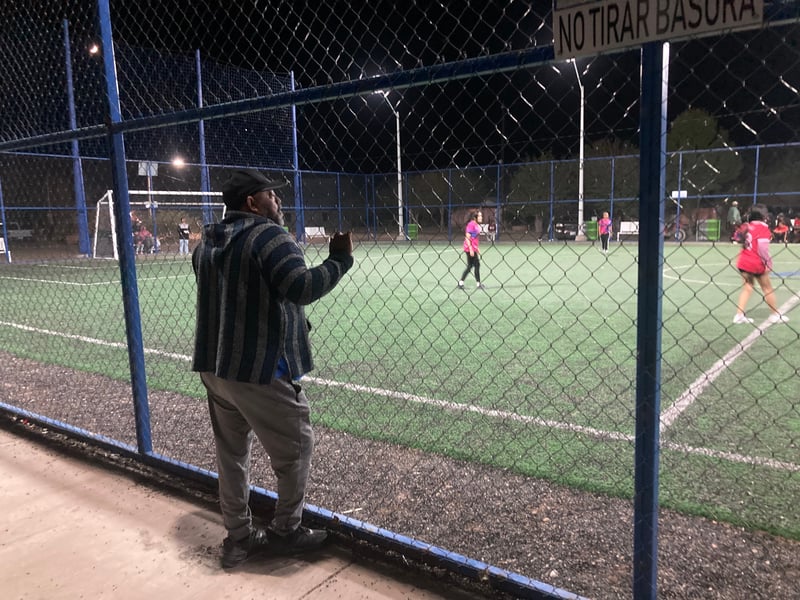
It was Tuesday — Election Day in the United States — and two teams of teenage girls were playing a soccer match. One team, from Modelo, consisted of migrant girls staying at Sosa’s shelter.
For Sosa, the game was a welcome break from the grim realities of helping migrants. “I’ve had people here who have seen their children get murdered in front of them,” he’d said earlier in the day. “This is the biggest area for human trafficking. Criminals will pluck migrants out of the desert like they never existed.”
In Ciudad Juárez, one of his shelters wasattacked in 2022 by armed men who broke in and tried to abduct migrants staying there. Though they were unsuccessful, they did manage to rob the migrants of money and cell phones — a critical tool for asylum-seekers hoping to make appointments on the CBP One app.
Through the app, migrants learn which of eight ports of entry can process their asylum request. CBP will allow them entry if they can prove a credible fear of returning home. But with sluggishly long wait times, trying to make appointments on the app has become something of a purgatory for desperate migrants. In a report in May, Human Rights Watch said the app “feeds cartel needs for a vulnerable population to prey upon.”
Under another Trump presidency, a bad situation could get worse for migrants.
Some human rights organizations expect the app will end. During his first administration, Trump invoked Title 42, a public health measure that automatically expelled most migrants and put a halt on new asylum claims. This time, he’s also promised mass deportations of millions of migrants already in the country.
The night of the soccer game, no one was paying much attention to U.S. elections, at least for a few hours. Arriving in pickup trucks, spectators sat in the parking lot by the field to cheer on their family members.
Janette, a 24-year-old from Churumuco, Michoacan, had been at the shelter with her younger cousin for a week. She was here to watch her play.
“The game is something positive for everyone,” Janette said between cheers. “It’s good to get your mind off of things, to do something normal.”
The Modelo team won 6-4. Sosa drove them back.
As election results trickled in north of the border, the mood at the shelter was restless.
Outside, Mexican migrant Delfino Ponce waxed about patience. Already, he’d been at Tierra de Oro shelter with his wife and two children for 10 months.
“If I don’t get my CBP One appointment soon, I’ll have to go back to my town,” Ponce said under an open sky. “But I’ve been here for so long, there’s no going back.”
Inside, Sosa led the migrants in a prayer.
“Fear is the only thing that can stop you,” he told them. “Fear is the only thing that inhibits you from being who you are. You start as a small seed and then grow. They throw out a seed into the field, but it must grow.”
The next morning, as three migrants prepared breakfast, official results showed Trump’s resounding defeat over Vice President Kamala Harris. Sosa tried to reassure the migrants.
“Don’t be scared,” he told them. Trump “can’t do anything to you that’s worse than anything that you’ve been through before.”
The words did little to soothe worries. After hazardous journeys north and long CBP One wait times, the return of Donald Trump seemed like another steep hurdle.
“The point is to go to the U.S.,” said Julia Carbajal Sandoval, an asylum-seeker from Colombia. “If we can’t get there, what will we do? We can’t be here forever. We’ll live on the street, we’ll do whatever we have to do, but we can’t go back.”
In front of the Tierra de Oro shelter stands a surveillance tower. Installed in June, it’s part of a network of surveillance cameras that have sprouted up in Chihuahua state since 2022.
Known as the Centinela Platform, the system will consist of 10,000 surveillance cameras capable of face and license-plate recognition, according to the Electronic Frontier Foundation. There will be surveillance vehicles and drone teams. Its nerve center will be a looming headquarters in downtown Ciudad Juarez known as Torre Centinela or Sentinel Tower.
Construction on Torre Centinela was slated to end in December but is still far from finished. And while officials in Chihuahua say the system will decrease crime by 90%, reports suggest crime in Chihuahua is in fact up, as desperate migrants continue to stream through remote deserts and forests here.
For critics, the evidence points to shortcomings in tech-forward border policing. “This type of surveillance doesn’t deliver as promised [and] is pretty faulty and pretty wasteful,” Dave Maass, journalist and lead investigator of the Electronic Frontier Foundation report, said in a phone interview. “The whole platform is leaning into spending gobs of money because it’s glittery.”
“People always ask if this is effective,” he added. “Effective at what? There are humanitarian issues. There are policies that should be addressed.”

The low effectiveness and high price tags aren’t the only factors troubling observers like Maass. Chihuahua’s surveillance project has the blessing of its northern neighbor, after Republican Texas Governor Greg Abbott signed off on amemorandum of understanding.
“There’s something chilling about seeing two states with an international security treaty outside of the federal government,” Maass said. “I’ve never seen this level of collaboration between two states like this, a decision that should probably be made within the federal government.”
The memorandum states Texas and Chihuahua’s commitment to cooperating, including by implementing measures to “allow Chihuahua State Police to track vehicles from the moment they leave an industrial park in Juárez until they cross the border into Texas.”
“The State of Chihuahua is incorporating technologies such as drones to patrol the border, AI databases connected to the driver license registry and biometric filters to assist in the capture of cartel leaders," the memorandum continues. That information will be shared across both states.
While it doesn’t say so explicitly, the memorandum also makes clear that cartels aren’t the only ones standing to profit handsomely off of migrants.
Also profiting are private security firms like Mexico City-based Seguritech. In 2022, Chihuahua Governor María Eugenia Campos Galván awarded the company a multiyear border-security contract worth almost $233 million.
Seguritech’s profits have soared since 2007, when then-President Felipe Calderón declared a war on drugs. Between that year and 2018, the company raked in more than a billion dollars in government contracts. That figure doesn’t even include its contract for the Sentinel Tower, a collaboration with Chihuahua’s Secretary of State Public Security. Once completed, the tower will stand 20 stories high and connect to 13 Mexican cities.
In downtown Ciudad Juárez, a 20-minute walk from the U.S. border, is Hotel Ursula. Its street-level windows are blocked by quilts. Visitors loiter out front, browsing on their cellphones or smoking weed.
This five-story hotel has a history of hosting migrants. But it’s not a state-sanctioned shelter, and it’s seen its share of violence. Last year, federal police working with Mexican immigration authorities raided the hotel, evicting hundreds of migrants. Just weeks ago, an Ecuadorian migrant was fatally stabbed here. These days, the five-story hotel is completely booked. For $5 a night, asylum-seekers can stay in bunks in a large room off of the main reception hall.
A tracking feature on the CBP One app makes Mexico City the southernmost point at which migrants can use it. That’s caused migrants to concentrate in Mexico City and in cities to the north, including the border city of Juarez. They wait in limbo in places like Hotel Ursula, vulnerable to criminals and authorities.
Trump’s upcoming term is on the minds of many at the hotel. That includes William Carbajar, a young Colombian who has been traveling for four months and living in the hotel for two.
“I want to go to the other side to look for more opportunities. I’m from a very dangerous place, and there’s no jobs,” he said. “All I do here is wait for my appointment. It’s dangerous here, and now I have no idea what’s going to happen with Trump, what he’s going to do, if this is all for nothing.”
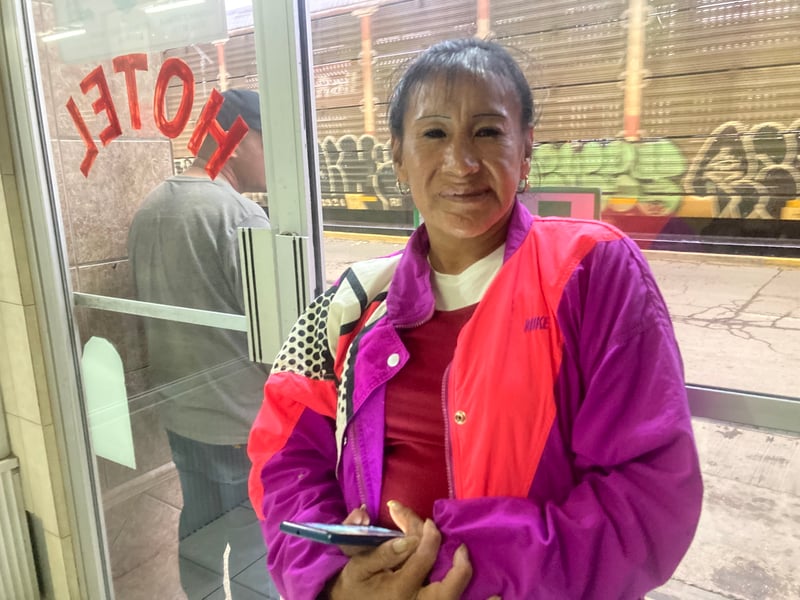
Cecilia Sánchez has stayed at Hotel Ursula for nearly two months after making the journey from Quito, Ecuador, six months ago.
She was trying to stay resolute. “I don’t know Trump personally, so I am going to keep doing what I’m doing,” she said in an interview in the hotel entranceway. “It’s in God’s hands.”
Already, it had been a harrowing journey. “I saw people die in the jungle,” she said. “I came through Mexico City, [and] now I’m here.” She was trying to make it to her daughter in the U.S., whose husband had recently died. “I need to take care of her,” she said. “She can’t be alone anymore, and I can’t be here.”
Back in Modelo, a couple miles from the New Mexico border, hundreds of chile peppers lay scattered across the highway. They sit in the noon sun like breadcrumbs from the fairy tale “Hansel and Gretel,” as if to show migrants the way to their new home.
The real breadcrumbs are more subtle. A palm tree, wrapped with tinsel and glistening in the sun, marks a border crossing point for coyotes. Migrants pay steep fees for the chance to cross here, sometimes up to $15,000 per person.
On the U.S. side, truck tires serve as additional guideposts for coyotes and migrants. They’re laid out every couple miles, marking pickup points.
Besides ending pathways toward asylum, Trump says he will declare a national emergency and use the military to carry out mass deportations.
His choice of Tom Homan, the manbehind family separation during his first term, as his border czar suggests a willingness to follow through on these pledges.
Already, U.S. Immigration and Customs Enforcement appears to be ramping up. This month, the agencysolicited new ideas for surveillance contracts, spitballing ideas like “biometric technology monitoring services across the nation" for people awaiting immigration hearings.
Since the Department of Homeland Security launched in 2003, billions have been spent on border barriers and immigration enforcement, according to a report from the American Immigration Council in August.
That’s been true across both Democratic and Republican administrations. Sections of militarized border wall, first started in the 1990s under Bill Clinton, were further expanded by George W. Bush and Barack Obama.
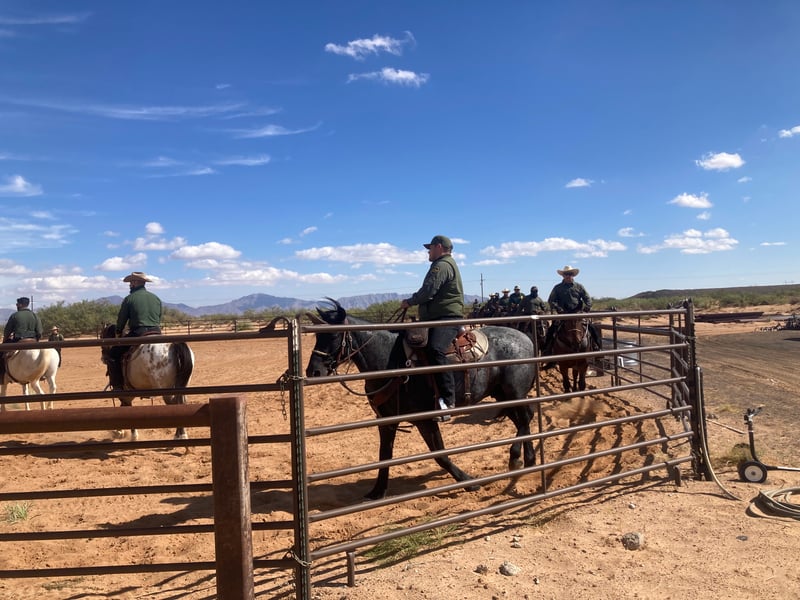
All of it reflects a decadeslong legacy along the border, in which policing has often taken precedence over humanitarian concerns. First there were Border Patrol agents on horseback, then came millions in cameras, lasers, sensors and other high-tech gadgets.
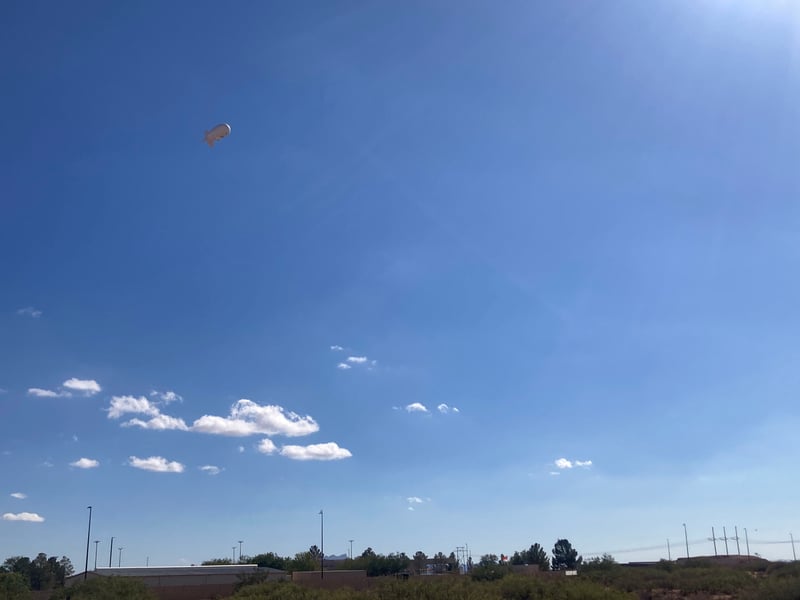
A Border Patrol surveillance blimp hovered in the desert sky like a bloated ghost. Sosa looked out from his truck at a portion of the partially built border wall, its materials lying on the ground like an expensive trash heap. He was on the U.S. side of the border, right near the international boundary. He shook his head. “So many resources,” he said, “that could be spent on something more useful.”
Subscribe to our free newsletters
Our weekly newsletter Closing Arguments offers the latest about ongoing trials, major litigation and rulings in courthouses around the U.S. and the world, while the monthly Under the Lights dishes the legal dirt from Hollywood, sports, Big Tech and the arts.