
 Search Articles


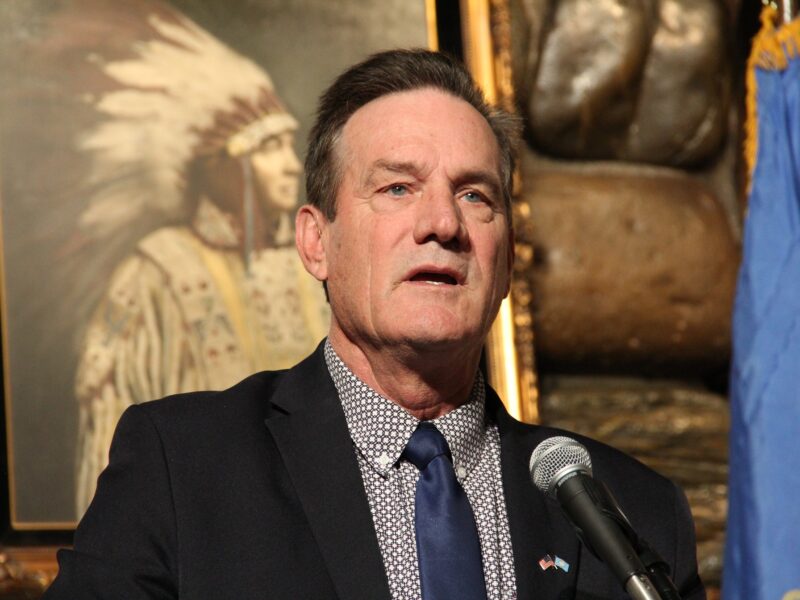
(CN) — South Dakota is now the 40th state to establish measures designed to protect those participating in public life from being burdened with legal fees when facing lawsuits they would likely win on the merits.
South Dakota Governor Larry Rhoden signed Senate Bill 137, which protects against strategic lawsuits against public participation, otherwise known as SLAPP.
“Free speech is one of the first freedoms listed in our Bill of Rights, and this bill further protects that right for South Dakotans,” Rhoden said in a Monday statement. “We will continue to safeguard liberty and justice for all.”
The act will allow defendants to go to court within sixty days to request the dismissal of such cases.
Speaking to the State Senate Judiciary Committee in February, the bill’s sponsor, Senator Amber Hulse said 39 states already have anti-SLAPP laws.
“The idea is that sometimes people with money or power can use the court system to punish or intimidate everyday South Dakotans by filing expensive lawsuits, not to necessarily to win on the merits, but to bury the other side in legal fees, stress and discovery processes," said Hulse, a Hot Springs Republican.
“This bill is about one simple principle: That you shouldn’t be destroyed for participating in public life,” she added.
In South Dakota, bills signed by the governor typically become law on July 1.
The measure passed both houses of the South Dakota Legislature with overwhelming support, 33-0 in the State Senate and 65-2 in the State House. The Legislature is dominated by Republicans like Hulse, but neither nay vote was from a Democrat.
SLAPP lawsuits are brought by people and entities to “dissuade their critics from continuing to produce negative publicity,” according to the Legal Information Institute at Cornell Law School. The institute notes that SLAPP suits are usually brought to temporarily prevent criticism or to force defendants to spent time and resources responding to them.
In February’s committee hearing, speakers included community newspaper editors who said they operated on slim budgets and could ill-afford a lawsuit, even one they might ultimately win, for simply reporting the news factually.
David Bordewyk, executive director of the South Dakota News Media Association, told senators then he has worked with “many members” who have faced threatened or actual litigation, put forward in attempt to silence them.
“That is really, really, tough, particularly if you are a community newspaper editor and you’re just a small operation and you are going it alone, and now you are under threat of a lawsuit that could potentially put your whole newspaper at risk," he said.
Advocates for conservative causes also spoke for the measure, though Hulse emphasized it protected activists across the political spectrum.
In that committee hearing, no one spoke against the measure.
SLAPP laws have been criticized because, if they are too broadly written, they can keep parties from bringing meritorious libel claims, according to the Legal Information Institute. Hulse and supporters of the measure said the South Dakota bill does not create immunity from defamation.
The South Dakota measure comes as a judge in next-door North Dakota ordered Greenpeace to pay $345 million after it lost a suit connected to protests over the Dakota Access Pipeline. The environmental activism organization describes the award as a product of a SLAPP suit andis seeking a new trial. North Dakota is one of the states without an anti-SLAPP law.
 Follow @nelson_aj
Subscribe to our free newsletters
Our weekly newsletter Closing Arguments offers the latest about ongoing trials, major litigation and rulings in courthouses around the U.S. and the world, while the monthly Under the Lights dishes the legal dirt from Hollywood, sports, Big Tech and the arts.