
 Search Articles


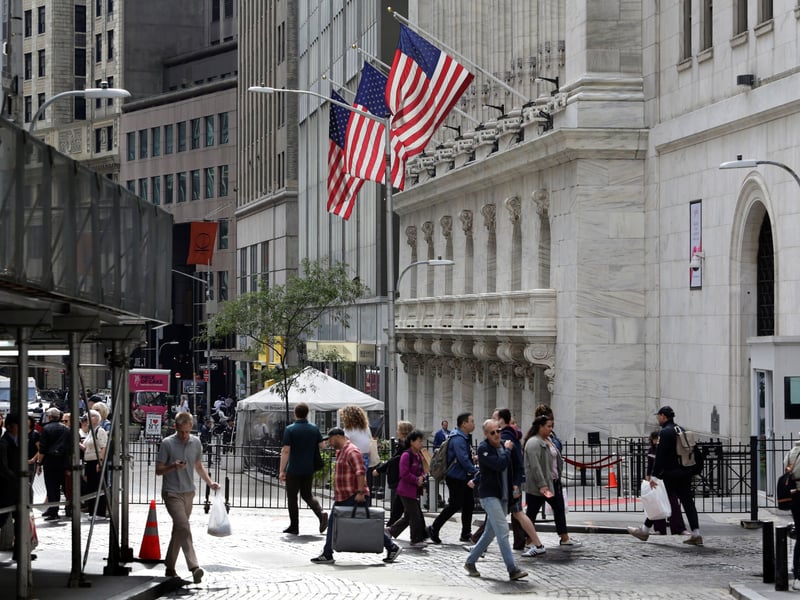
MANHATTAN (CN) — Wall Street has managed to pull out another winning week despite some shocking inflation data.
On Wednesday, investors were shocked by a 0.5% price increase in the Bureau of Labor Statistics’ consumer price index for January. The only sector with a monthly drop in prices was apparel, which decreased by 1.4%.
Markets declined after the report, and did so again after a report showing a decline on retail sales. And yet by Friday’s closing bell, the S&P 500 had set a new record, picking up 89 points. The Dow Jones Industrial Average gained 202 points for the week, while the Nasdaq finished up 503 points.
Some say the jump in inflation could be due to rising gasoline prices and the avian flu’s impact on egg prices. But the fact that core inflation — which discounts both energy and food — has been stuck at higher than 3% for the past six months poses a problem for the Federal Reserve.
“Houston, we have a problem,” Chris Zaccarelli, chief investment officer at Northlight Asset Management, said on Wednesday. He noted that all inflation metrics jumped in this latest report and that year-over-year headline inflation is at 3%, well above the Fed’s 2% annualized target.
“Not only will this create tremendous psychological damage to investors, but the market will likely have a negative knee-jerk reaction to the increasing risks of higher-for-longer or even higher-from-here,” Zaccarelli said.
Fortunately, a day later the producer price index came in lower than the CPI, increasing by just 0.4% last month. That’s still higher than the 0.3% consensus forecast but not as much of a jump as the CPI, which gave investors some relief.
The biggest increases, once again, were driven by energy prices, as goods inflation rose by 0.6% and food prices gained 1.1%. Services prices were in line with expectations, increasing 0.3% in January.
The Fed currently has no plans to change the 4.25% to 4.5% federal funds interest rate. If prices continue to rise, it could put pressure on the central bank to keep rates steady until the end of the year — or worse, raise them again.
Fed Chair Jerome Powell testified before Congress this week, telling lawmakers the economy remains strong and that monetary policy will remain less restrictive. “[W]e do not need to be in a hurry to adjust our policy stance,” Powell said. “We now that reducing policy restraint too fast or too much could hinder progress on inflation.”
Investors also were dismayed this week by a weak retail sales report by the U.S. Census Bureau, which showed a 0.9% drop in consumer spending last month.
The total was well below analysts’ consensus forecast of a 0.1% decline in sales. Most experts say a post-holiday slump, the wildfires in California and a cold winter are likely to blame.
Optimism among small businesses also dipped this week, according to the National Federation of Independent Business. The group’s monthly optimism index fell 2.3 points, though the index remains above the 51-year average.
More troubling is the NFIB’s January “uncertainty index." Following declines for December and November, it increased 14 points to reach the third-highest record.
 Follow @NickRummell
Subscribe to our free newsletters
Our weekly newsletter Closing Arguments offers the latest about ongoing trials, major litigation and rulings in courthouses around the U.S. and the world, while the monthly Under the Lights dishes the legal dirt from Hollywood, sports, Big Tech and the arts.