
 Search Articles


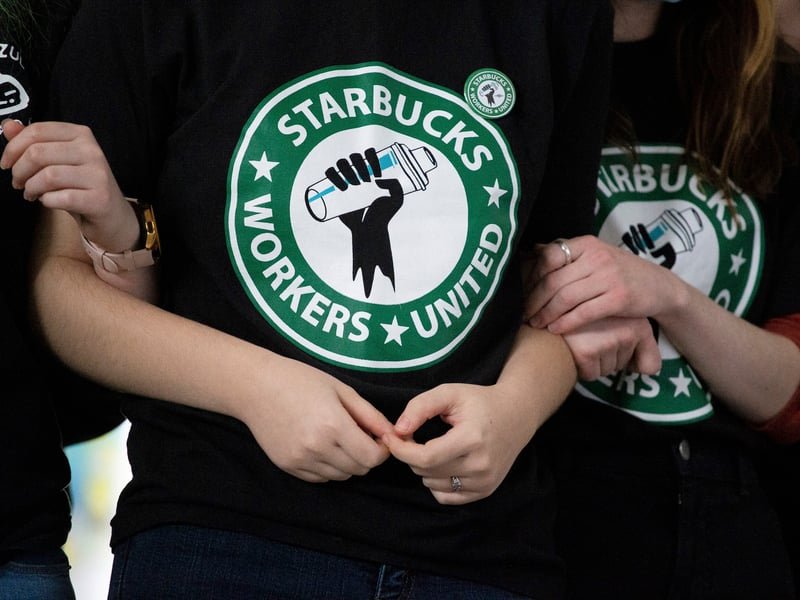
(CN) — Starbucks told a Fifth Circuit panel Monday that the National Labor Relations Board improperly determined that the coffee giant unlawfully fired an employee in retaliation for his union organizing activity.
The NLRB found that Starbucks illegally fired James Schenk, a shift supervisor at a Starbucks store in the Albany, New York, area who in 2021 and 2022 helped lead a campaign to unionize the store. Starbucks fired Schenk in August 2022 after he opened a letter from the NLRB addressed to the store. But the board found that his termination, as well as previous disciplinary actions for sending profane messages in an employee Snapchat group and failing to complete four assigned tasks by the end of a shift, were retaliation for his union activism.
In its findings, the board said there was “unusually” strong evidence of anti-union animus in this case, including the store manager agreeing with Schenk in a conversation that the district manager was targeting him because of his union organizing.
U.S. Circuit Judge Andrew Oldham, a Donald Trump appointee, questioned the board’s findings, suggesting that Starbucks could have fired Schenk just based on his Snapchat messages, which Oldham called “egregious” and “horrific.”
“That has to be a fireable offense,” Oldham said.
NLRB attorney Joel Heller agreed that Schenk could have been fired for the messages, but he said the question is “not whether they could have fired him in some abstract sense, but whether they would have done so absent his union activity.”
The NLRB found that Starbucks had previously tolerated profanity at the store. But Amy Saharia, an attorney representing Starbucks, argued that Schenk’s messages weren’t just profane, but that he was name-calling specific individuals, including a co-worker who had a medical condition that prevented her from using cleaning products.
“He was asked, is it common to call someone who suffers from an allergy, who may have an accommodation at work, ‘dumb fucking bitch who can’t even use cleaners?’ And he said no, that is not common.” Saharia said, recalling Schenk’s testimony during the NLRB proceedings. “That, in and of itself, defeats the board’s contrary finding.”
Since a Starbucks store in Buffalo, New York, voted to join the union Workers United in December 2021, becoming the first Starbucks store in the U.S. to unionize, Starbucks has experienced a major unionization push, with over 600 Starbucks locations voting to join the union. This has led to numerous NLRBcases based on accusations that Starbucks is attempting to suppress union activity.
Michael Dolce, an attorney representing Workers United, told the panel that Schenk played an important role in this unionization push, helping to unionize not only his own store but also seven other stores in the Albany area.
“Schenk was not just a known union supporter,” Michael Dolce said. “Schenk was one of the most effective worker organizers on the entire Starbucks organizing campaign.”
U.S Circuit Judge Carl Stewart, a Bill Clinton appointee, and U.S. Circuit Judge James Graves, a Barack Obama appointee, joined Oldham on the panel.
Subscribe to our free newsletters
Our weekly newsletter Closing Arguments offers the latest about ongoing trials, major litigation and rulings in courthouses around the U.S. and the world, while the monthly Under the Lights dishes the legal dirt from Hollywood, sports, Big Tech and the arts.