
 Search Articles


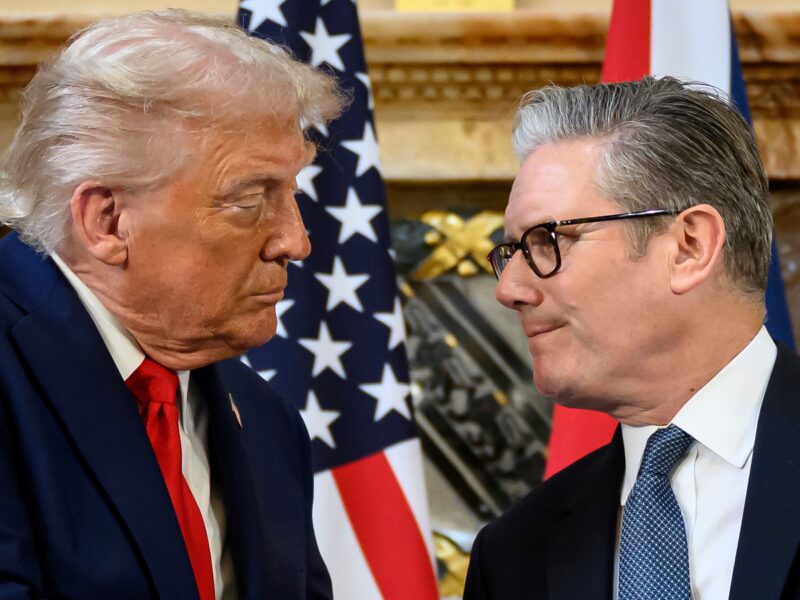
MANCHESTER, England (CN) — Prime Minister Keir Starmer said Thursday the United Kingdom is working closely with the United States even as the widening war with Iran exposes new strains between London and Washington.
Speaking at a press conference in Downing Street, Starmer said Britain had already begun reinforcing its military presence in the Middle East before U.S. and Israeli strikes on Iran began over the weekend.
“Long before” the strikes, he said, the U.K. had deployed additional defensive assets to the region to “defend our interests.”
Throughout January and February, Britain moved fighter jets, air defense missiles and radar systems to Cyprus and Qatar to ensure the country was “in a heightened state of readiness,” Starmer said.
When the strikes began Saturday, the Royal Air Force launched aircraft that shot down several drones, including one heading toward a base housing British personnel, he said.
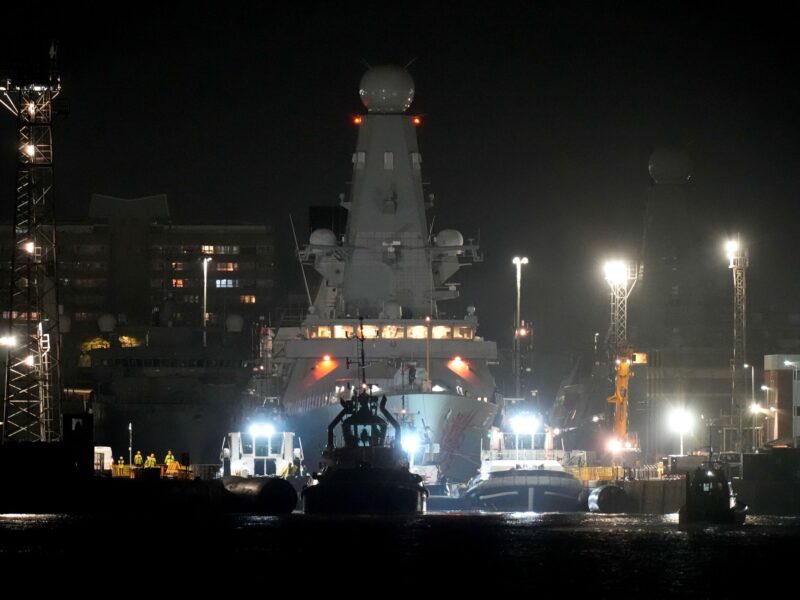
Four additional fighter jets are being sent to Qatar, helicopters with antidrone capabilities will arrive in Cyprus Friday and the Royal Navy destroyer HMS Dragon will deploy to the Mediterranean.
At the same time, the government is scrambling to bring home thousands of British citizens stranded across the Middle East as missile and drone attacks disrupt flights.
The first government flight bringing back stranded Britons departed on Thursday after being delayed, in what is described as the biggest travel disruption since the pandemic.
Around 4,000 Britons have already returned, Starmer confirmed, but more than 140,000 people have told the government they are in the region.
“This is a huge undertaking,” he said. “It’s not going to happen overnight.”
Despite tensions with Washington, Starmer said the long-standing alliance between the two countries remains intact.
“All of my team are having discussions all the time with the Americans,” he said, stressing that “the special relationship is in operation right now” despite continued criticism from President Donald Trump.
Cyprus anger after drone strike
The conflict has already drawn Britain closer to the fighting.
A drone struck a British military base at Akrotiri in Cyprus Sunday, prompting criticism from officials on the Mediterranean island who said they were not adequately warned.
Cyprus’ high commissioner to the U.K., Kyriacos Kouros, said the public was “disappointed” with Britain’s handling of the threat.
“The people are scared, the people could expect more,” he said, asking for “more cooperation with the government of Cyprus to safeguard that such incidents won’t happen again.”
Cyprus President Nikos Christodoulides also criticized the failure to stop the drone and stressed that the country would not participate in military operations tied to the war.
The attack, believed to be an Iranian drone launched by a pro-Iranian militia Hezbollah in Lebanon or western Iraq, highlighted how British bases and personnel can become targets even if London is not directly participating in the strikes.
Starmer said the U.K. is “fully committed to the security of Cyprus and British military personnel based there.”
Trump disappointed in Starmer
The war has also complicated relations between Starmer and Trump.
The British leader has questioned the legality of U.S. action against Iran and rejected the idea of “regime change from the skies,” his sharpest public criticism of the president since taking office.
Starmer also initially refused a U.S. request to use the joint military base at Diego Garcia in the Indian Ocean to conduct strikes on Iran, though he later allowed American forces to use British bases for what he described as “defensive” operations targeting Iranian missiles.
Trump responded with blunt criticism of the prime minister.
“He has not been helpful. I never thought I’d see that. I never thought I’d see that from the U.K. We love the U.K.,” Trump told reporters in the Oval Office.
“It’s just a much different kind of relationship that we’ve had with your country before. It’s very sad to see that the relationship is obviously not what it was,” he said.
Diego Garcia is on the Chagos Islands, a British territory the government has agreed to return to Mauritius. Trump initially endorsed the deal before describing it as an act of “great stupidity.”
Referring to Diego Garcia, Trump said: “Somebody came and took it away from him and it’s taken three or four days for us to work out where we can land. It would have been much more convenient landing there as opposed to flying many extra hours. So we are very surprised. This is not Winston Churchill that we’re dealing with.”
Starmer has invested significant political effort in managing relations with Trump since taking office, avoiding public confrontations and inviting the president for a historic second state visit.
But the Iran conflict has forced him to draw a line between supporting the U.S. and avoiding direct involvement in another Middle East war, as memories of Iraq loom long in British politics.
Despite the tensions, disputes between Washington and London are not unprecedented.
The special relationship has endured previous clashes during the Cold War, including the 1956 Suez Crisis, when the U.K. coordinated with France and Israel to seize the Suez Canal in Egypt. President Dwight Eisenhower opposed the invasion, threatening to sell sterling bonds to devalue the British currency, ultimately forcing the U.K. to abandon its plans.
During the Vietnam War, the U.S. repeatedly asked the U.K. to send troops, with multiple prime ministers consistently refusing.
The current conflict presents another test, as Britain tries to support its closest ally while avoiding being pulled into a war it did not start.
Brits don’t support war
Early polling suggests many British voters are skeptical of the war.
A YouGov survey found 49% oppose U.S. strikes on Iran, compared with 28% who support them. Half of respondents said they oppose allowing the U.S. to use British bases for military operations.
Some people express concern Britain could be pulled deeper into the conflict.
Helen from Birmingham said she fears the U.S. could use British facilities beyond defensive purposes.
“At what point is Trump going to be declared unfit for office,” she questioned on social media. “I think that although the use of British bases is for the purpose of defense, Trump won’t use them for that and we risk getting dragged into a conflict when the intention is to defend.”
Others questioned whether the alliance still benefits Britain.
“We are not in a special relationship with the U.S. unless they need something,” said Arthur, a Labour supporter.
Even without directly joining U.S. attacks, the drone strike in Cyprus underscores how quickly Britain risks being drawn deeper into a conflict it insists it is not fighting, with British bases and personnel potential targets.
Courthouse News reporter James Francis Whitehead is based in England.
 Follow @jayfranklinlive
Subscribe to our free newsletters
Our weekly newsletter Closing Arguments offers the latest about ongoing trials, major litigation and rulings in courthouses around the U.S. and the world, while the monthly Under the Lights dishes the legal dirt from Hollywood, sports, Big Tech and the arts.