Search Articles


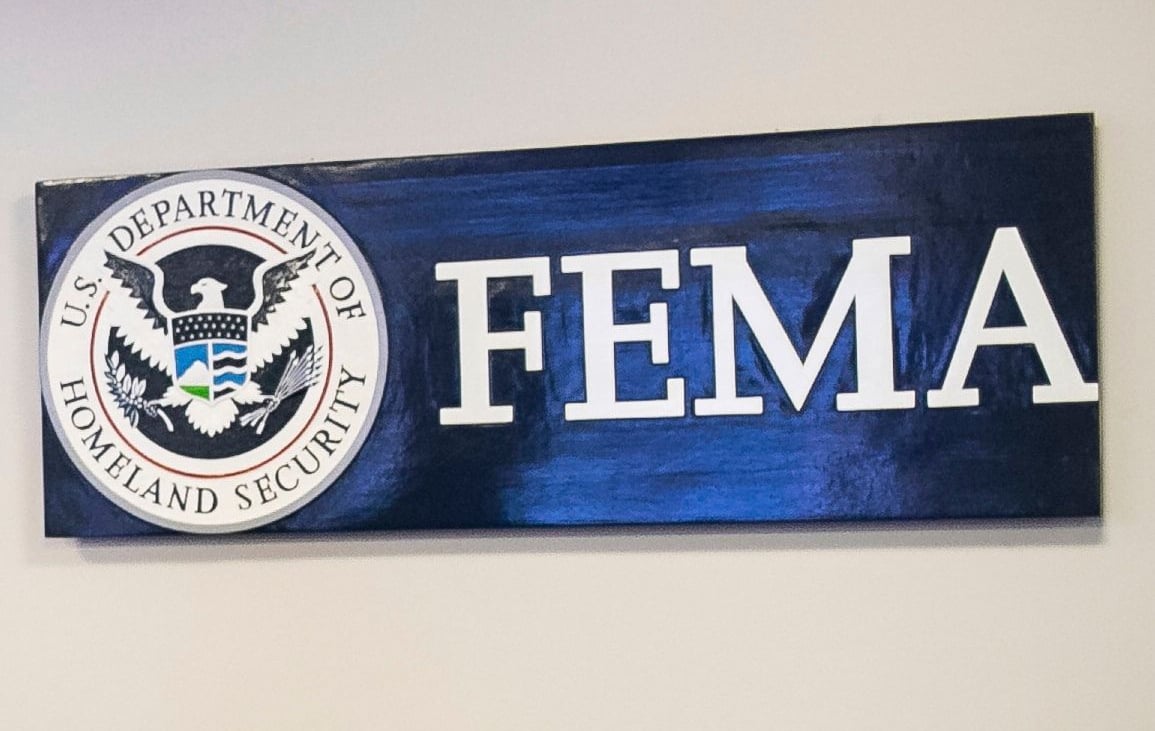
(CN) — Over two dozen states took on the Department of Homeland Security and FEMA Thursday, filing suit over new election and immigration requirements to receive grants from the federal government.
DHS and FEMA violated the Administrative Procedure Act and the spending clause in the U.S. Constitution, the states argued, by imposing new election- and immigration-related requirements to receive billions in anti-terrorism and emergency response funds. The agencies are attempting to leverage the funds to “coerce” states into adopting the Trump administration’s preferred policies, the states said in their suit.
Twenty-five states — including California, Colorado, Arizona and Washington — and the District of Columbia filed suit in Rhode Island, claiming the change in requirements was retaliation after FEMA and DHS were unsuccessful in cutting federal funding from states they felt opposed the administration’s immigration agenda in a prior legal case.
One of FEMA’s largest grant programs, the Homeland Security Grant Program, is now requiring states to verify the citizenship of their registered voters against the U.S. Citizenship and Immigration Services’ Systematic Alien Verification for Entitlements program, the plaintiffs said, leaving over $740 million in funding in limbo. The funds for the program are intended to assist states in fighting and responding to terrorism.
FEMA has also updated its terms to cut funding to states at any time if it deems they are not in compliance with “agency priorities.” For discretionary awards, it could cut funds for “convenience,” the plaintiffs claimed.
But Congress never gave the agencies the authority to rewrite state election law, require cooperation with federal immigration enforcement or cut off funding for any reason, the states said, nor can conditions outlining eligibility for the funds be vague and ambiguous. The agencies are also required by the Administrative Procedure Act to analyze the impact the changes would have on each program, they added.
In 2025, DHS updated its terms and conditions, adding provisions that require states and other recipients to cooperate with enforcing federal immigration law. FEMA has also cut the funding for specific grant recipients it considers to be “sanctuary jurisdictions,” the plaintiffs said, calling the change fickle and unconstitutional.
“Plaintiff states have received these grants year over year and rely on them to fund critical preparedness, mitigation and relief efforts,” the plaintiffs said. “DHS now insists that the states are not entitled to these funds unless they help enforce federal immigration law.”
Following President Donald Trump’s push for nationalized elections, FEMA has now also imposed election conditions on Homeland Security Grant Program recipients, requiring them to transition electronic voting systems to equipment that accepts hand-marked paper ballots, conduct manual audits postelection, conduct ballot reconciliation, confirm the citizenship of election workers and use the SAVE program to conduct citizenship verification.
States and grant recipients will have 20% of grant funds withheld until the agency confirms they have complied with the election changes, the states said, arguing the change violates the Constitution, which tasks states with election administration.
“Election security is national security, and protecting our critical infrastructure remains a top priority for the Trump administration,” said a FEMA spokesperson. “Concerns over voting processes, data security and registration practices have made it clear that action is required. This year, states must take critical, common-sense steps to protect U.S. elections before receiving their full Homeland Security Grant Program awards. These new requirements will preserve election integrity.”
The new election requirements are unlawful, “arbitrary and capricious” and ignore investments states have already made in election infrastructure, the plaintiffs said, adding states cannot comply with vague election guidelines DHS has not yet adopted.
“The election conditions impose conditions unrelated to the federal funding they encumber, requiring states to comply with specific policies regarding voter eligibility and vote tabulation as a condition for obtaining millions of dollars in funding to prevent and respond to terrorist attacks,” the plaintiffs said in their suit.
Federal law does not require states to use the SAVE program to regulate their voter roll databases, and many states have privacy laws preventing their election officials from sharing voter roll information with third parties, including the federal government.
“President Trump has little support for both his mass deportation agenda and his baseless claims of election fraud, so instead, he’s trying to bully state and local governments into adopting his preferred policies in exchange for much-needed funding,” California Attorney General Rob Bonta said. “The administration has already lost similar fights in court, and we expect this latest unlawful attempt to fail as well. Our communities deserve better than to have essential resources caught up in political games.”
DHS is now preventing states from publicizing the presence of federal immigration enforcement operations, the plaintiffs said, and is also requiring access to confirm the immigration status of detainees in correctional facilities and information about residents’ citizenship status.
FEMA has also imposed a new termination clause on all of its grants, the states said, allowing it to cancel a grant if it “no longer advances the national interest” or for the agency’s convenience. Existing law doesn’t allow FEMA to cancel grants when the agency’s priorities later change, the states said.
The states criticized the new termination conditions, saying they “operate as unlawful coercion by threatening the total loss of critical preparedness and disaster-relief funding to extract compliance defendants could not lawfully compel directly.”
The plaintiffs are asking the court to issue an injunction requiring FEMA and DHS to send out funding opportunity notices that don’t include the election, immigration and termination conditions.
 Follow @SKHaulenbeek
 Follow @shaulenbeek.bsky.social
Subscribe to our free newsletters
Our weekly newsletter Closing Arguments offers the latest about ongoing trials, major litigation and rulings in courthouses around the U.S. and the world, while the monthly Under the Lights dishes the legal dirt from Hollywood, sports, Big Tech and the arts.
Additional Reads
 Italy sends citizenship-by-descent dispute to EU court July 23, 2026