
 Search Articles


MEXICO CITY (CN) — Mexico’s rocky road to recovery after the Covid-19 pandemic has finally started to smooth out, but structural problems in the country’s economy put that growth at risk, according to the financial firm Banco BASE.
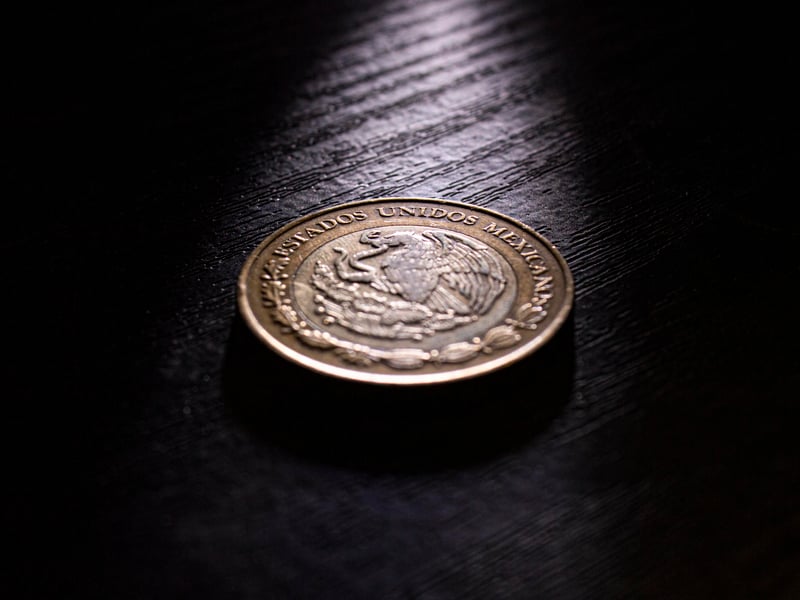
Dubbed the “superpeso" by the Mexican media, the increase in the peso’s valuation turned a corner in early July when the exchange rate dipped below 17 pesos to the dollar, the first time it has entered that territory since 2015.
After flirting with the 17-to-one rate for a weekend later in the month, the peso again began to increase in value. It opened Monday morning at 16.72 pesos to the dollar.
But like the Federal Reserve’s hoped-for “soft landing” for the U.S. economy, Mexico’s financial good fortune is not guaranteed, Banco BASE said in a report published Monday.
“Mexico’s economy is showing good growth, but structural problems … continue,” the report said.
These issues include the predominance of the informal economy, lagging gross fixed investment and Mexico’s dependence on remittances from the United States to drive consumption.
Mexico’s gross domestic product saw growth of 0.91% in the second quarter of 2023, down slightly from the 1.02% growth in the first quarter, according to data from the National Institute of Statistics and Geography.
Year-over-year GDP growth was 3.57%, not far behind that of the U.S., which saw 3.68% GDP growth in the second quarter of 2023 compared to the same time in 2022.
The country’s labor market is also flying high. Unemployment dropped to a record 2.68% in June, the lowest observed since Mexico began keeping such statistics in 2005. Even the rate of extended unemployment, which takes into account those of working age not actively looking for work, dropped to a record 10.11% in June.
But the monetary good news is tempered by the fact that over 55% of Mexico’s workers do not participate in the country’s formal economy.
“This means that more than half of Mexico’s workers are in a vulnerable situation, either because their employer does not recognize them as employees or because they work for companies or employers that are not formally registered,” the report said.
Such workers do not receive a number of benefits to which they are entitled by law, including social security and retirement funds.
A stronger peso means that those exchanging from the U.S. dollar get less bang for their buck, which could affect several aspects of Mexico’s economy, from exporters to tourism operators to recipients of remittances from family members working in the U.S., the report said.
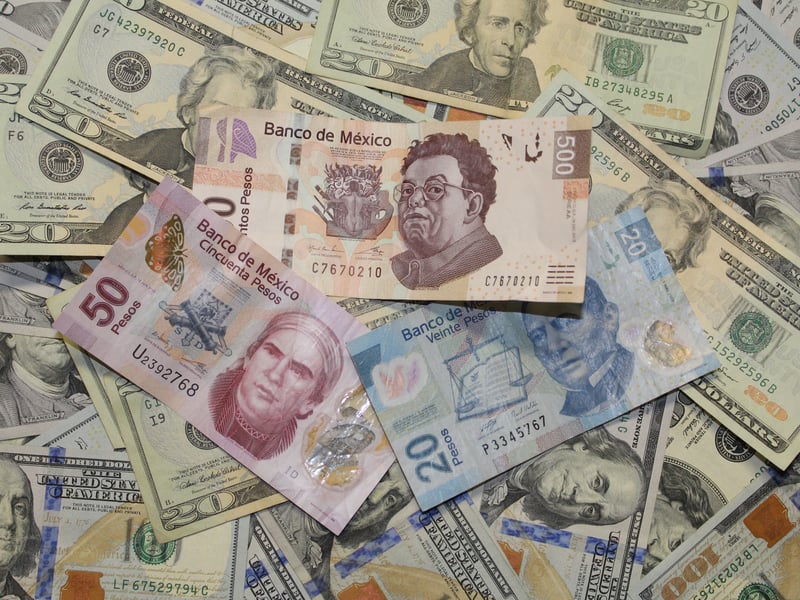
Remittances from the United States reached an all-time high of nearly US $5.7 billion in May, the most recent data point. That month normally sees a higher rate of international money transfers due to Mother’s Day, but the report also attributed the increase to the possibility that Mexican workers in the U.S. have seen a drop in purchasing power and have been forced to send more dollars to make ends meet in pesos.
However, when adjusted for inflation and taking into account the average exchange rate for that month — 17.74 pesos to the dollar — Banco BASE estimated that the flow of these remittances in pesos actually fell by 7.36%. Put simply, Mexican workers in the U.S. are sending more dollars than ever, but their families in Mexico are receiving fewer pesos.
Migrant activists in Mexico confirmed this effect on remittances and the purchasing power of those who depend on them.
“The higher the peso is against the dollar, the less income it represents for families that receive remittances,” said Eunice Rendón, executive director of Agenda Migrante, who added that other factors like higher inflation have also affected this sector’s buying power in recent years.
While Rendón views a stronger peso as beneficial to Mexico’s economy, she does not believe that better economic opportunities at home can do everything needed to create a situation in which Mexicans do not have to emigrate north.
Economic factors are just one variable driving migration from Mexico to the U.S., Rendón said, the other being the extreme violence plaguing the country.
“Violence is what has has principally driven people from Mexico to the United States,” she said. “Of course the stronger peso can help, but we still need to address the violence and threats from criminal groups in order to prevent this emigration.”
Also affecting economic growth, the rate of gross fixed investment — primarily in the transportation and construction sectors — has shown significant recovery since the pandemic, but it still lags behind the all-time high in July 2018.
Banco BASE attributes this slower pace to the consequences of some of President Andrés Manuel López Obrador’s drastic changes in economic policy upon taking office later that year. The trend began when he cancelled the construction then underway of a new airport in Mexico City to build his own airport in nearby Mexico State.
The uncertainty caused by this and other policies of the López Obrador administration led to downgrades in Mexico’s credit quality ratings the following year, which Banco BASE notes came before the pandemic.
“These risk factors can cause disenchantment over the peso or over Mexico, which could cause investors to seek out other currencies for their investments,” said Gabriela Siller, director of economic analysis at Banco BASE.
Factors like Mexico’s trade disputes with the United States also play a role as as threats to the peso’s rising value, according to the report. López Obrador’s opposition to accepting genetically modified corn from the United States, for example, could lead to sanctions under the U.S.-Mexico-Canada Agreement.
The International Chamber of Commerce in June urged López Obrador to drop restrictions on genetically modified corn due to the possible economic consequences. Activists accused the group of unduly exerting pressure on a matter of public policy and food sovereignty.
 Follow @copycopeland
Subscribe to our free newsletters
Our weekly newsletter Closing Arguments offers the latest about ongoing trials, major litigation and rulings in courthouses around the U.S. and the world, while the monthly Under the Lights dishes the legal dirt from Hollywood, sports, Big Tech and the arts.