
 Search Articles


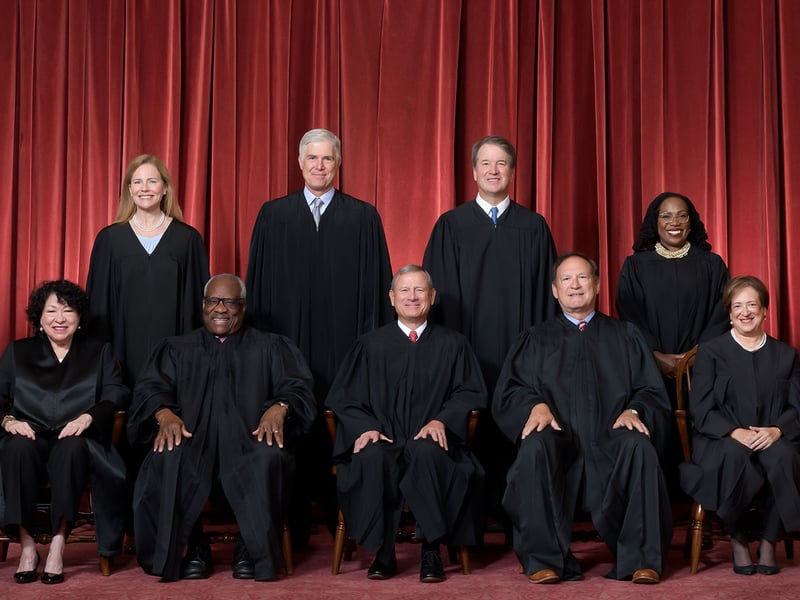
WASHINGTON (CN) — The Supreme Court announced new filing requirements for litigants Tuesday, publicizing the implementation of newly developed software that will run automated recusal checks to help the justices identify potential conflicts of interest.
The updated rules require litigants to identify stock tickers for each party involved in a case. According to a release from the public information office, the justices asked court officials to develop the system after adopting an ethics code in 2023.
“This software will be used to run automated recusal checks by comparing information about parties and attorneys in a case with lists created by each justice’s chambers,” the court said.
Automated conflict check software has been mandated in the lower courts since 2007, and court watchers said some justices were rumored to have continued to use the technology on the high court bench. But the change appears to be in line with the court’s promise to examine best practices on judicial ethics after signing on to their code of conduct.
“It’s not a major improvement, and it shouldn’t have taken 827 days to implement one minor shift,” Gabe Roth, executive director of Fix the Court, said. “If the justices wanted to implement a more effective change related to their ethics and their investments, they’d agree not to own any stocks during their tenures, since all it does is cause unnecessary recusals.”
Fix the Court, a judicial watchdog group that tracks potential conflicts of interest, identified only two justices who hold individual stocks: Chief Justice John Roberts and Justice Samuel Alito, both George W. Bush appointees.
Roberts holds shares in biotech and semiconductor companies, according to his latest financial disclosure. But Alito holds shares in over two dozen companies, including Boeing, PNC Bank and Procter & Gamble.
Last month, Alito issued a belated recusal from an environmental case because of his financial interest in ConocoPhillips, the parent corporation for an oil and gas company. Alito said he initially decided not to recuse because Burlington Resources Oil and Gas Company was dismissed from the case. However, he said that later briefing noted that Burlington remained a party in the lower court.
A coalition of policy organizations and judicial advocacy groups called for a congressional investigation into Alito for what they described as a pattern of ethical malfeasance.
Under the code of conduct, each justice is responsible for policing themselves. The court has no mechanism for what should happen if a justice fails to acknowledge they violated the code.
In 2024, Justice Neil Gorsuch, a Donald Trump appointee, issued a similarly belated recusal from a different environmental case involving a proposed Utah oil and gas rail line. Gorsuch did not detail his ethical conflict, but he was pressured to recuse from the case because of his ties to an oil billionaire who stands to profit from the ruling.
This month, the American Bar Association’s house of delegates called on the Supreme Court to modify its 2023 ethics code to include an “appropriate enforcement mechanism” that would bring the high court’s standards in line with those established for lower court judges by the U.S. Judicial Conference.
Congressional Democrats pushed the justices to consider the association’s recommendations, writing a letter to Roberts saying it would be “irresponsible” for the high court to ignore pleas from Congress and legal experts to address deficiencies in its current ethical standards.
In January, Representative Joe Morelle proposed a stock ownership ban for the justices and lower court judges. Roth said stock ownership causes unnecessary recusals, noting the justices could receive similar benefits from holding a blended fund, mutual fund or ETF without as high a conflict exposure.
“Public service requires certain sacrifices in the name of ethics, and I believe no stock ownership for federal judges and justices should be one of them,” Roth said.
According to the court, the automated recusal checks will serve as an addition to the existing conflict-checking procedures in chambers. The new rules will take effect March 16.
 Follow @KelseyReichmann
 Follow @kelseyreichmann.bsky.social
Subscribe to our free newsletters
Our weekly newsletter Closing Arguments offers the latest about ongoing trials, major litigation and rulings in courthouses around the U.S. and the world, while the monthly Under the Lights dishes the legal dirt from Hollywood, sports, Big Tech and the arts.