
 Search Articles


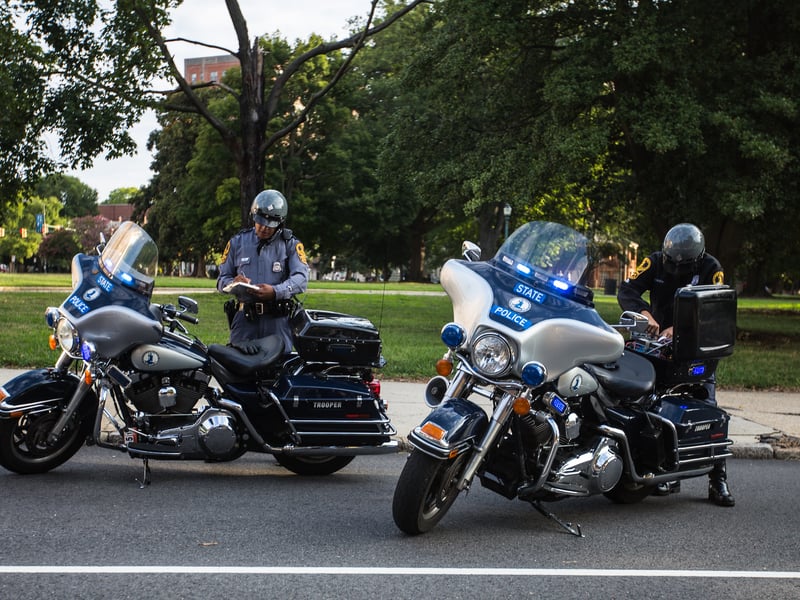
WASHINGTON (CN) — A deadly traffic stop in Texas needs a second look, the Supreme Court ruled Thursday, rejecting a two-second rule that restricts excessive force reviews focused on the moment an officer feels threatened.
In a unanimous decision, the high court ruled that the required “totality of the circumstances” review should not have any time limit, noting that the “moment-of-threat” rule prevented lower courts from considering any preceding circumstances, like the reason for a stop or earlier interactions.
Justice Elena Kagan, a Barack Obama appointee, wrote in the court’s opinion that the rule improperly narrowed the necessary Fourth Amendment analysis in any excessive force case, such as the 2016 fatal shooting at the center of the case.
“To assess whether an officer acted reasonably in using force, a court must consider all the relevant circumstances, including facts and events leading up to the climactic moment,” Kagan wrote.
Harris County, Texas, police officer Roberto Felix shot and killed Ashtian Barnes in a 2016 traffic stop. Janice Hughes Barnes, Barnes’ mother, sued Felix saying he used excessive force in violation of her son’s rights.
Barnes was driving a rental car to pick up his girlfriend’s daughter when a toll road camera flagged his vehicle for unpaid tolls. During the stop, Felix claimed that Barnes tried to drive off after failing to present his license. In the span of three seconds, Felix jumped onto the moving car and shot Barnes twice. Barnes bled out in the driver’s seat as Felix held him at gunpoint.
Based on the two-second window when the car accelerated, a lower court and the Fifth Circuit found that Felix hadn’t acted with excessive force. Barnes said the courts incorrectly limited their review to the moment of threat instead of considering the totality of circumstances.
The core question, Kagan wrote, was whether Felix’s actions were justified from “the perspective of a reasonable officer on the scene” while considering both individual liberty and governmental interests tied to police action.
By reviewing the totality of the circumstances, the context surrounding a shooting could benefit either party.
“Prior events may show, for example, why a reasonable offer would have perceived otherwise ambiguous conduct of a suspect as threatening,” Kagan said. “Or instead they may show why such an officer would have perceived the same conduct as innocuous.”
She pointed to the Supreme Court’s 2014 decision in *Plumhoff v. Rickard, * another excessive-force case where a driver was shot and killed after a five-minute car chase when the driver crashed into a police cruiser.
The driver’s daughter sued, arguing the officer fired when the chase was already over, a position the high court rejected based on the “outrageously reckless” behavior throughout the chase and his “last-second efforts to again take flight.”
“Given all of those events, the court explained, a reasonable officer would have concluded that the driver was ‘intent on resuming’ his getaway and, if allowed to do so, would ‘again pose a deadly threat for others,’” Kagan said.
In Barnes’ case, the lower and Fifth Circuit courts were limited to the two seconds before the shooting, after Felix stepped onto the doorsill of Barnes’ car, and thus could not consider the reasons for the stop or the earlier interactions between the two men.
If that rule were applied to *Plumhoff, * Kagan said, the courts would only view the case just moments after the crash, while the car was “at a standstill,” rather than any of the chase.
Justice Brett Kavanaugh, joined by justices Clarence Thomas, Samuel Alito and Amy Coney Barrett, wrote a concurrence to expand on “the dangers of traffic stops for police officers,” particularly when a driver pulls away.
Kavanaugh, a Donald Trump appointee, wrote that such instances pose a difficult situation for officers, who must decide whether to let the driver go, give chase, jump on the car or “try to shoot out the tires of the fleeing car.”
He said it’s one thing for judges to review such “split-second judgments” in a peaceful courtroom, and another to make them on the ground.
The high court vacated the Fifth Circuit’s ruling and remanded the case for further proceedings.
During oral arguments in January, the justices seemed inclined to narrowly side with Barnes, seeking a clean getaway from the potentially thorny issues of deadly traffic stops.
 Follow @KelseyReichmann
 Follow @kelseyreichmann.bsky.social
Subscribe to our free newsletters
Our weekly newsletter Closing Arguments offers the latest about ongoing trials, major litigation and rulings in courthouses around the U.S. and the world, while the monthly Under the Lights dishes the legal dirt from Hollywood, sports, Big Tech and the arts.