
 Search Articles


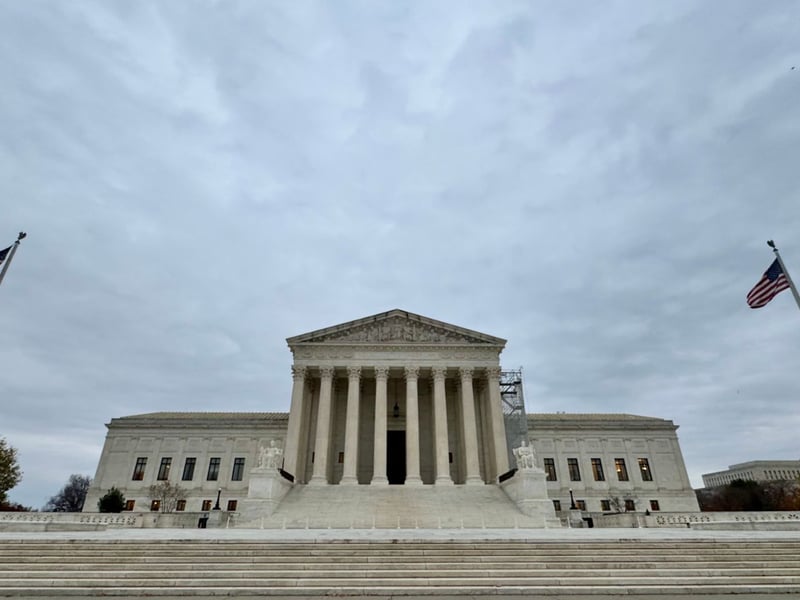
WASHINGTON (CN) — The Supreme Court on Thursday ruled that a Catholic nonprofit in Wisconsin qualified for tax-exempt status, expanding tax breaks to religiously affiliated companies.
Writing for a unanimous court, Justice Sonia Sotomayor said that Wisconsin’s religious tax exemption unconstitutionally discriminated against Catholic nonprofits based on theological practices.
“It is fundamental to our constitutional order that the government maintain ‘neutrality between religion and religion,’” Sotomayor, a Barack Obama appointee, wrote. “There may be hard calls to make in policing that rule, but this is not one.”
Wisconsin denied Catholic Charities, an umbrella organization, the religious tax exemption because it functioned like a secular nonprofit. Through its affiliated subentities, the group provides shelter to the elderly and poor, assists individuals with mental and physical illnesses and offers daily living and job training for people with disabilities.
Catholic Charities claimed that the nonprofits expressed the social ministry of the church. Rejecting the bid because the nonprofits didn’t proselytize, Catholic Charities argued, discriminated based on religion.
“In the end, this is a religiously pluralistic society, and that calls for a generous approach to religious exemptions, not a stingy one,” Eric Rassbach, an attorney with the Becket Fund for Religious Liberty representing the nonprofit, said during oral arguments in March.
Wisconsin viewed the tax exemption as comparable to the ministerial exception, exempting religious groups from state employment laws. The state said it aims to avoid government interference with church affairs.
Catholic Charities paid into Wisconsin’s unemployment system for decades before filing for a religious exemption in 2016. The application was denied, however, after the Department of Workforce Development determined the organization isn’t operated primarily for religious purposes.
With religious exempt status, companies are not required to offer employee benefits like unemployment insurance. Employment law advocates worry that expanding the religious tax exemption could be detrimental to the unemployment system.
The Economic Policy Institute said a large base of employers is necessary to spread out the costs and benefits of the system. By collecting funds from many employers during periods of stable employment, the system ensures it can pay out benefits during periods of high unemployment.
If all of Wisconsin’s religiously affiliated nonprofits opted out of the system during the Covid-19 pandemic, the state economy would have lost at least $26.4 million in federal benefits.
The Supreme Court, however, was more concerned with Wisconsin violating the nonprofit’s First Amendment rights. Sotomayor said laws that differentiate between religions based on theological lines were textbook denominational discrimination.
Wisconsin determined that Catholic Charities was controlled by the church and motivated by religion. However, Sotomayor said the nonprofits were found ineligible for the tax exemption because they did not imbue program participants with the Catholic faith.
“Much like a law exempting only those religious organizations that perform baptisms or worship on Sundays, an exemption that requires proselytization or exclusive service of co-religionists establishes a preference for certain religions based on the commands of their religious doctrine,” Sotomayor wrote.
Since the 1970s, over 40 states have adopted religious tax exemptions similar to the Federal Unemployment Tax Act.
Justice Ketanji Brown Jackson, a Joe Biden appointee, attempted to limit the breadth of the court’s ruling. In a concurring opinion, Jackson explained that the religious tax exemptions should turn on what an entity does, not how or why it does it.
“Congress sought to extend to most nonprofit workers the stability that unemployment insurance offers, while exempting a narrow category of church-affiliated entities most likely to cause significant entanglement problems for the unemployment system — precisely because their work involves preparing individuals for religious life,” Jackson wrote. “It is perfectly consistent with the opinion the court hands down today for states to align their §3309(b)(1)(B)-based religious-purposes exemptions with Congress’s true focus.”
Justice Clarence Thomas, a George H.W. Bush appointee, however, seemed to take the opposite tack. Thomas said the Wisconsin Supreme Court also violated the church autonomy doctrine when finding that the nonprofit was distinct and separate from the church itself.
“When deciding whether an employer qualifies as a religious institution, a civil court must accept the employer’s understanding of its internal structure, just as it must accept the employer’s understanding of its religious beliefs generally,” Thomas wrote.
Thomas said that he viewed Catholic Charities as an arm of the diocese.
“As an arm of the Diocese from the Bishop’s perspective, Catholic Charities and its subentities must qualify as well, regardless of whether their activities, considered in isolation, would qualify as religious,” Thomas wrote.
Bishop James Powers, Bishop of the Diocese of Superior, said the church was grateful that the court unanimously recognized that serving the poor was part of their religious exercise.
“At the heart of Catholic Charities’ ministry is Christ’s call to care for the least of our brothers and sisters, without condition and without exception,” Powers said in a statement.
Becket, which represented Catholic Charities before the court, called the ruling a resounding victory for the First Amendment.
“Wisconsin shouldn’t have picked this fight in the first place,” Eric Rassbach, vice president and senior counsel at Becket, said in a statement. “It was always absurd to claim that Catholic Charities wasn’t religious because it helps everyone, no matter their religion.”
 Follow @KelseyReichmann
 Follow @kelseyreichmann.bsky.social
Subscribe to our free newsletters
Our weekly newsletter Closing Arguments offers the latest about ongoing trials, major litigation and rulings in courthouses around the U.S. and the world, while the monthly Under the Lights dishes the legal dirt from Hollywood, sports, Big Tech and the arts.