
 Search Articles


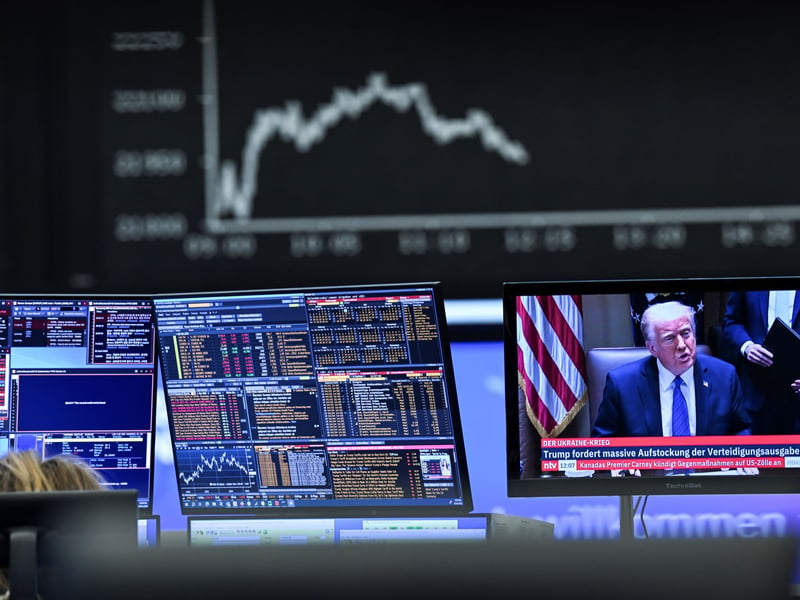
WASHINGTON (CN) — The Supreme Court agreed on Tuesday to quickly resolve a major legal battle over President Donald Trump’s authority to unilaterally wage a global tariff war.
Tossing their typical briefing schedule out the door, the justices set a breakneck briefing schedule to hear arguments in the case during the first week of November. The speedy review gives the parties in the case only weeks to undertake a monthslong process, however, it could allow the court to rule on the closely watched appeal by the end of the year.
Trump claimed vast executive authority in April to levy “Liberation Day” tariffs under the International Emergency Economic Powers Act, a Nixon-era law granting presidents broad authority over economic matters during emergencies. IEEPA, as the 1977 statute is commonly known, was designed to curb earlier emergency powers under the Trading with the Enemy Act.
Instead, Trump declared a national emergency on trade deficits and fentanyl trafficking to implement sweeping global tariffs without congressional authority.
A federal appeals court rejected Trump’s use of the statute, ruling his power to regulate imports under IEEPA doesn’t extend to sweeping “reciprocal” or trafficking tariffs.
The White House claimed the ruling “cast a pall of legal uncertainty over the president’s efforts to protect our country by preventing an unprecedented economic and foreign policy crisis.”
Trump urged the justices to review the case quickly, arguing the appeals court undercut his authority on the world stage.
“World leaders are questioning the president’s authority to impose tariffs, walking away from delaying negotiations, and/or imposing a different calculus on their negotiating positions,” Treasury Secretary Scott Bessent wrote in a declaration to the court.
A coalition of small businesses and 12 states claimed that Trump’s use of IEEPA was unlawful; however, they supported his petition at the Supreme Court.
“This case of undoubted importance requires resolution by this court,” the companies wrote in a brief before the court.
The businesses stated that they were facing severe economic hardships due to price increases and supply chain disruptions caused by the tariffs.
“As one of the respondents has explained, these impacts are ‘not survivable for a business of its size,’” the companies wrote.
However, the companies stressed that their acquiescence should not be mistaken for agreement with the government’s arguments.
They argued Trump’s blanket tariffs were unlawful under the major questions doctrine, which the Supreme Court used to strike down Biden’s student loan forgiveness plan. The major questions doctrine limits executive agencies to only acting on issues of national significance with clear congressional approval.
The D.C. Circuit noted Trump’s tariffs are projected to have a much larger economic impact than the two cases where the Supreme Court applied the doctrine —Biden v. Nebraska and Alabama Association of Realtors v. Department of Health & Human Services , which carried $50 billion and $519 billion impact, respectively.
 Follow @KelseyReichmann
 Follow @kelseyreichmann.bsky.social
Subscribe to our free newsletters
Our weekly newsletter Closing Arguments offers the latest about ongoing trials, major litigation and rulings in courthouses around the U.S. and the world, while the monthly Under the Lights dishes the legal dirt from Hollywood, sports, Big Tech and the arts.