Search Articles


WASHINGTON (CN) — The Supreme Court paved the way on Thursday for President Donald Trump to restart immigration agents’ controversial practice of physically blocking migrants from seeking asylum at the border.
Under the Immigration and Nationality Act, anyone who is physically present in the United States — whether or not at a designated port of entry — can seek asylum if they have a well-founded fear of persecution in their home country.
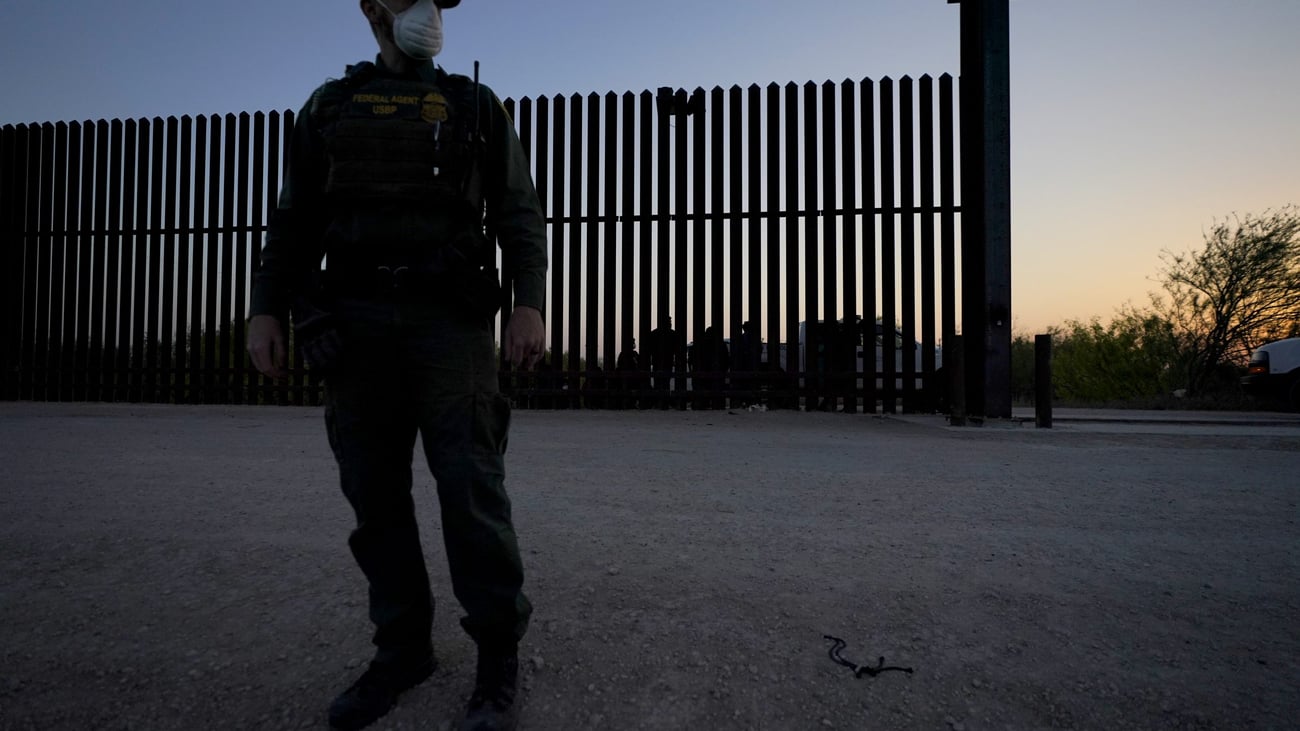
During his first term, Trump formalized “metering guidance,” ordering border agents to prevent migrants from seeking asylum by physically blocking them from setting foot over the border. The president hasn’t formally reinstated the turnback policy — which was rescinded during the Biden administration — but he pushed the justices to reverse an appeals court ruling finding it unlawful.
In a 6-3 ruling, the conservative majority agreed to do so. Justice Samuel Alito, a George W. Bush appointee, said migrants aren’t entitled to asylum protections until they physically “arrive in” the U.S. by setting foot across the border.
“A person arrives in a destination when he enters within its area — not before,” Alito wrote for the majority.
Leading the dissent, Justice Sonia Sotomayor, a Barack Obama appointee, said the majority’s decision allows border officials to ignore their legal obligations and turn away refugees even if doing so would result in the persecution they sought to escape.
“The majority ignores the statutory context and history, not to mention the longstanding position of the Executive Branch, all of which show that any noncitizen arriving at our doorstep and seeking admission must be inspected and allowed to apply for asylum, regardless of whether her foot has crossed the threshold,” Sotomayor wrote. “Because the court today blesses the executive branch’s decision to slam the door shut on all who are fleeing persecution, despite the detailed inspection and asylum system that Congress enacted and commands, I respectfully dissent.”
Border turnbacks originated in 2016 during an influx of Haitian asylum-seekers at Southern California’s San Ysidro port of entry. The Obama administration began ordering border agents to turn away newly arriving migrants. Two years later, the Department of Homeland Security formalized the policy, giving all southern border ports “metering guidance.”
The first Trump administration implemented an additional roadblock in 2019, making migrants who traveled through one or more countries on their way to the U.S. ineligible for asylum if they did not previously seek protection in at least one transit country.
A lower court certified a class for the asylum-seekers who had arrived prior to Trump’s transit rule and issued an injunction reopening claims that had been denied based on the 2019 policy. That class allowed the case to continue after the Biden administration rescinded the metering policy in 2021. The transit rule was later rescinded in 2023.
In 2022, the lower court issued a permanent injunction barring the government from applying the asylum prohibitions to that class and said its members were entitled to seek asylum under prior policy guidance.
To decide whether the remedy should be upheld, the Ninth Circuit reviewed the lawfulness of the metering policy. The panel sided with the asylum-seekers, rejecting the government’s arguments that migrants who were turned away from ports of entry were not unlawfully denied asylum under the metering policy because they were not physically present in the U.S.
When the Supreme Court reviewed Trump’s appeal in March, the justices were sympathetic to the government’s case. However, they spent a significant portion of the argument attempting to decipher the intricacies of when migrants could be considered “in” the U.S.
According to the conservative majority, the proposition “in” means within the limits, bounds or area of. Therefore, Alito said, a person arrives in a geographic location only when he enters it.
Alito provided a series of examples to confirm the court’s understanding.
“A running back does not arrive in the end zone when he reaches the 1-yard line,” Alito wrote. “A guest does not arrive in a house when he knocks on the front door. An army does not arrive in a city by encamping outside its walls.”
The dissent provided counter examples of when the natural reading of “arriving in” and “arrives in” do not require the person to be physically inside the relevant space.
“If someone said, ‘Call me when you arrive in Washington, D.C.,’ it would be logical to call them once you have landed at DCA Airport, just across the river in Virginia,” Sotomayor said. “Nor would it be premature to say someone ‘arrives in’ San Francisco while she is still driving on the Golden Gate Bridge.”
Sotomayor read sections of her dissent from the bench during Thursday’s opinion announcement, drawing on the historical context of the asylum system to refute the majority’s holding. She described the U.S. government’s infamous decision to turn away Jewish refugees fleeing Nazi Germany.
“Congress passed the Refugee Act in 1980 because it did not want this country to repeat the mistakes of its past,” Sotomayor wrote. “Yet if the refugees on the M.S. St. Louis were to walk up to a port of entry on our southern border today, the majority’s interpretation would allow immigration officers to refuse even to consider their asylum applications by physically blocking them from stepping foot onto U.S. soil.”
Dissenting justices typically only read opinions from the bench in cases of particular importance. In a rare move, Alito admitted that he was unaware Sotomayor intended to do so in this case.
After she finished speaking, Alito interjected, stating there “was much he would have added” if he had known about Sotomayor’s bench statement in advance.
Justice Ketanji Brown Jackson, a Joe Biden appointee, penned an additional dissent, remarking on the court’s decision to rule on the case even though the Trump administration has not said whether it would reinstate the policy.
Jackson said the court’s “advisory opinion” rushed “to greenlight this retired practice.”
“The court is not a law student puzzling through a difficult cold call,” Jackson wrote.
She said the absence of a policy forced the court to rely on metaphors about a linebacker and houseguests because there are no actual facts to grapple with.
“No one knows how, if at all, the reasoning drawn from these metaphors will map on to the realities of a future metering policy,” Jackson wrote. “All we can do now is guess.”
 Follow @KelseyReichmann
 Follow @kelseyreichmann.bsky.social
Subscribe to our free newsletters
Our weekly newsletter Closing Arguments offers the latest about ongoing trials, major litigation and rulings in courthouses around the U.S. and the world, while the monthly Under the Lights dishes the legal dirt from Hollywood, sports, Big Tech and the arts.