
 Search Articles


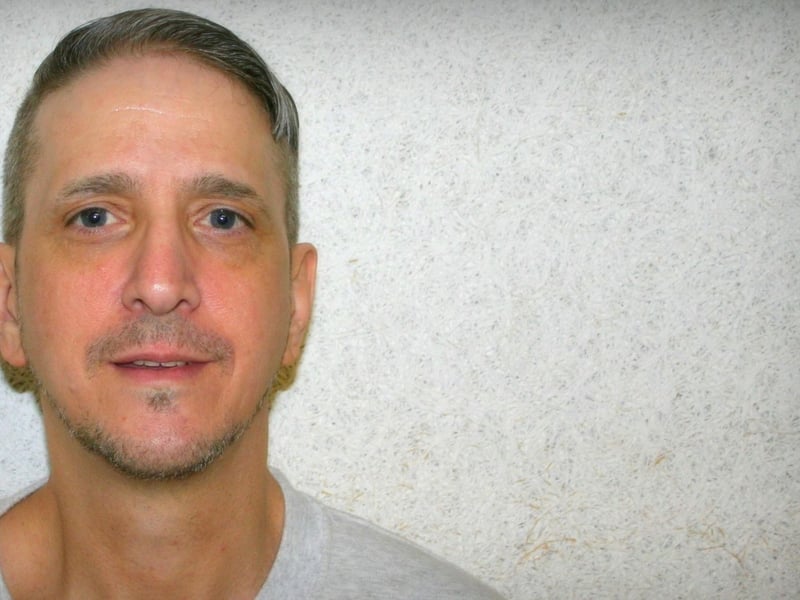
WASHINGTON (CN) — Richard Glossip prevailed in his decadeslong bid for a new trial on Tuesday, as the Supreme Court granted him another chance to prove his innocence.
In a breakthrough win for Glossip, the Supreme Court ruled that Oklahoma prosecutors violated their constitutional obligation to correct false testimony, necessitating a new trial.
“Today was a victory for justice and fairness in our judicial system,” Don Knight, Glossip’s longtime attorney, said in a statement following the ruling. “Rich Glossip, who has maintained his innocence for 27 years, will now be given the chance to have the fair trial that he has always been denied.”
Glossip was sentenced to death for the 1996 murder of hotel owner Barry Van Treese. At the time, Glossip worked as the motel’s manager with fellow employee Justin Sneed. Sneed pleaded guilty to Van Treese’s murder, but he accused Glossip of hiring him to commit the crime.
Sneed was prosecutors’ only direct connection between Glossip and the murder, but testimony from Oklahoma’s star witness is now at the heart of Glossip’s innocence appeal.
Sneed’s testimony was central to the downfall of Glossip’s conviction at the Supreme Court. In a 5-3 ruling, the majority held that prosecutors’ failure to correct Sneed’s testimony violated Glossip’s due process rights.
Justice Sonia Sotomayor wrote the opinion of the court, joined by Chief Justice John Roberts and justices Elena Kagan, Brett Kavanaugh and Ketanji Brown Jackson. Justice Neil Gorsuch, a Donald Trump appointee, recused from the case. Kagan was appointed by Barack Obama; Jackson is a Joe Biden appointee.
Glossip’s more than 20 year fight to prove his innocence caught fire in 2022 when Oklahoma Attorney General Gentner Drummond uncovered boxes of evidence that prosecutors never turned over to the defense. Glossip’s attorneys argued that the hidden documents violated Brady v. Maryland .
Both state lawmakers and Drummond commissioned independent investigations into Glossip’s prosecution, finding serious problems undermining the case. Despite those extensive reports, the Oklahoma Court of Criminal Appeals refused to grant Glossip a new trial.
Glossip urged the Supreme Court to reverse. During oral arguments in October, his attorneys said Sneed’s lies about his bipolar disorder and visit with a psychiatrist could have been used by the defense to undermine his credibility.
Sotomayor, a Barack Obama appointee, said the case record supported Glossip’s claim. The majority said prosecutors violated *Napue v. Illinois * when they failed to reveal that Sneed lied about his bipolar diagnosis and his lithium prescription.
“Because Sneed’s testimony was the only direct evidence of Glossip’s guilt of capital murder, the jury’s assessment of Sneed’s credibility was necessarily determinative here,” Sotomayor wrote. “Besides Sneed, no other witness and no physical evidence established that Glossip orchestrated Van Treese’s murder. Thus, the jury could convict Glossip only if it believed Sneed.”
Sotomayor said Sneed’s lies undermined his credibility and proved that he was willing to lie under oath. This was particularly significant, the high court found, because Sneed was already “nobody’s idea of a strong witness.”
Sotomayor said the Napue violation and additional misconduct claims against prosecutors undermined confidence in the verdict. Instead of sending the case back to the lower court, the majority said prosecutors’ due process violations entitled Glossip to a new trial.
“Because prejudice analysis requires a ‘cumulative evaluation’ of all the evidence, whether or not that evidence is before the court in the form of an independent claim for relief, these documents reinforce our conclusion that the Napue error here prejudiced the defense,” Sotomayor wrote.
Oklahoma took the rare step of arguing in favor of Glossip. The state said the lower court didn’t adequately consider the gravity of the attorney general’s concerns about Glossip’s conviction.
The Supreme Court appointed Christopher Michel, an attorney with Quinn Emanuel who previously clerked with Roberts, a George W. Bush appointee, and Kavanaugh, a Donald Trump appointee, to defend the lower court ruling.
In dissent, Justice Clarence Thomas and Justice Samuel Alito, a George W. Bush appointee, said that the majority overstepped, stating that the case should have been remanded. Sotomayor pushed back on this claim, saying that the facts underlying the Napue finding were conceded by the attorney general and supported by the record.
“There is no reason to allow state courts a second (or third, or fourth) bite at the apple to identify alternative state grounds for their decision in every case involving a dependent ground,” Sotomayor wrote.
Thomas, a George H.W. Bush appointee, called the ruling a violation of black-letter law, claiming that the Supreme Court didn’t have jurisdiction to review the criminal appeals court’s ruling or order a new trial.
When agreeing to review the case, the justices asked the parties to present arguments on the Supreme Court’s jurisdiction over the appeal. The majority concluded that the high court had jurisdiction to review the state court ruling because the holding turned on federal law.
Thomas disagreed, stating that the majority “grossly mischaracterized” the state court’s analysis. According to Thomas, the Oklahoma Court of Criminal Appeals held that state post-conviction relief statutes barred any relief on Napue — sequestering the ruling to state court grounds.
Even if the justices had jurisdiction, Thomas said Sneed’s lies weren’t relevant to the underlying case and accused the majority of fashioning a “defendant-friendly standard” to rule in Glossip’s favor.
“After having bent the law at every turn to grant relief to Glossip, the court suddenly retreats to faux formalism when dealing with the victim’s family,” Thomas wrote.
Thomas focused heavily on claims from the Van Treese family that an amicus presented for the first time at the Supreme Court. He said the majority denied the victim’s family their day in court by failing to order an evidentiary hearing on those claims.
“Even if the family had no formal right to be heard, any reasonable factfinder plainly could consider the account of the evidence that the family has brought to light, making the majority’s procedural objections beside the point,” Thomas wrote. “Make no mistake: The majority is choosing to cast aside the family’s interests. I would not.”
Justice Amy Coney Barrett, a Donald Trump appointee, landed in the middle of the majority and dissent. She agreed that the Supreme Court had jurisdiction to hear the appeal; however, she rejected the call for a new trial.
Glossip’s win comes after decades of litigation and several execution dates. When the Supreme Court reviewed a previous appeal from him on Oklahoma’s execution protocol, he was only minutes away from lethal injection before the governor stepped in to halt the procedure because the Department of Corrections bought the wrong drug.
David Weiss, who co-led Reed Smith’s pro bono investigation for Oklahoma lawmakers, said the court’s ruling confirmed what the independent investigation found three years prior. Weiss’ report said that Glossip’s conviction was heavily flawed from the outset — stating that Glossip shouldn’t have been charged in the first place.
“The result achieved today is only possible because of a herculean effort by everyone involved in the case seeking to correct this injustice,” Weiss said in a statement. “That it takes so many people, working literally tens of thousands of hours, to convince five Supreme Court justices that his conviction was so flawed, suggests that our system of justice needs serious reform. Today we are grateful, but more work needs to be done.”
Robert Dunham, director at the Death Penalty Policy Project, said in a email, “The Supreme Court clearly got it right. An innocent man’s life has been spared — at least for now. But that is only part of the story.”
Dunham said Glossip shouldn’t have had to fight so hard for a fair trial. Instead, Dunham said, the courts failed Glossip time and time again.
“Richard Glossip’s case shows how easy it is for a state to condemn an innocent man to die and how hard it is to set him free,” Dunham said. “Every year, states cavalierly execute people who may well have been innocent. But we’ve had more than 700 death penalty cases overturned because of misconduct by police and prosecutors and more and more exonerations in cases in which prisoners have spent decades on death row with prosecutors pushing to deny them access to the courts.”
 Follow @KelseyReichmann
 Follow @kelseyreichmann.bsky.social
Subscribe to our free newsletters
Our weekly newsletter Closing Arguments offers the latest about ongoing trials, major litigation and rulings in courthouses around the U.S. and the world, while the monthly Under the Lights dishes the legal dirt from Hollywood, sports, Big Tech and the arts.