
 Search Articles


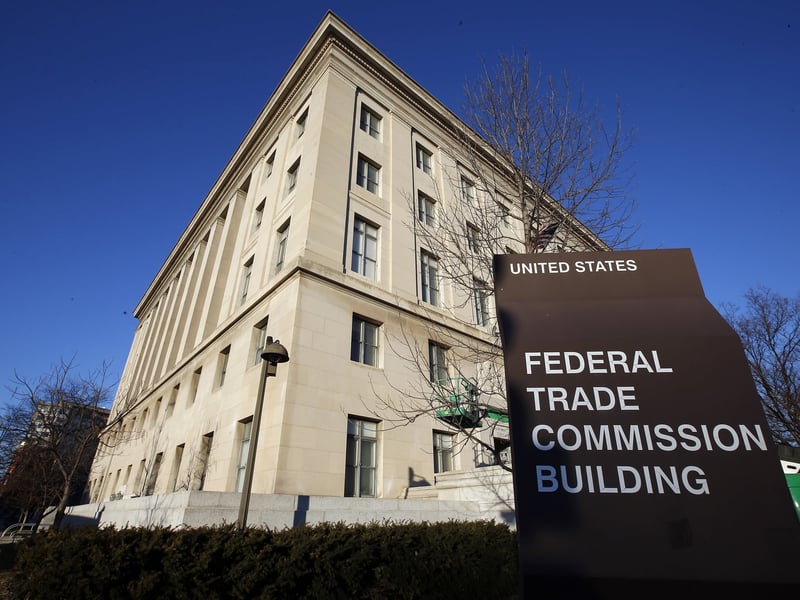
WASHINGTON (CN) — President Donald Trump secured a major victory at the Supreme Court on Monday, receiving the go-ahead to fire a Federal Trade Commission member protected by nearly a century of precedent.
The 6-3 ruling allows Trump to fire Democratic Commissioner Rebecca Slaughter for now. However, the justices also agreed to hear arguments in the case during their upcoming term.
Chief Justice John Roberts issued an administrative stay on Sept. 8, allowing Trump to fire Slaughter while the high court considered his emergency appeal.
Justice Elena Kagan, a Barack Obama appointee, led her liberal colleagues in dissent, chastising the court for allowing Trump to get rid of Slaughter before arguments were heard.
“Our emergency docket should never be used, as it has been this year, to permit what our own precedent bars,” Kagan wrote. “Still more, it should not be used, as it also has been, to transfer government authority from Congress to the president, and thus to reshape the nation’s separation of powers.”
Trump asked the justices to allow him to keep Slaughter off the commission while the courts decided whether he had authority to terminate her without cause. According to the White House, Trump’s removal power is “conclusive and preclusive,” which the administration said meant it “may not be regulated by Congress or reviewed by the courts.”
The legal battle directly challenges the court’s landmark 1935 ruling in Humphrey’s Executor v. United States , which limited presidential authority over independent commissions.
Under Humphrey’s Executor , regulators can only be fired for misconduct — not because their decisions aren’t favorable to the current administration.
Kagan said that Congress restricted the president’s authority to fire an FTC commissioner without reason.
“To reach a different result requires reversing the rule stated in Humphrey’s : It entails overriding rather than accepting Congress’s judgment about agency design,” Kagan wrote.
The conservative supermajority has severely curtailed the 90-year precedent in recent months, ceding to Trump’s repeated requests to dismiss ideological foes. This emergency appeal — the 23rd of Trump’s second term — could effectively overturn the ruling without the high court’s thorough review.
Kagan suggested that the court’s decision to schedule arguments in the case suggested that they were ready to overrule Humphrey’s once and for all.
“But until the deed is done, Humphrey’s controls, and prevents the majority from giving the president the unlimited removal power Congress denied him,” Kagan wrote. “Because the majority’s stay does just that, I respectfully dissent.”
A panel on the D.C. Circuit refused to remove the commissioner, relying on Humphrey’s . Slaughter said that her case was a mirror to the facts involved in the precedent, involving the same provision of the FTC Act.
But Trump characterized the appeals court’s rejection as “subverting the hierarchy of the federal court system created by the Constitution and Congress,” citing the Supreme Court’s recent shadow docket rulings.
“[The lower courts] have made clear that, regardless of recent developments on [this] court’s emergency docket,’ they will adhere to their expansive and incorrect interpretation of Humphrey’s Executor ,” U.S. Solicitor General John Sauer wrote in an emergency appeal. “And they have explained that they will persist in that adherence ‘unless and until’ this court grants certiorari and overrules that decision.”
Slaughter countered that the lower courts were following the high court’s own rulings.
“If that directive does not apply here, it’s hard to see when it would,” Slaughter wrote. “Accordingly, granting applicants’ request would undermine the authority of this court and effectively vitiate an important and longstanding principle of sound judicial administration.”
Slaughter said that the emergency docket wasn’t the appropriate forum to overturn nearly a century of precedent. She urged the justices to force Trump to follow the same rules every other president has abided by.
“If the president is to be given new powers Congress has expressly and repeatedly refused to give him, that decision should come from the people’s elected representatives,” Slaughter wrote. “At a minimum, any such far-reaching decision to reverse a considered congressional policy judgment should not be made on the emergency docket.”
Trump suggested that the justices skip a pending merits review by the appeals court, pushing the high court to take on the review itself.
“Uncertainty about the continued status of Humphrey’s Executor and the constitutionality of statutory removal protections is disrupting the work of federal agencies,” Sauer wrote. “And the ‘downsides of delay in resolving the status of [Humphrey’s Executor ] outweigh the benefits of further lower court consideration.’”
While the lower courts ruled against Trump in Slaughter’s case, the president has had better odds at the Supreme Court. He has filed more than two dozen emergency appeals during his second term, prevailing in over 70% of his requests to overturn lower court rulings.
Attorney General Pamela Bondi celebrated the ruling in a post on X.
“This helps affirm our argument that the President, not a lower court judge, has hiring and firing power over executive officials,” [Bondi wrote](http://This helps affirm our argument that the President, not a lower court judge, has hiring and firing power over executive officials. We will continue fighting and winning in court to defend President Trump’s agenda.). “We will continue fighting and winning in court to defend President Trump’s agenda.”
 Follow @KelseyReichmann
 Follow @kelseyreichmann.bsky.social
Subscribe to our free newsletters
Our weekly newsletter Closing Arguments offers the latest about ongoing trials, major litigation and rulings in courthouses around the U.S. and the world, while the monthly Under the Lights dishes the legal dirt from Hollywood, sports, Big Tech and the arts.