
 Search Articles


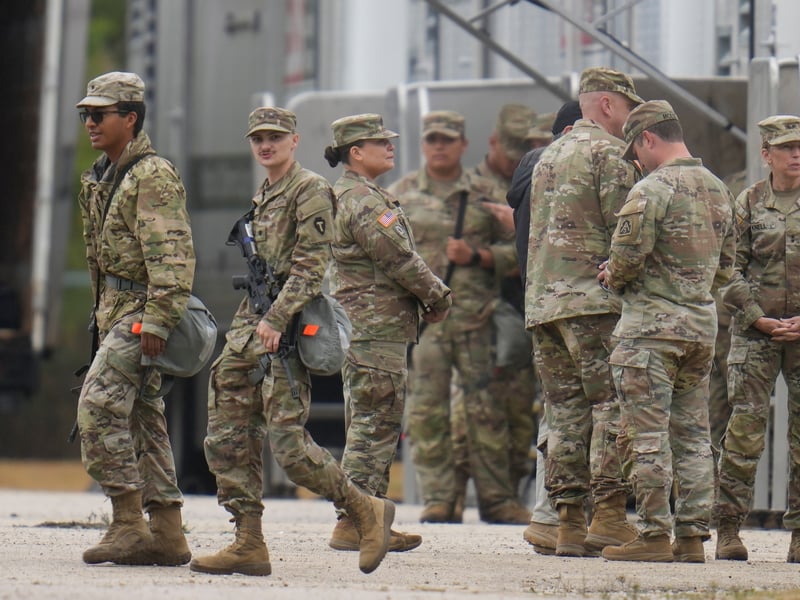
WASHINGTON (CN) — The Supreme Court on Wednesday asked President Donald Trump to answer additional questions about whether the federal government met the requirements necessary to deploy the National Guard to Chicago.
According to the White House, National Guard troops need to be deployed because federal officials have been unable to execute immigration law with “regular forces,” invoking a rarely used statute known as Title 10. The justices want to know whether “regular forces” refers to the U.S. military — not federal officials as Trump suggests.
Last week, Martin Lederman, a law professor at Georgetown University, suggested that Trump hadn’t met Title 10’s qualifications in a brief before the court. Lederman said the government clearly defined regular forces within Trump’s emergency application as civilian federal law enforcement agencies like Immigrations and Customs Enforcement and the Federal Protective Service.
“It is highly uncommon, however, to refer to such civilian officials and employees as any kind of ‘forces’ at all; and they certainly are not ‘the regular forces’ to which [Title 10] refers,” Lederman wrote. “‘[T]he regular forces’ to which the statute refers are, instead, the standing military forces of the armed services, within the Department of Defense.”
Lederman explained that he’s not suggesting that Trump can deploy the military to execute federal laws in Illinois, just that Trump’s Title 10 claims do not meet muster.
In September, the Department of Homeland Security announced “Operation Midway Blitz,” an effort to ramp up immigration-related arrests in and around Chicago.
A suburban immigration processing facility in Broadview has become the epicenter of the operation, leading to standoffs between protesters and ICE officers. Viral videos have shown officers pointing guns at protesters and deploying smoke grenades and tear gas. One video last month captured an officer throwing Democratic congressional candidate Kat Abughazaleh to the ground.
Earlier on Wednesday, the Justice Department indicted Abughazaleh and six others for assaulting, resisting or impeding officers and conspiracy to impede or injure an officer. Abughazaleh called the charges a political prosecution and an attack on the First Amendment.
Illinois Governor JB Pritzker sued Trump on Oct. 6 to block the deployment of troops, stating that there was no public safety need or emergency. But the White House continues to insist that National Guard troops are necessary to quell protests that the administration says amount to a rebellion.
Stating that Trump wouldn’t “turn a blind eye to lawlessness,” White House spokeswoman Abigail Jackson expressed confidence that the court would side with the president.
“The facts haven’t changed,” Jackson said. “Amidst ongoing violent riots and lawlessness, that local leaders like Pritzker have refused to step in to quell, President Trump has exercised his lawful authority to protect federal officers and assets."
Pritzker’s office did not respond to a request for comment on the Supreme Court’s request for additional briefing. The federal government and Illinois must submit a response to the justices’ question by Nov. 10.
Two lower courts have already determined there is no active rebellion in Chicago, with an appeals court declaring that “political opposition is not rebellion.” A Seventh Circuit panel also unanimously rejected claims that protest activity in Illinois hampered federal officers from executing federal immigration laws.
U.S. Solicitor General John Sauer urged the justices to take immediate action on Oct. 17, claiming that the continued prohibition on the deployment of federal troops increased the risk that officers would be seriously harmed by what he called “violent anti-ICE agitators.”
The justices’ order, however, signals that they do not intend to act anytime soon.
 Follow @KelseyReichmann
 Follow @kelseyreichmann.bsky.social
Subscribe to our free newsletters
Our weekly newsletter Closing Arguments offers the latest about ongoing trials, major litigation and rulings in courthouses around the U.S. and the world, while the monthly Under the Lights dishes the legal dirt from Hollywood, sports, Big Tech and the arts.