
 Search Articles


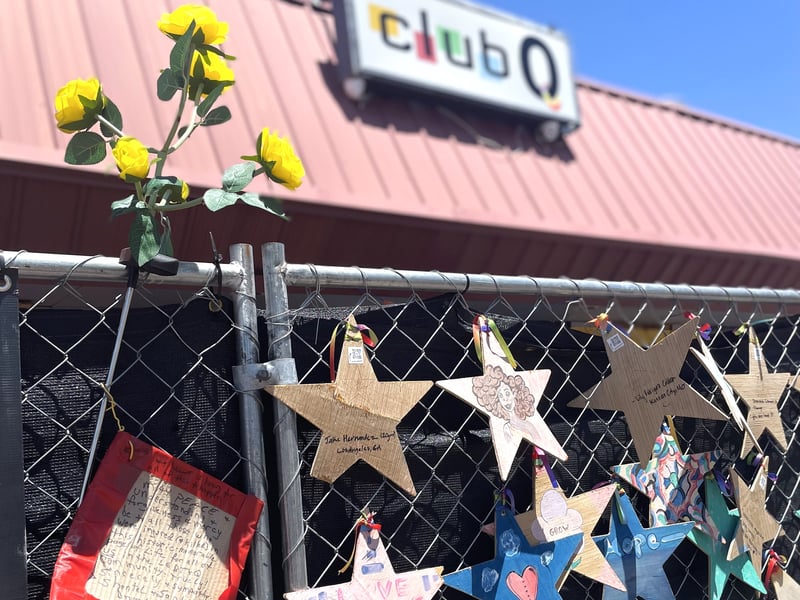
(CN) — The survivors and families of the people murdered in 2022’s mass shooting at Club Q in Colorado Springs, Colorado, can’t hold the club and its owners liable under a state premises liability law, but they can still hold them liable for negligence and wrongful death claims, a Colorado federal judge ruled on Thursday.
On Nov. 22, 2022, Anderson Lee Aldrich entered the LGBTQ nightclub and immediately started firing an assault weapon into a crowd of people celebrating Transgender Day of Remembrance. Aldrich killed five people and injured many more before being subdued by club patrons.
Aldrich later pled guilty to murder, injuring 19 and attempting to murder 26 more, and 74 hate crimes and firearms charges. He was sentenced to five concurrent life sentences in June 2023.
Families and survivors of the mass shooting filed suit against then-El Paso County Sheriff Bill Elder, along with the county commissioners and Club Q, claiming lax security and that the sheriff’s department failed to use the state’s red-flag law to stop the shooter from gathering weapons before the attack.
Club Q and other landowners then filed a motion to dismiss, arguing that Aldrich was the predominant proximate cause of the plaintiffs’ injuries, not them.
U.S. District Judge William Martinez, a Barack Obama appointee, “reluctantly” agreed with the landowner’s argument, he writes in his order.
“Plaintiffs’ theory of liability under the CPLA is basically that defendants failed to maintain adequate security and otherwise keep their premises safe from foreseeable harms to the LGBTQ+ community,” Martinez wrote. “Applying Wagner and the amended portions of the CPLA reproduced above, the court feels constrained to conclude as a matter of law that Aldrich’s conduct was the predominant cause of plaintiffs’ injuries.”
Wagner refers to a case from 2020 called* Rocky Mountain Planned Parenthood, Inc. v. Wagner* . That case arose from a 2015 mass shooting at a Planned Parenthood of the Rocky Mountains clinic in Colorado Springs that left three people dead and nine seriously injured. CPLA refers to the Colorado Premises Liability Act.
In the Rocky Mountain Planned Parenthood case, a trial court ruled that the shooter, Robert Lewis Dear Jr., was the predominant cause of the plaintiffs’ injuries.
“To begin, the court does not perceive a meaningful difference between Aldrich’s conduct and the conduct of the shooter in Wagner,” or other mass shooters Martinez discusses in his order, he writes. “Nor does the court see a way to materially distinguish the alleged nonfeasance of defendants here with the alleged nonfeasance of PPRM in Wagner.”
While Martinez writes that he shares the plaintiffs’ concerns that reading of the law creates immunity for property owners whenever a mass shooting occurs no matter how bad their security lapses are, the state’s General Assembly and three dissenting judges in the Colorado Supreme Court ruling in the Wagner case reasoned that if shifting risk from the perpetrators of mass shooting to landowners could increase the potential for liability and make things like women’s health clinics and other businesses that serve what some might consider controversial services prohibitively expensive to operate and hard to insure.
Still, “the court shares plaintiffs’ concerns and bristles at the idea that utterly foreseeable mass shootings can continue to occur with little to no civil recourse for victims. By closing the courthouse doors to mass shooting victims under the CPLA, the General Assembly has essentially given landowners carte blanche to implement zero safety precautions against obvious — or even known — threats of violence by deranged individuals,” Martinez writes.
But Martinez refused to grant Club Q and other landowners’ motion to dismiss the families and survivors’ negligence and wrongful death claims because they described a broader pattern of misconduct beyond allegations about the premises layout.
“Specifically, plaintiffs complain about ‘targeted corporate decisions, training, and staffing’ deficiencies, which allegedly caused their injuries,” Martinez writes. “In light of these allegations, the court will not decide this fact-intensive inquiry to reflexively dismiss the negligence and wrongful death claims. Defendants are free to reassert these arguments, and any others, after discovery has run its course.”
Neither the plaintiffs’ attorney nor Club Q representatives immediately responded to requests for comment.
Subscribe to our free newsletters
Our weekly newsletter Closing Arguments offers the latest about ongoing trials, major litigation and rulings in courthouses around the U.S. and the world, while the monthly Under the Lights dishes the legal dirt from Hollywood, sports, Big Tech and the arts.