
 Search Articles


RICHMOND, Va. (CN) — Two teams embroiled in antitrust litigation against NASCAR are asking the Fourth Circuit to reconsider its findings that NASCAR should not have been required to sign a racing contract that granted the teams more favorable terms.
The Fourth Circuit issued an opinion earlier in June, finding that a lower court should not have required NASCAR and its owner James France to give the teams a racing agreement that excluded a litigation release clause the teams claimed was proof of the racing body’s monopoly. The parties had come to an agreement to allow the teams to compete as open teams, but the charter agreement meant the teams could compete with a cut of merchandising and broadcasting profits and also have guaranteed entry into races.
The teams had told the court that they were facing ruin and the loss of drivers and sponsors if the court didn’t require NASCAR to offer them charter agreements without giving up their legal case, and a lower court judge agreed.
The Fourth Circuit panel that heard the issue on appeal differed, finding that the teams should not have asked to have their cake and eat it, too, with judges saying if they felt the contract was unfair, they should not have asked to sign it.
Front Row Motorsports and 23XI Racing filed an appeal Friday, asking the court to reconsider the case en banc, with all the judges on the circuit present. The case had been previously heard by a panel of judges, none of whom found the teams’ argument compelling. En banc hearings are rare, and the Fourth Circuit normally only conducts one or two every year.
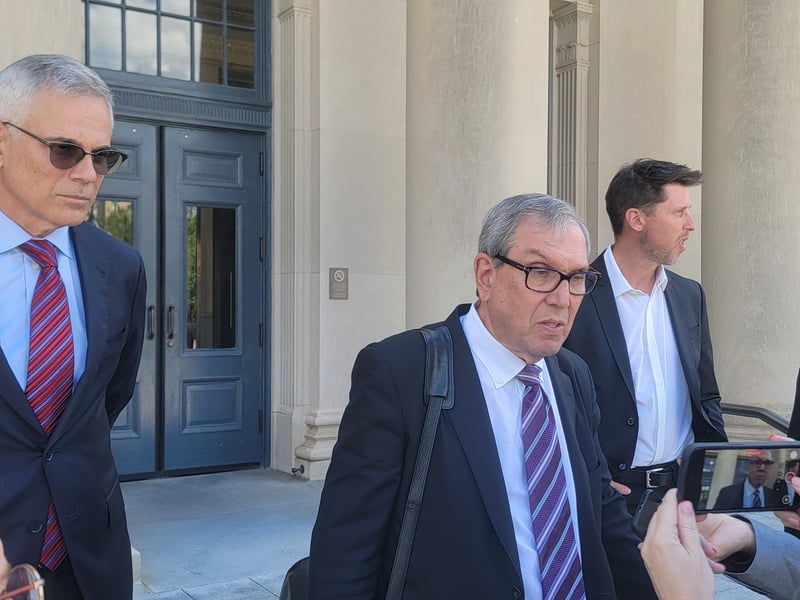
Jeffrey Kessler, counsel for Front Row and 23XI Racing, told reporters on Tuesday that the teams are open to settlement if NASCAR is willing to make changes to their system and acknowledged the difficulty in getting a rehearing.
“The panel’s decision does not address the merits of our case,” Kessler said in a statement Friday. “It was based solely on a narrow question: whether the release of claims in the charter agreement could be considered anticompetitive. If upheld, the ruling would set a dangerous precedent, allowing monopolists to shield themselves from legal challenges simply by requiring release language as a condition of doing business with the monopoly.
“Our lawsuit is about making NASCAR more competitive and fair,” he continued. “The release provision is just one of many anticompetitive tactics NASCAR has used to preserve its monopoly. We remain fully confident in our case and are committed to racing the full season — regardless of the outcome of this petition.”
The panel of judges did not consider the release’s anticompetitive effect, the plaintiffs said, and, if the decision stands, will encourage other monopolists to maintain their monopolies by requiring releases as a condition of entry. The panel should have considered the litigation release in context with NASCAR’s anticompetitive behavior or left the injunction in place, the teams said. The judges also failed to consider all of NASCAR’s anticompetitive acts together as a whole, they argued.
Without action, any monopolist could maintain its power by barring participants from a market unless they agree not to challenge it in court, the plaintiffs said.
“The parties and panel found no case in which a monopolist insisted on a release of antitrust claims as a condition of market entry. But that was not a legitimate reason to vacate the injunction,” the teams said in their appeal. “NASCAR may be the first monopoly brazen enough to force market participants to waive antitrust claims on pain of going out of business. But the issue is not whether the release is unprecedented. The issue is whether insisting on it is an anticompetitive act that helps maintain NASCAR’s monopoly.”
23XI Racing and Front Row Motorsports sued NASCAR and CEO James France in October 2024, claiming that the company has a monopoly on the stock car racing industry. They would be able to enter into much more lucrative contracts if there were competition in the industry, they said, but NASCAR has bought out tracks, acquired its closest competitor and required teams to sign contracts that prevent them from ever being able to sue NASCAR in order to compete in the industry.
NASCAR filed a counterclaim in March, saying that the teams “engaged in active threats and coercive behavior” to maintain an “illegal cartel” to pressure NASCAR for better contracts. The racing company, which filed the countersuit under the same antitrust legislation, the Sherman Act, claimed the teams should not have worked as a group to push for more beneficial terms and that in doing so, they harmed performance-based competition.
The parties are now waiting on an order out of the Western District of North Carolina over the teams’ arguments that NASCAR’s countersuit is retaliatory and should be dismissed.
The Fourth Circuit’s decision didn’t impact the teams’ ability to compete, as they will continue to race this season. Trial for the case is scheduled in Charlotte for Dec. 1 in hopes of resolving the legal case in advance of the 2026 racing season.
Representatives for NASCAR did not immediately reply to a request for comment.
 Follow @SKHaulenbeek
 Follow @shaulenbeek.bsky.social
Subscribe to our free newsletters
Our weekly newsletter Closing Arguments offers the latest about ongoing trials, major litigation and rulings in courthouses around the U.S. and the world, while the monthly Under the Lights dishes the legal dirt from Hollywood, sports, Big Tech and the arts.