
 Search Articles


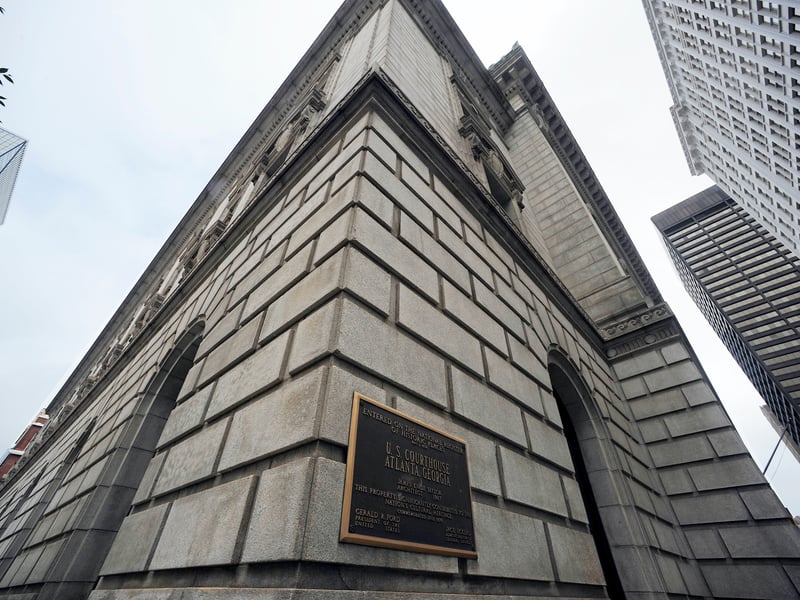
ATLANTA (CN) — A woman convicted of a wire fraud scheme involving ticket sales for a tennis tournament told an 11th Circuit panel on Tuesday that a Florida federal judge’s order for her to pay thousands of dollars in restitution even after her three-year probation sentence ended should be tossed.
A federal judge in 2022 ordered Mikel Mims to comply with a schedule to pay $255,620 in restitution following her 2014 guilty plea to conspiracy to commit wire fraud. Mims and co-conspirator Simon Habbershaw perpetrated a five-year scheme to sell tickets for the Sony Open Tennis tournament — now called the Miami Open — and pocket proceeds which should have gone to their employer.
Arguing on behalf of Mims on Tuesday, assistant federal public defender Ta’Ronce Stowes said the case against his client “logically” closed when her term of probation ended. He also argued the Florida federal judge unfairly failed to hold a hearing to determine why his client had not complied with the restitution payment schedule.
Chief U.S. District Judge Cecilia Altonaga entered an August 2022 order enforcing Mims’ restitution obligations after the government filed a motion alerting the court of her failure to pay.
“Defendant’s remarkable, yet unfounded, attempt to wriggle her way out of the payment schedule lacks support in law and fact,” she wrote.
Mims paid $58,232 in restitution but stopped making monthly payments after the end of her probation period in 2017. Mims instead filed a letter with the court in 2018 purporting to forgive her own debts.
At least one judge did not seem convinced by Mims’ argument.
“It seems like another logical time a case might close would be when all the restitution was paid,” U.S. Circuit Judge Britt Grant, a Donald Trump appointee, said. “It seems that a case could close when the defendant has satisfied her responsibilities.”
Stowes said the government should have opened an independent civil enforcement action to invoke the court’s jurisdiction instead.
“We have never taken the position that she is no longer on the hook for restitution,” Stowes said. “We’re just saying the government has to go about it the appropriate way.”
The government, however, says that questions concerning whether the case was “closed” are irrelevant. Assistant U.S. Attorney Amanda Perwin argued that there is no limitation on proceedings related to restitution other than a 20-year statute of limitations on liability.
“The long and short of this is that there is no authority anywhere in the [Mandatory Victims Restitution Act] that ties the district court’s jurisdiction to the period of probation or the period of supervised release,” Perwin said.
Obama-appointed U.S. Circuit Judge Jill Pryor questioned whether it was “unusual” that four years elapsed between the end of Mims’ probation and the attempt to collect restitution.
Perwin said Mims was given “ample” opportunity to tell the court her circumstances had changed or to explain why she had not made payments.
The government also noted that it likely had authority to seek prison time for Mims but instead only asked that the original restitution order be enforced.
“Federal courts always have jurisdiction to enforce their own judgments,” Perwin said. “There is no dispute that restitution is part of a criminal judgment.”
According to the indictment, Mims and Habbershaw worked for IMG Worldwide, the company that ran the tournament on Key Biscayne, and used their roles as sponsor and patron coordinators to arrange for a vendor to print extra tournament tickets.
Mims and Habbershaw sold the tickets to customers who paid money directly into their accounts. The scam netted the two defendants between $200,000 and $400,000.
Habbershaw also pleaded guilty to conspiracy to commit wire fraud. He was sentenced to three years of probation and ordered to pay $104,292 in restitution.
Grant and Pryor were joined on the panel by U.S. Circuit Judge Elizabeth Branch, a Donald Trump appointee. The panel did not signal when they will issue a decision in the case.
 Follow @KaylaGoggin_CNS
Subscribe to our free newsletters
Our weekly newsletter Closing Arguments offers the latest about ongoing trials, major litigation and rulings in courthouses around the U.S. and the world, while the monthly Under the Lights dishes the legal dirt from Hollywood, sports, Big Tech and the arts.