
 Search Articles


AUSTIN, Texas (CN) — Texas sued drugmakers and pharmacy benefit managers Thursday, claiming they are conspiring to raise insulin prices by as much as 1000%, bringing in massive profits for themselves while pushing the costs onto consumers who rely on the life-saving drugs.
Texas Attorney General Ken Paxton filed the lawsuit Thursday in Travis County District Court. In the nearly 150-page document, Paxton accuses the three largest insulin manufacturers and the three largest pharmacy companies of conspiring to overcharge patients for insulin by artificially inflating list prices, thereby violating the Texas Deceptive Trade Practices-Consumer Protection Act.
Eli Lilly, Novo Nordisk and Sanofi-Aventis collectively hold a near-total monopoly on the global manufacture of insulin and other medicines for diabetes, earning tens of billions of dollars in revenue from these drugs.
Paxton argues in the lawsuit that these three companies artificially raised the prices they charged pharmacies. They then paid those pharmacies back a significant portion of the list price in exchange for being included in the pharmacies’ standard offerings.
Paxton writes in the suit: “Insulins, which today cost manufacturer defendants less than $2 to produce and which were originally priced at $20 when released in the late 1990s, now range between $300 and $700.”
Paxton plainly stated the consequences of those high costs.
“For Texas diabetics, the physical, emotional and financial tolls caused by the insulin pricing scheme are devastating. Unable to afford the drugs their doctors prescribe, many diabetics in Texas ration or under-dose their diabetes medications, inject expired insulin, reuse needles, and starve themselves to control their blood sugars. This behavior is extremely dangerous and has led to serious complications or even death,” the attorney general writes in the suit.
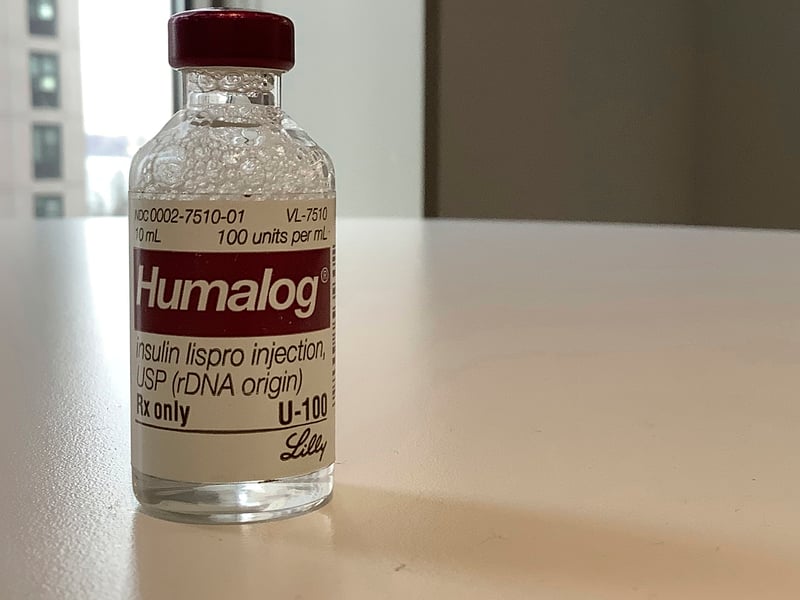
Eli Lilly in particular raised the price of one of their drugs, Humalog, by more than 1500% from 1997 to 2018, according to the Bureau of Labor Statistics.
Meanwhile, the three main pharmacy benefit managers included as defendants — CVS Caremark, Express Scripts and OptumRx — make up a combined 80% of benefit managers while controlling three of the five largest pharmacy chains in the country, Paxton writes. Each of these three are owned by three massive insurance companies, respectively Cigna, Aetna and UnitedHealth Group. These conglomerates are each in the Fortune 500’s top 20 companies.
Paxton claims these benefit managers encouraged drug companies to further raise prices by granting preferred status to whichever company paid them the most and charged the highest price. Moreover, while these companies claim to lower prices for their customers, in reality they regularly and willfully raise prices to keep their profits high, according to Paxton.
He says the manufacturers and pharmacies have conspired to raise prices and maximize their own profits while pushing the cost onto consumers.
In recent years, the extreme price of insulin has become a national issue. President Joe Biden’s Inflation Reduction Act capped the out-of-pocket costs for seniors on Medicare at $35. Since then, the president and others in Washington, including Senator Bernie Sanders, have pressured drug companies to match that cap while legislation is in the works.
Texas also passed legislation in 2022 capping co-pays for insulin prescriptions at $25 for a 31-day supply or $75 for a 60-day or 90-day supply.
Despite these efforts, insulin remains prohibitively expensive for many of the tens of millions of American diabetics, an estimated 11.6% of the total population, according to the National Institute of Health. Texas alone has roughly 3.4 million diabetics, while a further 7 million Texans are prediabetic.
Paxton is asking for an injunction against the companies to stop their deceptive practices, and is seeking unspecified financial penalties against them.
Paxton’s office has not yet responded to a request for comment.
Subscribe to our free newsletters
Our weekly newsletter Closing Arguments offers the latest about ongoing trials, major litigation and rulings in courthouses around the U.S. and the world, while the monthly Under the Lights dishes the legal dirt from Hollywood, sports, Big Tech and the arts.