Search Articles


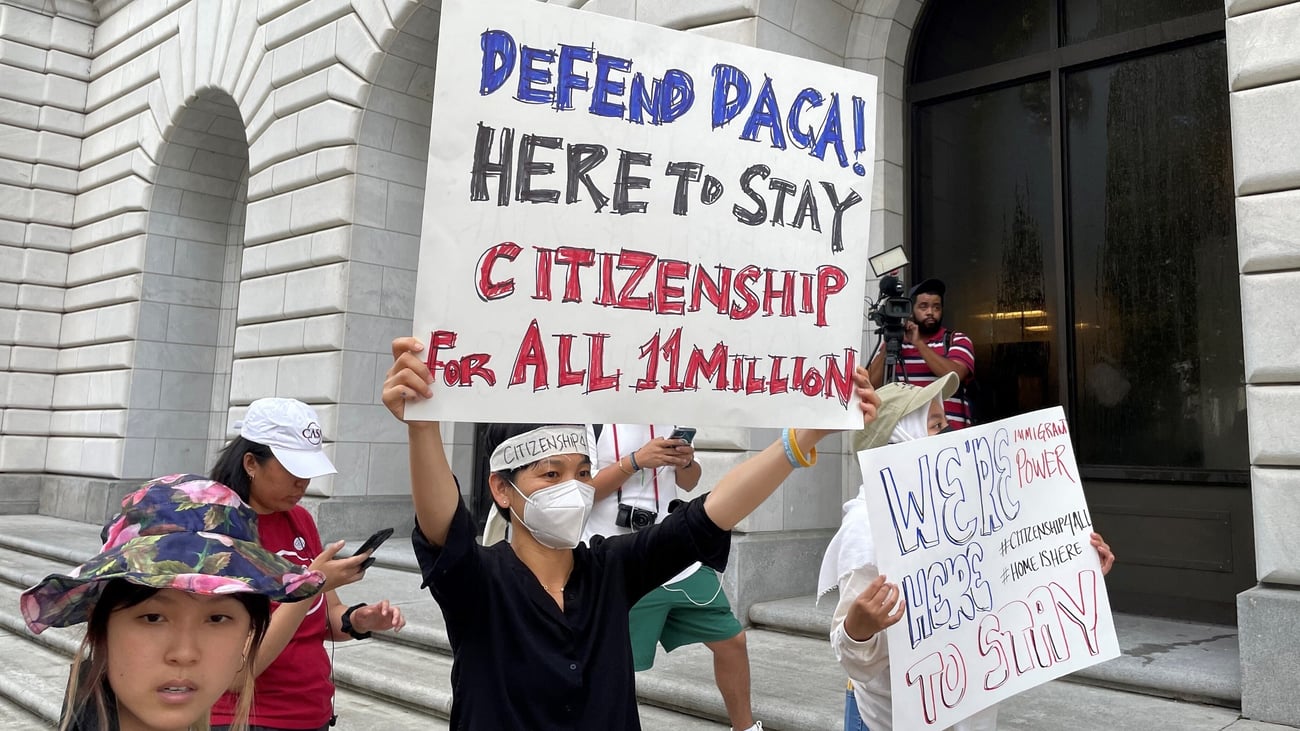
(CN) — A group of college students asked a Fifth Circuit panel Thursday to overturn an agreement that blocked a state law allowing students without permanent immigration status to receive in-state tuition at Texas public colleges and universities.
The students, joined by advocates also hoping to intervene in the case, asked the three-judge panel to vacate a 2025 consent judgment between Texas Attorney General Ken Paxton and the Justice Department that blocked the Texas Dream Act.
The decades-old law allowed in-state tuition for individuals without legal immigration status who establish residency in Texas, making attending college significantly cheaper.
But the agreement between Paxton and the DOJ established the law is preempted by a federal law stating individuals without lawful immigration status can’t be eligible “for any postsecondary education benefit” based on their residency within a state unless a U.S. citizen would also be eligible for that benefit regardless of residency.
Thomas Saenz, representing Students for Affordable Tuition, argued the entry of the consent judgment on the same day the Justice Department filed its case challenging the Dream Act deprived the students of “notice and an opportunity to be heard” in violation of their due process rights.
U.S. District Judge Reed O’Connor, a George W. Bush appointee, had ruled intervention would be futile because the act is definitely preempted by federal law.
And Joshua Salzman — representing the civil rights group La Unión del Pueblo Entero, along with Austin Community College and an individual student — argued the lower court lacked jurisdiction to enter the consent judgment because there was no “case or controversy” between Paxton and the Justice Department.
Salzman told the panel Paxton had conspired with the DOJ to bring a case to overturn the Dream Act.
“Since the 1880s, the Supreme Court has warned against the possibility that a party defeated in the legislature might circumvent the democratic process and, through a friendly suit, seek the invalidation of a democratically enacted law, and I think that describes this case,” Salzman said.
But Texas Assistant Solicitor General Nathaniel Plemons argued there was indeed a case and controversy, saying it didn’t matter “what the attorney general thinks or feels about the case,” as unless the Texas legislature overturned the Dream Act or a court blocked it, the law was going to continue to be enforced in violation of federal statute.
The intervenors argue the federal law should not be interpreted as preempting the Dream Act. Salzman told the panel in-state tuition does not qualify as a post-secondary education benefit.
“There’s no money or benefit flowing in the opposite direction to the student,” Salzman said. “It’s a status, and it is a status that is the default status in Texas because the Texas education system exists principally and primarily to serve people who will be contributing to the Texas economy in the future.”
Justice Department attorney Andrew Bernie argued the federal law plainly applies to in-state tuition and that a conference report from when the law was passed shows that was Congress’ intent. Ruling otherwise, he argued, would “deprive the statute of applying where Congress clearly intended it to apply.”
The intervenors also argue that, if the federal law does indeed preempt the Texas Dream Act, applying it in this case would violate the 10th Amendment of the U.S. Constitution by interfering with a state’s ability to set its own eligibility requirements for in-state tuition.
U.S. Circuit Judge Irma Carrillo Ramirez appeared skeptical of the arguments in favor of preemption. The Joe Biden appointee asked Bernie and Plemons about differences between the definition of residency in the state and federal laws and also seemed to agree with the intervenors’ arguments regarding the 10th Amendment.
When Bernie argued the federal law is “a regulation of aliens” that falls within the federal government’s constitutional authority, Ramirez asked, “How is this not a regulation on states if they’re not allowed to award in-state tuition to whom they wish?”
“Because the way the statute operates, the only thing the statute does, as opposed to issuing any sort of commands [to states], is it just preempts inconsistent state laws,” Bernie said.
“Like SB 4?” Ramirez asked, referencing a separate legal fight over a Texas law allowing state authorities to enforce immigration law.
Ramirez joined a dissent from an April ruling allowing that law to take effect after Trump’s Justice Department dropped a Biden-era challenge to the law. The dissent in that case argued SB 4 is likely preempted by federal law.
U.S. Circuit Judge Jerry Smith, a Ronald Reagan appointee, and U.S. Circuit Judge Don Willett, a Donald Trump appointee, joined Ramirez on the panel. The judges took the case under submission, and did not indicate when they would rule.
Subscribe to our free newsletters
Our weekly newsletter Closing Arguments offers the latest about ongoing trials, major litigation and rulings in courthouses around the U.S. and the world, while the monthly Under the Lights dishes the legal dirt from Hollywood, sports, Big Tech and the arts.