
 Search Articles


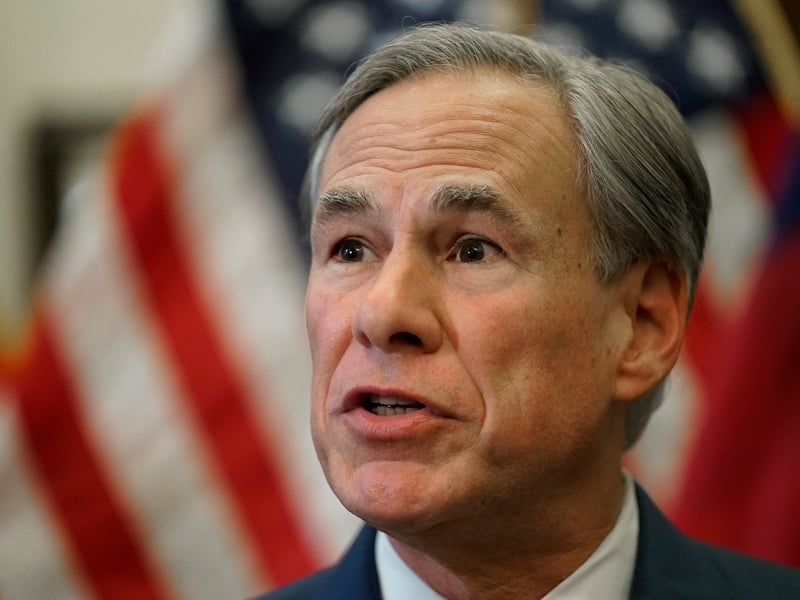
(CN) — Texas Governor Greg Abbott signed a bill Saturday banning people from countries deemed national security threats from purchasing or acquiring property in the state, a move critics say discriminates against certain immigrants.
Senate Bill 17 applies to individuals domiciled in countries identified as security risks by the U.S. Director of National Intelligence in one of the three most recent Annual Threat Assessments of the U.S. Intelligence Community, as well as companies based in those countries and the governments of those countries. These nations are currently China, Russia, Iran and North Korea. The governor can also add additional countries to the ban.
The law exempts U.S. citizens and legal permanent residents, as well as people legally present in the U.S. who are buying a home as their primary residence. It also doesn’t apply to leaseholds under one year.
The Texas attorney general is authorized to investigate potential violations of the law, and violators could face a state jail felony. If a property is found to have been acquired in violation of the law, a court will appoint a receiver to manage and sell the property.
The law is set to take effect Sept. 1.
Abbott signaled his support for SB 17 early on. He posted about the bill on the social media platform X, formerly Twitter, shortly after it was filed in late February: “We must get this to my desk this session.”
Abbott’s office told Courthouse News that the new law is critical to prevent foreign adversaries from setting up operations in Texas.
“Just this month, Chinese nationals were arrested attempting to smuggle bioweapons in Michigan," said Andrew Mahaleris, Abbott’s press secretary. “Foreign threats to our country are real, and we must safeguard against those who wish us harm.”
The bill’s author, Republican state Senator Lois Kolkhorst of Brenham, issued a statement declaring that “Texas is not for sale to any nation deemed a threat to our national security.”
“For three years, I’ve worked to pass legislation to protect our land, homes, commercial buildings, water, timber, oil and gas, and rare earth materials from being bought up by foreign adversarial nations,” Kolkhorst said. “Truly, this is the strongest national security bill in the nation, and it was an honor to have Governor Abbott sign Senate Bill 17 into law.”
Kolkhorst introduced a similar bill in 2023, but it died in the Texas House after vigorous pushback from the Asian American community.
Opponents of SB 17 say it harkens back to alien land laws, legislation enacted in certain states in the early 20th century that limited the land-owning ability of immigrants ineligible for U.S. citizenship. Such laws primarily targeted Asian immigrants.
One of the groups that opposed SB 17 was the Austin Chinese-American Network (ACAN). ACAN did not immediately respond to a request for comment on the bill’s passage, but board member Michael Wei told Houston Public Media after the bill was sent to the governor’s desk in late May that fewer people showed up to protest and testify against the legislation this time around. He attributed this to fear of government retribution in the current political climate.
“They worry about this kind of environment,” Wei said. “If they show up to do something, they’re going to record [you] on camera, then [they’re] going to be tracking your visa, review your visa or even revoke your green card.”
Subscribe to our free newsletters
Our weekly newsletter Closing Arguments offers the latest about ongoing trials, major litigation and rulings in courthouses around the U.S. and the world, while the monthly Under the Lights dishes the legal dirt from Hollywood, sports, Big Tech and the arts.