Search Articles


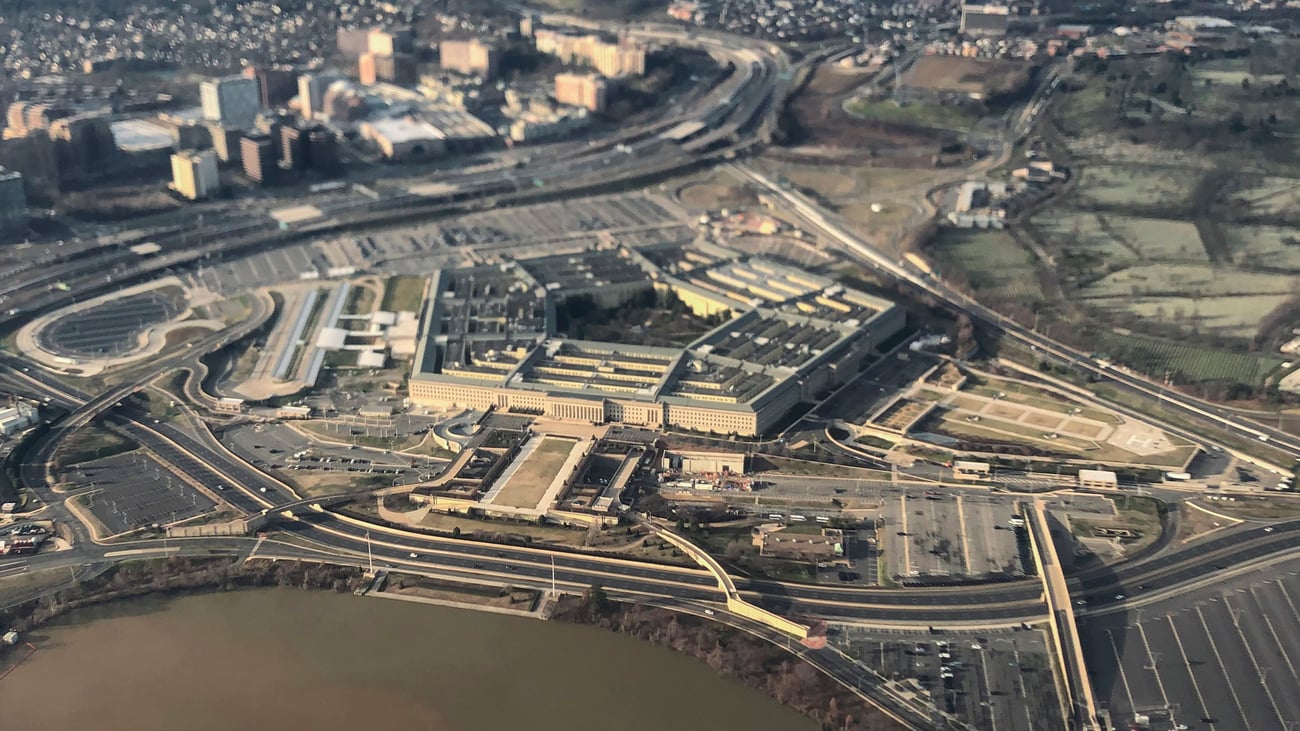
WASHINGTON (CN) — A federal judge on Thursday ordered the Pentagon to restore full press access after determining a revised policy clearly ignored a prior court order that found its initial version unconstitutional.
U.S. District Judge Paul Friedman, a Bill Clinton appointee, slammed Secretary of Defense Pete Hegseth for reinstating the unlawful policy “under the guise” of taking new agency action and expecting “the court to turn a blind eye.”
Rather than comply with Friedman’s March 20 injunction vacating the previous version of the policy, the Pentagon instead moved to cut off all meaningful press access to the Pentagon and restrict any potential access with an escort requirement.
“The court cannot conclude this opinion without noting once again what this case is really about: the attempt by the Secretary of Defense to dictate the information received by the American people, to control the message so that the public hears and sees only what the Secretary and the Trump administration want them to hear and see,” Friedman wrote in the 20-page opinion. “The Constitution demands better. The American public demands better, too.”
On March 20, Friedman reinstated press credentials for reporters who walked out en masse last fall in protest of a Defense Department policy barring journalists from obtaining any information without official approval.
According to plaintiff The New York Times, the Pentagon instituted an interim policy on March 23, which effectively maintained a wide prohibition on journalists reporting freely within the Pentagon, requiring escorts through the majority of the building.
The New York Times filed a motion to compel, asking Friedman to vacate the new policy and restore the level of press access that existed before the Pentagon implemented its new policy in October 2025.
At March 30 hearing, Friedman was particularly concerned with the policy’s restriction barring the “intentional inducement of unauthorized disclosure” — the prior version used the term “solicitation” — calling it “way worse.”
In his opinion, Friedman found the Pentagon had done “precisely what this court expressly forbade” by trying to cure the unlawful restrictions on core new gathering activities by providing “targeted clarifications.”
In the Pentagon’s view, the new prohibition would be triggered only if a journalist attempted to obtain information the journalist knew a government employee was forbidden to disclose by law.
That distinction, Friedman wrote, did not make the new policy legal.
“Considering that journalists ‘frequently’ grant anonymity to sources, including sources authorized to speak to the press on the Department’s behalf, every Pentagon reporter routinely will be presumptively in violation of the interim policy,” Friedman wrote.
Friedman further rejected the government’s defense that there are six “safe harbors” in the policy protecting routine news gathering, noting they failed to show a journalist would not have their credentials revoked nonetheless.
The harbors, he wrote, left open the possibility that simply asking a question on certain topics or to certain officials could result in credentials being revoked.
“In sum, there is little daylight between the policy’s unconstitutional ‘solicitation’ prohibition and the interim policy’s ‘inducement’ prohibition, and the latter is impermissible for the same reasons as the former,” Friedman wrote. “The court explained that the policy’s deficiencies were so entrenched that there was no alternative but to require the Department to scrap its prior approach and start afresh. By failing to do so, the Department has violated this court’s explicit mandate.”
Friedman rejected the Pentagon’s assertion he could only block the latest version of the policy if the New York Times brought an amended complaint specifically challenging it.
The Pentagon argued as long as it did not replicate the exact words of the initial policy and restored the Times’ reporters’ physical credentials, the policy should stay in place until the New York Times could bring another complaint.
“If the Department immediately uses new words to do the same thing? Too bad,” Friedman wrote. “If the Department immediately takes steps to undermine the purpose of the reporters’ credentials, namely, entry to the Pentagon? Again, too bad.”
Friedman pointed to one of the dozens of letters he received from Americans around the country “explaining what the First Amendment means to them,” in which an individual who had a scheduled interview at the Pentagon canceled because of the “Kafkaesque” access rules that barred his entry.
“The curtailment of First Amendment rights is dangerous at any time, and even more so in a time of war,” Friedman wrote. “Suppression of political speech is the mark of an autocracy, not a democracy — as the Framers recognized when they drafted the First Amendment.”
 Follow @Ryan_Knappy
Subscribe to our free newsletters
Our weekly newsletter Closing Arguments offers the latest about ongoing trials, major litigation and rulings in courthouses around the U.S. and the world, while the monthly Under the Lights dishes the legal dirt from Hollywood, sports, Big Tech and the arts.
Additional Reads
 Colorado's AI discrimination April 9, 2026
 Washington state millionaire tax faces legal challenge April 9, 2026