
 Search Articles


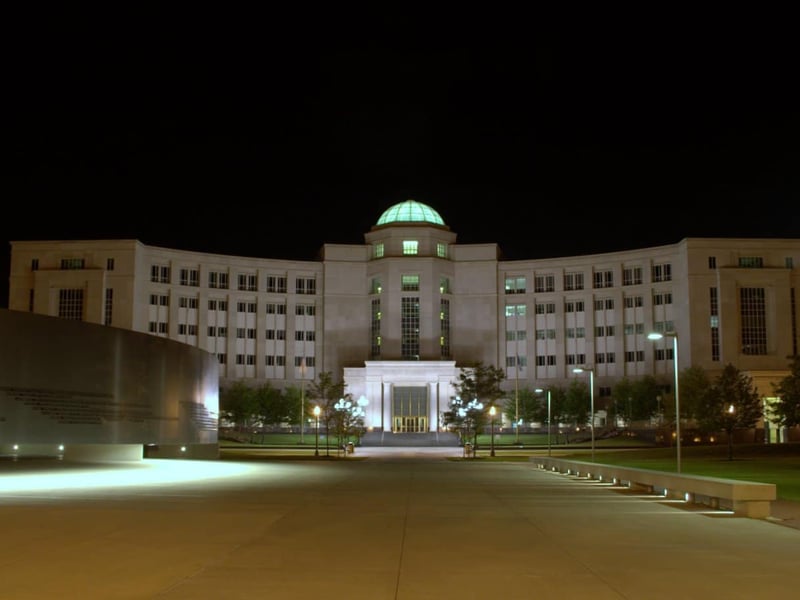
LANSING, Mich. (CN) — The Michigan Supreme Court ruled Monday to uphold ongoing medical benefits for Michigan residents who suffered car wreck injuries prior to a 2019 change in the state’s insurance laws.
Justice Elizabeth Welch wrote for the 5-2 majority that the Legislature could not retroactively terminate what were previously uncapped long-term medical benefits for those who suffered catastrophic injuries from car wrecks.
The ruling is a win for the plaintiffs, Ellen Andary and Phillip Krueger, who suffered traumatic injuries from car accidents prior to 2019 and were receiving uncapped lifetime medical care under their insurance plans.
Michigan is among the dozen states that are considered “no-fault,” which means that people injured in car accidents must rely on their individual insurance policies, not the policy of the other driver, to cover associated medical bills.
In 2019, to combat Michigan’s high car insurance rates, the Legislature passed large reductions for family-provided attendant care hours and reimbursement rates for medical services not covered by Medicare.
Andary and Krueger persuaded the court that retroactive application of the new law would violate their rights.
“We conclude that application of the 2019 amendments of MCL 500.3157(7) and (10) to Andary and Krueger would constitute a retroactive reduction of their vested contractual rights to receive uncapped PIP benefits pursuant to the insurance policies and incorporated statutes that existed when they were injured,” Welch wrote.
While Andary and Krueger prevailed on the contract claim, their constitutional challenge was unsuccessful.
“As to Andary’s and Krueger’s due process and equal protection challenges to prospective application of the 2019 no-fault amendments, we agree with the Court of Appeals that there is no further relief that can be provided to these plaintiffs and thus that they lack standing to move forward with their prospective claims,” Welch wrote.
The court’s decision will provide relief for thousands of people receiving long-term benefits and will help prevent stories like the ones presented in a court brief from the Michigan Osteopathic Association.
Dr. Owen Perlman wrote in an affidavit about the law’s impact on several of his patients, including a 47-year-old woman who became a quadriplegic from the neck down after an accident in 1994.
“She had much medical morbidity,” Perlman wrote. “When she had consistent trained nurses, she would intermittently need to go to the hospital for treatment of significant medical problems but was always able to recover at home. More recently, during the summer and fall of 2022, she had further problems. After a surgical procedure, she ended up on a ventilator. When told she was going to require a tracheostomy, she was concerned that with less staff, she would not be able to be safely managed at home. As a result, she declined the tracheostomy. She passed away on Oct. 3, 2022.”
Welch was joined in the majority by Chief Justice Elizabeth Clement and by justices Richard Bernstein, Megan Cavanagh and Kyra Bolden.
Justice David Viviano dissented in part, saying he would have held that the no-fault legislative amendments adopted in 2019 “broadly apply to all future medical expenses and attendant care services regardless of when the injury occurred.”
“ The result today is that through an erroneous interpretation of the statute, aided by resort to vague and disputed concepts that seem only to serve as cover for fairness concerns, the majority has impeded the Legislature’s effort to address an important issue in our state,” Viviano wrote, joined by Justice Brian Zahra in all but three of the dissent’s footnotes.
Viviano disagreed that the reforms on what medical care providers can charge and who can provide such care amounts to a reduction in benefits.
“As a practical matter, this might make it more difficult to find willing providers and attendant care services, but it does not impair the insurers’ legal obligation to pay these benefits,” Viviano wrote.
Subscribe to our free newsletters
Our weekly newsletter Closing Arguments offers the latest about ongoing trials, major litigation and rulings in courthouses around the U.S. and the world, while the monthly Under the Lights dishes the legal dirt from Hollywood, sports, Big Tech and the arts.