
 Search Articles


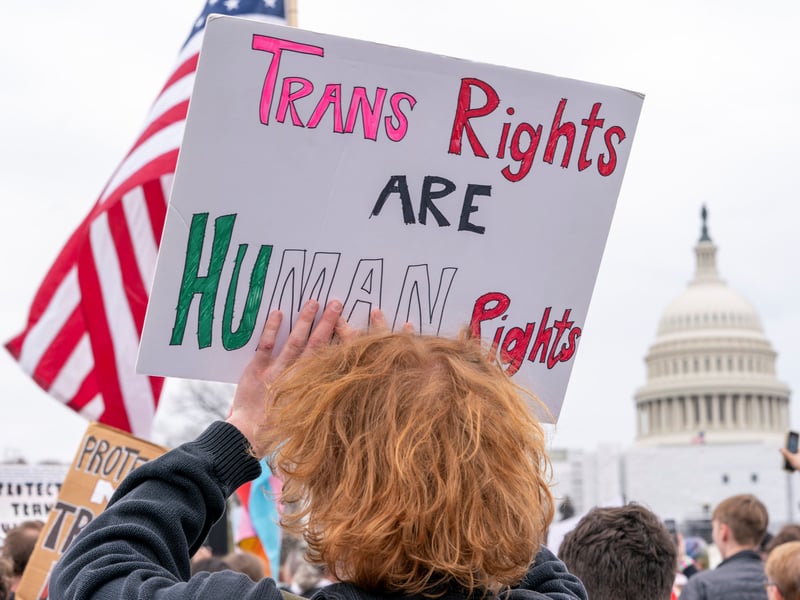
(CN) — Transgender students at Boise High School in Idaho on Wednesday asked the Ninth Circuit Court of Appeals to halt enforcement of a state law that prohibits them from using restrooms on campus in accordance with their gender identity.
The students, represented by the Sexuality and Gender Alliance, are seeking a preliminary injunction while they appeal an August decision by a trial judge who denied their request to block a 2023 Idaho law that requires them to use the restroom that corresponds with their “biological sex.”
The appellate panel didn’t indicate how they might rule on the students’ emergency request, but many of their questions focused on whether the availability of three so-called single-user restrooms on the campus — which are available to all genders — addresses the harm they would otherwise suffer from using a restroom that conflicts with their gender identity.
“Is there any record as to how exactly things are going right now?” U.S. Circuit Judge Mark Bennett, a Donald Trump appointee inquired, noting that the law has been in effect for about six weeks on the Boise High campus. “Where the unisex bathrooms are, how they are being used, what the difficulties are in using them?”
Kell Olson, an attorney for the trans students, said in response that students may have to go another building, or even two buildings away from where their classes are, to use a restroom where they don’t violate the law and are comfortable.
“In the context of civil rights, sending people to separate facilities has never been the answer, and it should not start here,” Olson told the panel.
“It’s very different to have the choice to go to a separate facility, as an additional option, then it is to be forced to go there because of who you are,” he added. “And on your way down the hallway to get there, you pass the girls’ room, but the state has pasted a message underneath that says ‘but not you.’”
The same Ninth Circuit panel, which also includes U.S. Circuit Judges Kim McLane Wardlaw, a Bill Clinton appointee, and Morgan Christen, a Barack Obama appointee, in March rebuffed the student organization’s constitutional challenge to the Idaho law that also prohibits trans students from using showers and changing rooms that conform with their gender identity.
The panel at that time determined that Senate Bill 1100 identified an important governmental objective: “protecting the privacy and safety of all students,” particularly in areas where a student might be partially or fully undressed. The judges left open the possibility that students could challenge the law insofar as it pertained to restrooms where stalls with doors protect the privacy of students using them.
The student organization renewed its bid for a narrower injunction regarding the ban only at Boise High ahead of the current school year, which is the first time that the law is being enforced.
However, Chief U.S. District Judge David Nye, a Trump appointee, wasn’t persuaded that bathroom stalls with doors eliminated the privacy concern that Idaho claims justifies the statute.
“Privacy is not limited to obscuring the visual line of sight of others when a person is relieving themselves in a restroom stall,” Nye said in denying the request for the narrower preliminary injunction. “Thus, SAGA cannot defeat defendant’s privacy justification by claiming that restroom stalls only allow for a small viewing window when the door is closed and locked.”
 Follow @edpettersson
Subscribe to our free newsletters
Our weekly newsletter Closing Arguments offers the latest about ongoing trials, major litigation and rulings in courthouses around the U.S. and the world, while the monthly Under the Lights dishes the legal dirt from Hollywood, sports, Big Tech and the arts.