
 Search Articles


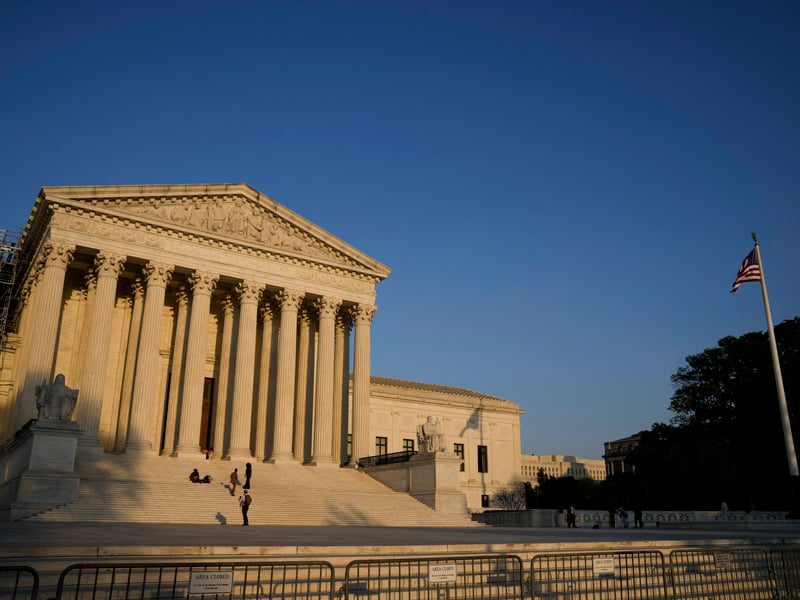
WASHINGTON (CN) — The Supreme Court advanced a lawsuit against a tribe-owned payday-loan operation accused of driving a customer to suicide by trying to collect a debt even after the man had filed for bankruptcy.
“The Bankruptcy Code unambiguously abrogates the sovereign immunity of all governments, including federally recognized Indian tribes,” wrote Justice Ketanji Brown Jackson wrote in the 8-1 decision.
The case stems from a loan for $1,100 that Lendgreen, a subsidiary of the Lac du Flambeau Band of Lake Superior Chippewa, paid in July 2019 to Brian Coughlin. With an annual interest rate of 107.9%, that debt grew to $1,600 by the end of the year, and Coughlin filed for bankruptcy.
While this move would trigger an automatic stay for most lenders, requiring them to petition a bankruptcy court for the amount of the debt, the Chippewa never filed a claim and proceeded to bombard Coughlin with collection calls and emails nearly every day.
Coughlin, who suffers from clinical depression, tried to kill himself and was hospitalized. After he recovered, he sued the tribe for violating the bankruptcy court’s automatic stay, demanding that it pay his medical bills, his lost sick leave and vacation time, and $87,000 in emotional damages.
Insisting that tribes retain sovereign immunity under U.S. bankruptcy law, the Chippewa took the case to Washington after a First Circuit defeat.
Pratik Shah with Akin Gump argued for the Chippewa at a high court hearing in April that bankruptcy code makes no specific reference to tribes when it describes foreign or domestic governments as having waived immunity.
Justice Neil Gorsuch, a staunch backer of tribal rights, made a similar argument in the court’s lone dissent.
“Congress could identify Tribes in any number of unmistakable ways — ’Indians,’ ‘Native Americans,’ ‘Indigenous Peoples,’ or even (as we have seen) ‘domestic dependent nations,’" the justice wrote. “Congress has had no trouble using language like that in plenty of other statutory contexts.”
Kellogg Hansen attorney Gregory Rapawy spoke for Coughlin at arguments, arguing that the law’s reference to domestic governments encompasses tribes “because they are subject to the authority of and within the territory of the United States.”
This stance won over the high court majority.
“Our analysis of the question whether the Code abrogates the sovereign immunity of federally recognized tribes is remarkably straightforward,” Jackson wrote. “The Code unequivocally abrogates the sovereign immunity of all governments, categorically. Tribes are indisputably governments. Therefore, [bankruptcy code] §106(a) unmistakably abrogates their sovereign immunity too.”
Coughlin’s attorney said in a statement Thursday that he and his client are pleased that the court backed their arguments.
“We look forward to returning to the bankruptcy court and obtaining redress for Mr. Coughlin’s injuries,” Rapawy said.
Justice Clarence Thomas noted in a concurring opinion that, because Coughlin’s suit arose out of the tribe’s “off-reservation commercial conduct,” Lendgreen wouldn’t be entitled to sovereign immunity, “regardless of the Bankruptcy Code’s abrogation provision.”
“To the extent that tribes possess sovereign immunity at all, that immunity does not extend to ‘suits arising out of a tribe’s commercial activities conducted beyond its territory,’” Thomas explained.
Shah did not respond immediately to a request for comment on the ruling.
The U.S. Department of Justice backed Coughlin in the case.
This story is developing and will be updated.
Subscribe to our free newsletters
Our weekly newsletter Closing Arguments offers the latest about ongoing trials, major litigation and rulings in courthouses around the U.S. and the world, while the monthly Under the Lights dishes the legal dirt from Hollywood, sports, Big Tech and the arts.