Search Articles


WASHINGTON (CN) — President Donald Trump’s nominee to lead the Justice Department office tasked with supporting state and local law enforcement deleted hundreds of social media posts in which he denigrated law enforcement and insulted the intelligence of prominent Democratic and Republican lawmakers.
Konstantinos Ligris, tapped to become an assistant attorney general leading the Justice Department’s Office of Justice Programs, told lawmakers Wednesday that he did not recall the posts, which have since been deleted. But a review of archived content from an X account apparently belonging to the nominee shows he made hundreds of disparaging comments about public officials, including members of the Senate committee tasked with advancing his appointment.
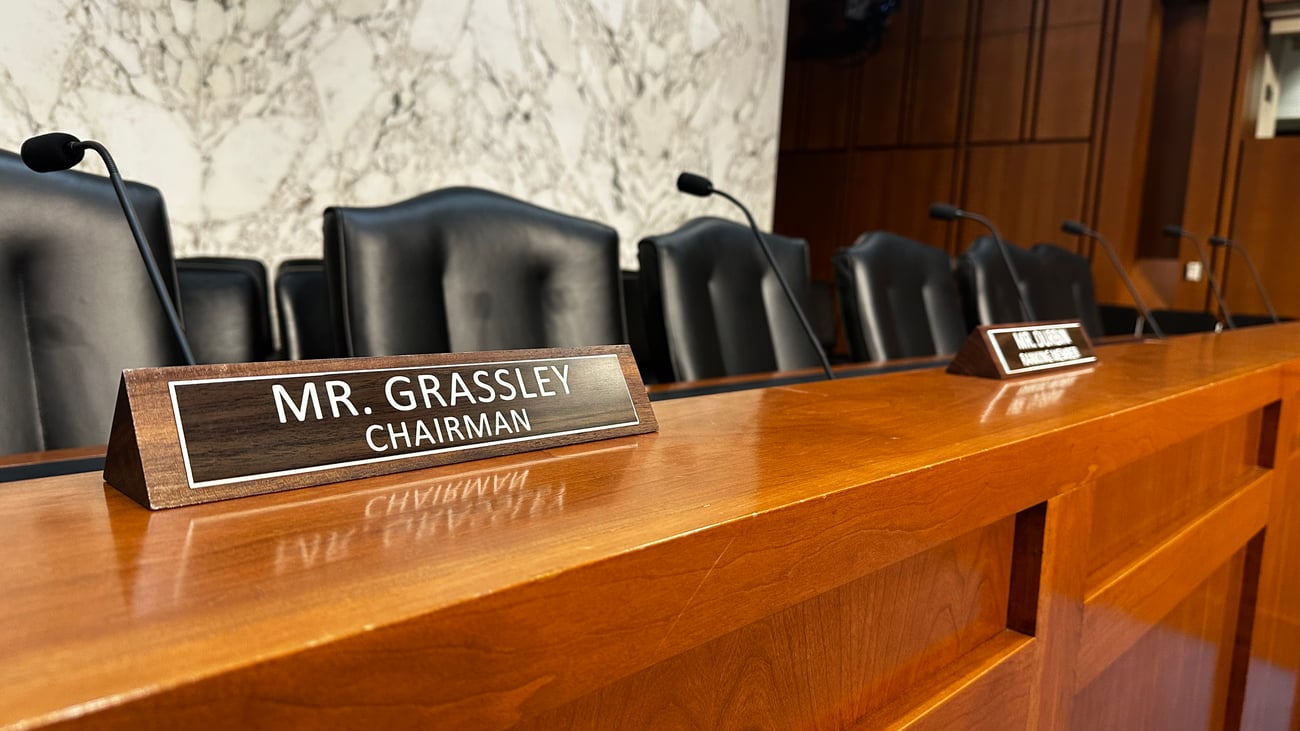
Ligris, a tech entrepreneur and former real estate attorney, faced sharp questions from the Senate Judiciary Committee Wednesday morning as they examined his nomination to head up the Justice Department program, which oversees grants and other assistance to state, local and tribal police departments. In focus for lawmakers was what they said was a yearslong history of offensive X posts from the nominee.
Courthouse News reviewed more than 300 archived social media posts from Ligris targeting Democratic and Republican lawmakers, as well as Biden administration officials and federal judges. In several posts, the Justice Department nominee referred to California Senator Alex Padilla as a “thug” after he was tackled and handcuffed at a news conference with former Homeland Security Secretary Kristi Noem.
In other posts, Ligris called Minnesota Senator Amy Klobuchar a “top-rated propaganda peddler” and a “partisan hack.” Both Padilla and Klobuchar sit on the Judiciary Committee. The nominee also referred to Massachusetts Senator Elizabeth Warren as a “loser and a fraud” and a “socialist hypocrite.”
And Ligris further used his platform to advocate for the impeachment of federal judges who have ruled against the Trump administration. In one post from March 2025, Ligris called on Congress to remove D.C. District Judge James Boasberg after lawmakers introduced articles of impeachment against him in the House.
“Impeach all these political hacks,” Ligris wrote at the time. In an earlier post from February 2025, he called for the establishment of a “judicial watchdog,” tagging Trump and billionaire Elon Musk.
Ligris’ posts were not limited to Democrats. The nominee called Maine Senator Susan Collins a “fraud” in January 2025 after she voted against Pete Hegseth’s nomination as defense secretary and, in separate comments, said Alaska Senator Lisa Murkowski “sounds almost as dumb as Kamala [Harris].”
Responding to a post from conservative commentator Meghan McCain holding up Hegseth, Vice President JD Vance and Secretary of State Marco Rubio as top contenders for the 2028 Republican presidential nomination, Ligris wrote, “Umm 2 of the 3.” It was unclear from his post which of the men he had excluded.
But the comments that Democrats found most offensive during Ligris’ confirmation hearing came in a 2024 post in which the Justice Department nominee called police officers “dumb as dirt” in response to a clip of dashcam video posted to X.
“Breach of peace … typical cop … dumb as dirt,” Ligris wrote at the time.
Illinois Senator Dick Durbin, the top Democrat on the Judiciary Committee, demanded the nominee explain the post. “Now you’re seeking a position to work with police departments all over the United States?” he said. “How could you do that?”
Ligris said he was “not familiar with some of the contexts or retweets” Democrats pointed to, adding he’d be “happy to take a look at them.” The nominee also said he “routinely” deletes social media posts every 90 days “for cybersecurity exposure reasons.”
Durbin was stunned by that response.
“That’s it?” the senator exclaimed. “At least address the ‘dumb as dirt’ comment. Say something about it — say you made a mistake, that you shouldn’t have said something like that about law enforcement officers. You want to work with police departments across the United States, and it’s a matter of record that you think they’re dumb as dirt?”
Ligris reiterated he didn’t have “specific reference” to the post in question and suggested it could have been reposted from another user. He added he had many family members who were police officers.
“I do not believe that law enforcement is dumb as dirt,” he said. “I believe that I would like to take a look at the entire post in its context and what it was referencing.”
Ligris was asked later on by Rhode Island Senator Sheldon Whitehouse about a separate post in which he referred to Trump and former Vice President Kamala Harris as “two clowns” and his posts calling Padilla a “thug.”
The nominee told Whitehouse he had not prepared to answer questions about his social media history and suggested he had not informed the White House about his past posts, saying he used X “regularly and frequently.”
“You’re telling me here that you never disclosed to the Department of Justice these tweets about senators who would have to vote on your nomination, and you’re telling me that DOJ as far as you know didn’t even know about them?” the Rhode Island Democrat asked.
“I’m telling you that the DOJ never raised these with me,” said Ligris, adding that he similarly had not disclosed them to the Justice Department.
The Justice Department did not immediately return a request for comment on whether it was aware of Ligris’ social media history. The White House similarly did not respond to a request for comment.
It’s not the first time someone tapped by the Trump administration to fill a crucial Justice Department role has faced scrutiny over past social media posts. Aaron Reitz, formerly assistant attorney general for the agency’s Office of Legal Policy, was questioned last year about his own deleted posts in which he appeared to speak approvingly about the Trump administration defying court orders.
Reitz, who has since left the Justice Department to run for Texas attorney general, attempted to smooth things over with lawmakers, telling them at the time that, “generally speaking,” parties to a court case were bound by lawful judicial orders.
 Follow @BenjaminSWeiss
Subscribe to our free newsletters
Our weekly newsletter Closing Arguments offers the latest about ongoing trials, major litigation and rulings in courthouses around the U.S. and the world, while the monthly Under the Lights dishes the legal dirt from Hollywood, sports, Big Tech and the arts.