
 Search Articles


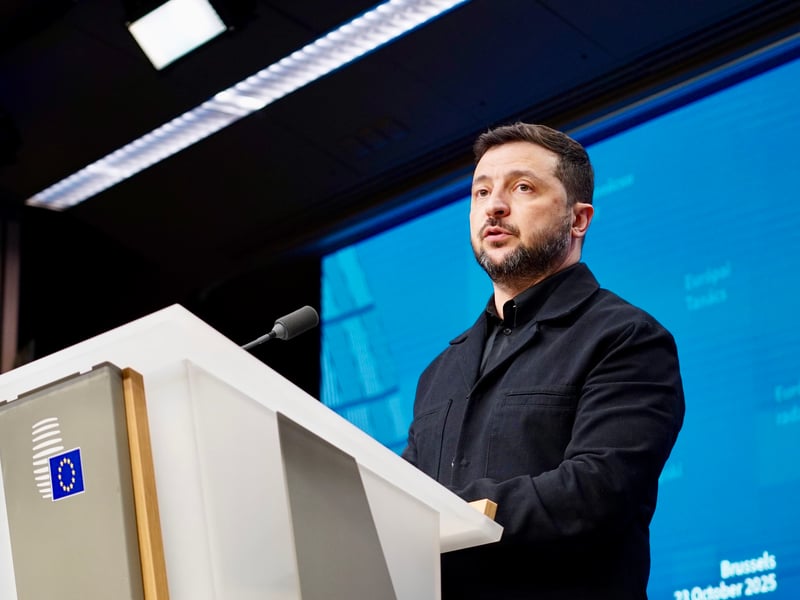
BRUSSELS (CN) — In a rare display of transatlantic coordination, the Trump administration and European Union hammered Russia with back-to-back sanctions this week — Trump’s first major punitive action against Moscow since taking office. But the EU summit in Brussels ended Thursday with leaders pledging Ukraine support while punting loan mechanics to December.
The EU approved its 19th sanctions package Thursday morning, banning Russian liquefied natural gas imports and targeting the “shadow fleet” — tankers that illegally transport Russian oil — cryptocurrency networks and Chinese entities that facilitate the trade. It came within 24 hours of Trump slapping sanctions on Russia’s two largest oil producers, Rosneft and Lukoil, after concluding Putin wasn’t negotiating in good faith.
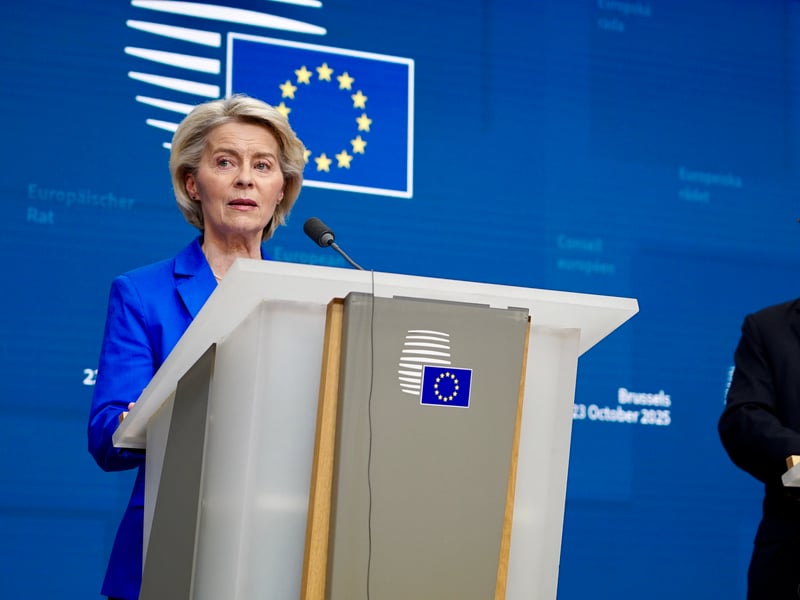
European Commission President Ursula von der Leyen got a heads-up call from Treasury Secretary Scott Bessent before the U.S. announcement. “With the imminent adoption of the EU’s 19th package, this is a clear signal from both sides of the Atlantic that we will keep up collective pressure on the aggressor,” she said on X. More sanctions could follow.
“Today it goes together with yesterday’s decisions of President Trump on energy, also [the] sanctions package. We waited for this. God bless, it will work,” Zelenskyy told reporters as he arrived for an EU leaders summit in Brussels.
On Tuesday, following last Friday’s White House meeting between Zelenskyy and Trump, European leaders issued a joint statement with Zelenskyy and the heads of Britain, Germany, France and Italy. It declared that “international borders must not be changed by force” — a direct rebuke to Trump’s suggestion the war be frozen along current battle lines. That would leave Russia occupying roughly 20% of Ukraine.
Europe has spent months anxious about Trump’s reliability on Ukraine. His calls to freeze the war along current battle lines and refusal to provide long-range Tomahawk missiles to Kyiv have fueled fears he might cut a deal with Putin over Ukraine’s head. The coordinated action suggests Trump may maintain pressure on Moscow — though his erratic messaging keeps European capitals on edge.
The White House called off a proposed Trump-Putin summit in Budapest this week after Russia stuck to its hard-line demands during a Monday call between Secretary of State Marco Rubio and Russian Foreign Minister Sergey Lavrov. “I don’t want to have a wasted meeting,” Trump said Tuesday.
Asked Thursday about his White House meeting with Trump last week, Zelenskyy offered a terse assessment: “We have sanctions on Russian energy. We don’t have meeting in Hungary without Ukraine. And we have not yet Tomahawks. That’s it. This is the result. I think not bad.”
‘Making Russia pay’
The latest sanctions package bans Russian liquefied natural gas imports starting January 2027, blacklists cryptocurrency providers — including a Russian state-backed stablecoin — and imposes transaction bans on banks in Tajikistan, Kyrgyzstan, the UAE, Hong Kong and five additional Russian banks. An additional 117 vessels were added to the EU’s port access ban, bringing the total to 557 shadow fleet tankers blocked from European waters.
The sanctions also crack down on Chinese entities — two refineries and an oil trader — that are major buyers of Russian crude oil.
The new joint action comes as European leaders finalize billions in aid for Ukraine — a massive loan repaid using profits from frozen Russian assets.
The EU and its member states have provided 177.5 billion euros ($206.3 billion) in support to Ukraine since the war began. The loan would give Ukraine sustained financing for two years using roughly 260 billion euros ($280 billion) in frozen Russian central bank reserves.
But the plan faces pushback. Belgian Prime Minister Bart De Wever warned Thursday that Belgium won’t support the loan without guarantees that all EU countries share the financial risk. Belgium hosts Euroclear, which holds the bulk of frozen Russian assets, making it a potential target for Russian retaliation.
De Wever noted Trump’s peace plan includes returning frozen assets to Russia for reconstruction — potentially leaving Belgium on the hook for billions.
That pushback derailed any concrete action Thursday. After De Wever held firm on his demands, leaders abandoned hopes and instead asked the EU executive to present “options” at the next summit on Dec. 19. Belgium accepted compromise language in the draft conclusions, but the proposal was effectively gutted.
European Council President António Costa had a message for Moscow despite the loan stalemate: “Russia should take good note of this. Ukraine will have the financial resources it needs to defend itself.”
Von der Leyen said the defense buildup will cost up to 800 billion euros ($929.7 billion) through 2030 — money she wants creating European jobs, not lining American contractors’ pockets. She pitched a “360-degree” security approach since tomorrow’s threat might come from the south, not the east.
Zelenskyy said Ukraine prioritizes domestic production first, European weapons second, and American arms only for systems like Patriots.
Hungarian Prime Minister Viktor Orbán skipped Thursday morning’s session with Zelenskyy, continuing Budapest’s refusal to sign any Ukraine-related declarations.
Europe’s defense dilemma
Ukraine isn’t just playing defense. Its Tuesday strike on Russia’s Bryansk Chemical Plant using British Storm Shadow missiles raises questions about whether Trump secretly loosened restrictions on hitting targets inside Russia. The plant makes gunpowder, explosives and rocket fuel.
Brussels wants something concrete locked down soon given the uncertainty about U.S. support.
But Thursday’s meeting exposes deeper questions about whether Europe can sustain Ukraine militarily if America backs off. Leaders stressed the need to reduce “strategic dependencies” — diplomatic language for Europe’s heavy reliance on American weapons and Chinese rare-earth metals.
The urgency became tangible Thursday evening when a Russian fighter jet and refueling aircraft briefly violated Lithuanian airspace from Kaliningrad — penetrating roughly 700 meters near Kybartai for about 18 seconds before retreating.
European capitals emphasized integrating Ukraine into the European defense industry, particularly for “defense innovation and cutting-edge defense technology.” It’s a signal that Europe wants Ukraine buying European as it rebuilds its arsenal — setting up potential tension with Washington over where the loan money gets spent.
Leaders also loosened the EU’s climate rules to give European industry some breathing room. They called for revising the bloc’s emissions trading system for buildings and transport, reviewing car CO2 standards to allow more flexibility for combustion engines and simplifying the carbon border tax.
The push comes as sky-high energy prices crush European manufacturers trying to compete globally — particularly against heavily subsidized Chinese green industries.
Von der Leyen framed climate policy as a cash grab Europe can’t afford to miss. Global battery markets will double by 2030, she told reporters, and Brussels plans “made in Europe” requirements for public procurement — weaponizing 2 trillion euros ($2.3 trillion) in annual government spending to favor domestic producers over Chinese competitors.
The summit also saw leaders push the commission to speed up cutting red tape — a rare issue that enjoys near-universal support across the bloc. It’s also welcome news for Trump, who has complained about EU regulatory overreach affecting American businesses.
China looms over the conclusions even without being named directly. Leaders called on the commission to “make effective use of all EU economic instruments” to counter “unfair trade practices” — diplomatic code for Beijing’s industrial subsidies and market distortions.
The language gives Brussels a green light to deploy the EU’s anti-coercion instrument — the so-called “trade bazooka “that allows retaliatory tariffs against economic blackmail — particularly after China’s recent restrictions on critical mineral exports that European factories depend on. France, Poland and Germany have been pushing for a tougher response, and Thursday’s conclusions suggest they got it.
Whether this week’s sanctions coordination signals lasting transatlantic unity or just a temporary alignment remains unclear. For now, both sides of the Atlantic are speaking the same language on Russia — even if Trump’s next move is anyone’s guess.
Courthouse News correspondent Yuval Molina is based in Brussels, Belgium.
Subscribe to our free newsletters
Our weekly newsletter Closing Arguments offers the latest about ongoing trials, major litigation and rulings in courthouses around the U.S. and the world, while the monthly Under the Lights dishes the legal dirt from Hollywood, sports, Big Tech and the arts.