
 Search Articles


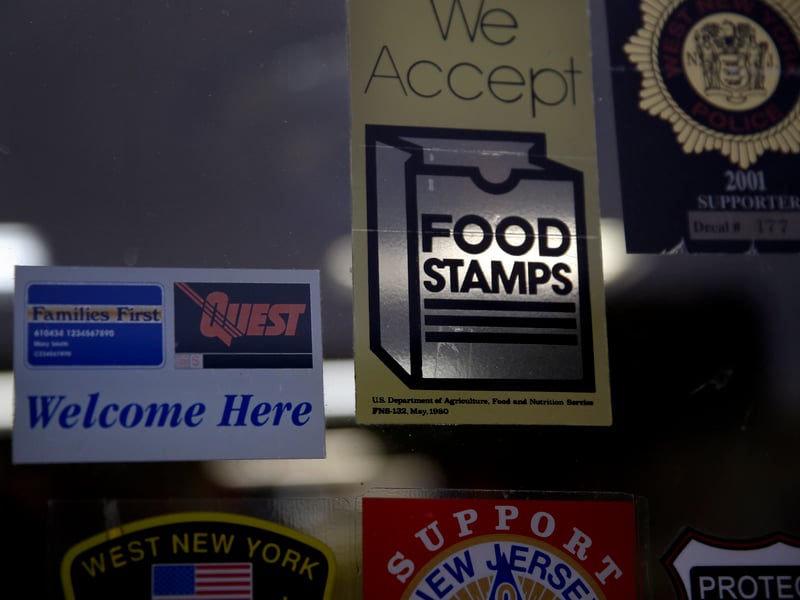
(CN) — A federal judge on Friday blocked the Trump administration from halting Supplemental Nutrition Assistance Program benefits as the government remains shut down with federal lawmakers unable to strike a budget deal.
U.S. District Judge John McConnell, a Barack Obama appointee in Rhode Island federal court, issued a bench ruling that grants a temporary restraining order keeping the program alive.
A group of cities, charities, churches, nonprofits and unions sued the Department of Agriculture on Thursday after the department announced it would be pausing SNAP benefits for the month of November due to the federal government’s ongoing shutdown.
“Today’s ruling is a lifeline for millions of families, seniors, and veterans who depend on SNAP to put food on the table,” the plaintiffs said in a joint statement. “It reaffirms a fundamental principle: no administration can use hunger as a political weapon. This victory is about more than one program — it’s about the American values of fairness, compassion, and accountability that hold our democracy together.”
Nationwide, approximately 42 million Americans use SNAP to address food insecurity. Children and seniors make up nearly 60% of all recipients; more than one million recipients are veterans.
McConnell’s ruling Friday temporarily preserves that aid just a day before the suspension was set to take place. It would have been the first time since SNAP’s inception that benefits were delayed.
Instead, the judge ordered the government to use a congressionally approved contingency fund to keep the program alive. The plaintiffs claim the USDA was inexplicably refusing to touch that money, about $6 billion, despite it being set aside for this very scenario.
The government can appeal to the First Circuit Court of Appeals, but it’s not immediately clear if it intends to do so. It remains uncertain how or when SNAP recipients will receive their benefits.
The USDA announced the intended pause with a letter to state agencies this month, saying it was “forced to direct states to hold their November issuance files and delay transmission to state EBT vendors until further notice.”
“The agency claims it cannot fund the program due to the government shutdown — even though previously appropriated funds are available, including contingency funds that Congress expressly designated for use when ‘necessary to carry out program operations,’” they argue.
The government never explained why it wouldn’t be using these funds, the plaintiffs claim, making its actions arbitrary and capricious. On the USDA website, it blames Democrats for the SNAP suspension with the following message:
“Senate Democrats have now voted 12 times to not fund the food stamp program, also known as the Supplemental Nutrition Assistance Program (SNAP). Bottom line, the well has run dry. At this time, there will be no benefits issued Nov. 1.”
Less than an hour before McConnell’s ruling, a federal judge in Massachusetts issued an order in a similar lawsuit that found states were likely to be harmed by the lack of SNAP funding. U.S. District Judge Indira Talwani, a Barack Obama appointee, ruled the government must to dip into those contingency funds to feed Americans.
“Defendants also may supplement the contingency funds by authorizing a transfer of additional funds,” Talwani ruled, responding to the government’s claim that the funds were insufficient to cover SNAP for all of November.
In that case, brought by 25 Democratic states and the District of Columbia, Talwani gave the Trump administration until Monday to come up with a plan to fund the benefits amid the shutdown.
The shutdown started on Oct. 1 after Democrats and Republicans in Congress failed to reach an agreement on health care provisions in the federal budget. With no end in sight, it’s possible that the current government freeze will surpass the longest shutdown in American history of 35 days — which occurred between 2018 and 2019, during Donald Trump’s first presidency.
 Follow @Uebey
 Follow @uebey.bsky.social
Subscribe to our free newsletters
Our weekly newsletter Closing Arguments offers the latest about ongoing trials, major litigation and rulings in courthouses around the U.S. and the world, while the monthly Under the Lights dishes the legal dirt from Hollywood, sports, Big Tech and the arts.