
 Search Articles


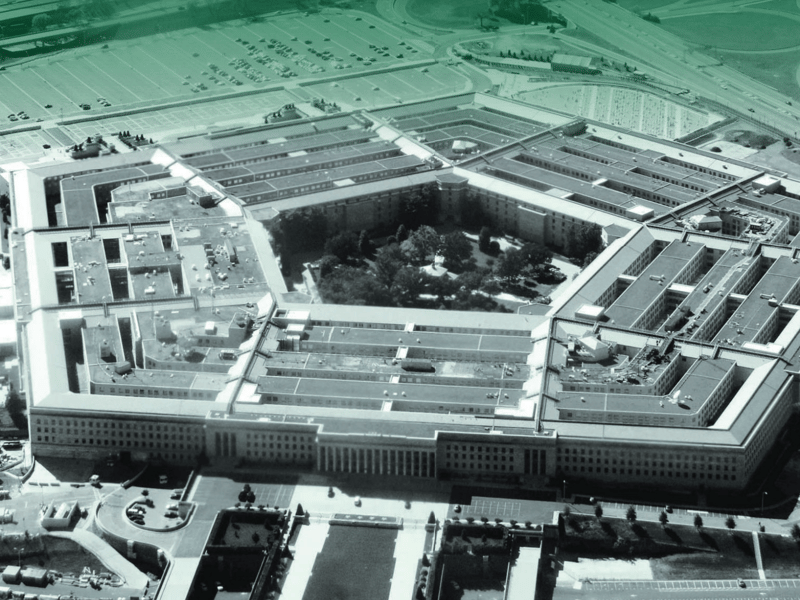
WASHINGTON (CN) — As part of his far-reaching efforts to leave his mark on the U.S. government, President Donald Trump on Friday signed an executive order renaming the Defense Department to the Department of War.
The move is purely symbolic — retitling the Pentagon agency does not shift its national defense mission or shuffle any of the military offices under its purview, and the president can’t unilaterally implement a name change without congressional approval.
But it does represent the belief of the president and his top advisors that the U.S. military apparatus should cut a tougher, more aggressive silhouette.
“We won the first World War, we won the second World War, we won everything before than and in between,” Trump said in the Oval Office Friday afternoon as he unveiled the name change. “And then we decided to go woke and we changed the name to the Department of Defense.”
The Defense Department as it exists today was established in 1947 by the National Security Act, signed into law by President Harry Truman. The legislation created the National Security Council, the U.S. Air Force and the Joint Chiefs of Staff. Those bodies were established under the so-called National Military Establishment — which was named the Department of Defense in 1949.
The original aim of the Defense Department’s creation was to unify the U.S. military and defense apparatus. Truman framed the effort as a way to cut down on wasteful spending and smooth over friction between military departments.
The War Department branding is itself a callback to the federal department established at the country’s founding to oversee military affairs. The historical agency was largely decentralized, and through World War II the heads of every military department were cabinet-level officials who reported to the president alongside the then-secretary of war.
Defense Secretary Pete Hegseth said that renaming the Defense Department to the Department of War was about “restoring the warrior ethos” of the U.S. military.
“We changed the name after World War II from the Department of War to the Department of Defense in 1974 … and we haven’t won a major war since,” said Hegseth.
The now-secretary of war did not explain how the name of the U.S. defense agency affected the country’s performance in recent wars but contended that the name change would reflect the military’s shift to offense in addition to defense.
“Maximum lethality, not tepid lethality — violent effect, not politically correct,” Hegseth quipped.
Trump and Hegseth were joined in the Oval Office on Friday by the nation’s highest-ranking military officer, General Dan Caine, who said the president had delivered a “clear and unambiguous” mission to deliver the administration’s stated goal of “peace through strength.”
Though the White House has said that the Pentagon rebrand helps project U.S. military might, critics of the project including Democrats in Congress have slammed the move as a distraction from other pressing issues.
“We are struggling for resources and dealing with conflicts around the world that we haven’t seen in my lifetime,” New Hampshire Senator Jeanne Shaheen, the top Democrat on the Senate Foreign Relations Committee, said on MSNBC Friday. “It is a very dangerous environment, and for the president and the secretary to spend time and energy [on this] is a distraction from what we need to do to focus on the readiness of our troops who are serving.”
Senate Minority Whip Dick Durbin called the rebrand a waste of time and resources and criticized Trump of undertaking an “unnecessary vanity exercise.”
Still, congressional Republicans backed the move. Oklahoma Senator Markwayne Mullin said on Fox News Friday that it was a signal to the world that the U.S. military would be “proactive” rather than “reactive.”
“The whole point of peace through strength is that you’re trying to prevent wars,” he said. “You can’t prevent wars if you’re always reacting to something — sometimes you’ve got to be proactive in that.”
The Defense Department rebrand was a part of “changing the mindset” of the U.S. military apparatus, Mullin argued.
At least one Republican member of Congress, Florida Representative Greg Steube, has said that he would sponsor legislation clearing the way for the White House’s proposed name change.
But even if lawmakers greenlight the rebrand, the Department of Defense logo and name appear on military signs, vehicles and buildings all over the world — retitling the agency will require billions of dollars and hundreds of hours of work. It’s unclear how that plays into the Trump administration’s stated goal of cutting down unnecessary government spending.
Trump said Friday that the Pentagon would approach the rebrand in “not the most expensive way.”
The White House has already taken an interest in the military’s branding. Hegseth has overseen efforts to walk back former President Joe Biden’s move to rename several U.S. bases that honored Confederate leaders, such as North Carolina’s Fort Bragg. The Pentagon in February returned the Bragg name to the Army base — but the new name refers to a World War II paratrooper of the same name, rather than the Confederate general Braxton Bragg.
And Hegseth in June announced that the Navy would rename the USNS Harvey Milk, an oiler support ship named for the gay rights activist and Navy officer.
Trump has also sought to leave his aesthetic mark on other areas of the U.S. government, including the White House itself. The president has directed changes to the executive mansion’s Rose Garden, paving over a section of lawn and installing a concrete patio populated by café tables and chairs. The Trump administration also announced in July that it would build a new 90,000 square foot ballroom in the White House, a project expected to wrap up before 2028.
 Follow @BenjaminSWeiss
Subscribe to our free newsletters
Our weekly newsletter Closing Arguments offers the latest about ongoing trials, major litigation and rulings in courthouses around the U.S. and the world, while the monthly Under the Lights dishes the legal dirt from Hollywood, sports, Big Tech and the arts.