
 Search Articles


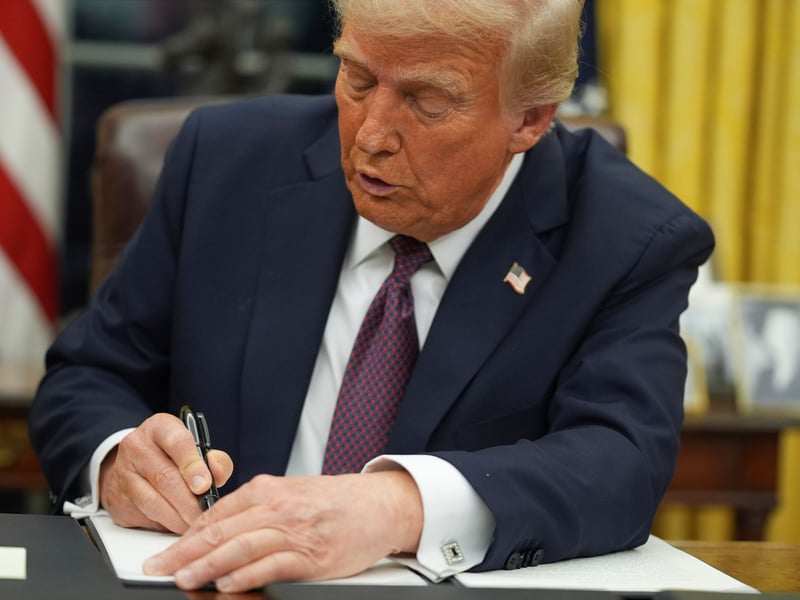
WASHINGTON (CN) — A knock-down, drag-out fight over legal scholarship has been playing out in the background of President Donald Trump’s bid to limit birthright citizenship, highlighting questions about how the court may use history to unwind a more than century-old promise for those born on U.S. soil.
Less than a month after Trump issued an executive order declaring an end to birthright citizenship for certain children, two law professors used an opinion piece to detail a legal argument now at the heart of a case before the Supreme Court: Does the 14th Amendment apply to all or only certain people born in the United States?
Randy Barnett, a professor at Georgetown University, and Ilan Wurman, a professor at the University of Minnesota, posited that the central question for birthright citizenship wasn’t “all persons born or naturalized in the United States,” but those “subject to the jurisdiction thereof” who were due 14th Amendment rights.
The article landed like a bomb, earning sharp condemnation from legal scholars and historians alike. That fight has only become more acrimonious a year later. Now the Supreme Court is set to weigh in, putting the justices in the middle of a contested fight over what it means to be American and highlighting the struggles of using history in the modern legal world.
Allegiance to the sovereign
Thirty years after the 14th Amendment enshrined citizenship rights in the Constitution, the Supreme Court affirmed those rights for children of foreign nationals. In 1898, United States v. Wong Kim Ark established parameters of what is known as jus soli, or the citizenship of children born in the United States to noncitizens.
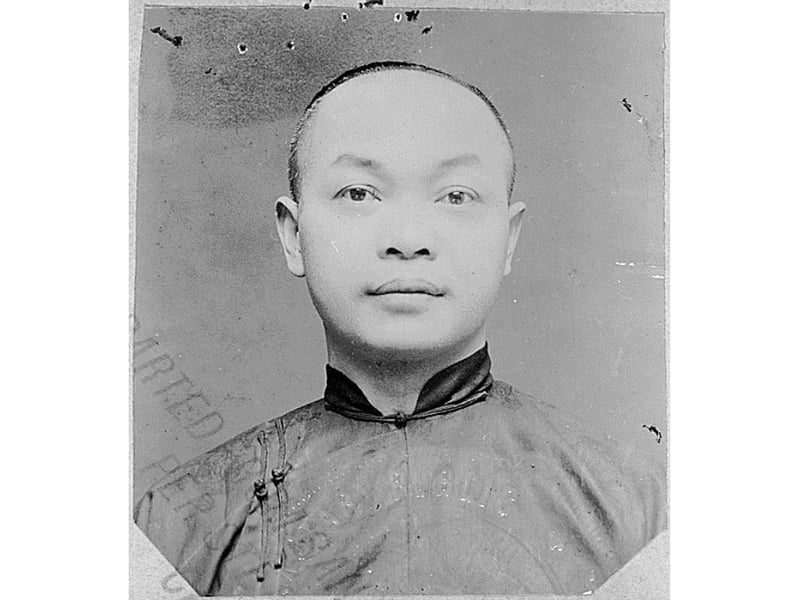
For over a century since then, the United States has granted citizenship to most people — with exceptions for children of diplomats and invading armies — born within its territorial boundaries with little fuss.
But Trump says his predecessors had it wrong, declaring that the 14th Amendment’s citizenship clause was a solution to a singular problem: Dred Scott v. Sandford. The Supreme Court held in the infamous 1857 ruling that formerly enslaved African Americans and their descendants were not citizens.
According to Trump, that is historical evidence the framers never intended to give citizenship to all children born on U.S. soil. In a 2025 executive order, Trump claimed to erase birthright citizenship for the children of individuals who do not have legal status or with temporary legal status.
While most legal scholars dismissed the argument as nonsensical, a small group offered support. Among them, Wurman became a leading voice for Trump’s arguments.
Wurman says history supports limiting birthright citizenship to parents under the sovereign’s protection in exchange for which the parents owed the sovereign allegiance. He described birthright citizenship as more of a contract than a territorial right.
“There’s a strong argument at common law that illegal aliens would not have been under the sovereign’s protection within the meaning of the relevant rule,” Wurman said in an interview. “And temporary visitors would have been under the sovereign’s protection, but the rule was contested as to whether it should apply to merely temporary visitors.”
A means to an end
The newfound reading of the 14th Amendment from Wurman and other law professors has been characterized as a revisionist history and compared to the Bush White House’s torture memos.
Anthony Michael Kreis, a professor at Georgia State University College of Law, co-authored an essay critiquing the new scholarship on methodological, factual and ethical grounds. Kreis said Wurman and others came up with an answer before doing the research to support it.
“When you have people who have demonstrated no expertise or have written nothing on the subject before and they suddenly come out with a brand new theory of 800 years of law, I think that’s rather suspect,” Kreis said. “Especially when it comes in the wake of a political controversy, and they seem to develop scholarship out of nowhere.”
Wurman’s law article on the topic was published a year after his opinion article kicked off this controversy.
Kreis is far from alone in critiquing Wurman’s work. Keith Whittington, a professor at Yale Law School and a visiting fellow at the Hoover Institution, characterized Wurman’s views as revisionist, saying he reversed the common law understanding of an immigrant pledging allegiance and the sovereign pledging protection. He argued the sovereign’s duty arises from an infant’s mere presence within its governing authority.
“The sovereign assumes the duty to protect infants within its jurisdiction without waiting for the infant to enter into any compact with mutual consent,” Whittington wrote in an amicus. “If a newborn infant an hour removed from its mother’s womb were left at a fire station, the state would not ask for the immigration status of the parent before protecting the child.”
Evan D. Bernick, a law professor at Northern Illinois University College of Law, and Jed Handelsman Shugerman, a law professor at Boston University, say submissions claiming an originalist argument for limiting birthright citizenship ranged from constitutionally irrelevant to plainly incorrect.
The Cato Institute dedicated five pages of its amicus brief to specifically rebutting Wurman’s claims.
“The vast majority of Wurman’s brief describes his own perspective on the common-law rules of citizenship, in play long before the ratification of the Fourteenth Amendment in 1868,” the group wrote. “That perspective is faint-hearted.”
Cato commended Wurman for hesitating to draw unjustified conclusions from equivocal evidence but concluded his brief’s “idiosyncratic application of originalist methods weakens the force of its tentative findings.”

Stars align
Prior to 2025, the legal scholarship for a limited reading of the citizenship clause was sparse. Notably, John Eastman, the architect of Trump’s effort to overturn the 2020 election results, wrote a 2006 article on the topic. And two law professors wrote a book in 1985 on the topic that was similarly criticized by the legal academy.
Barnett, Richard Epstein, a professor at NYU School of Law, and several other scholars have also submitted research supporting Trump’s position over the last year.
Wurman said his interest in the citizenship clause was sparked while researching a different topic on the 14th Amendment. After Trump issued his executive order and Wurman received tenure at his university, he decided to renew his research.
“The stars really have to align for a scholar to want to take the risk arguing something like this,” Wurman said. “The stars aligned for me for a variety of reasons, including my prior work on the 14th Amendment, my somewhat different political predispositions, and the fact that the Trump administration was doing this.”
For Wurman, that work looked like a lot of reading, first secondary literature and then the sources cited within them.
“You start reading the sources that people cite, and you just ask, ‘what are they actually saying?’” Wurman said. “Then you see what the primary sources themselves cite other sources, and you start building a mental map of the data and evidence. Sometimes, you read secondary sources you think are only tangentially related, but they suggest some insight, some connection that maybe no one else has seen before.”
One such topic included how noncitizens were treated under medieval law in England, which Wurman said led him to a history of royal safe conducts — medieval and early modern documents issued by monarchs or authorities to guarantee safe passage for travelers — and statutes granting permission to enter a sovereign’s territory.
“Everyone says that aliens from friendly countries in the 1600s and 1700s … are under the sovereign’s protection, but wait a minute, is it possible that that was only the case because the sovereign, through Parliament, gave them permission to enter an extended protection to them?” Wurman said. “That is an insight no one else had made before, and I was just doing general reading on the topic.”
To his critics, Wurman says “spare me the outrage.”
“Scholars on the left claiming someone on the right is politically motivated is kind of rich,” Wurman said. “I mean, can you name me one out of the thousands of public law professors who are on the left that have ever reached a single conclusion or idea that does not align with their political ideology? So it is kind of rich to accuse conservatives, whose method of originalism routinely requires them to update their understandings.”
Into the fire
Disagreements about history aren’t new, but as justices adopt originalist jurisprudence these debates are increasingly playing out on court dockets.
“Judges will cite things and clearly not really understand what they’re citing,” Kreis said. “Medieval treatises, for example, are really complicated documents. Justice Alito cited some medieval sources in the Dobbs decision, for example, but didn’t really fully flush out the context of the quotes that he was using, and didn’t really seem to grasp what the source he was citing actually was.”
This isn’t a one-sided issue. Kreis noted that a Texas judge cited a 15th-century law from England to uphold gun regulations. However, the law in question was meant to disarm the Welsh people and was enacted in anti-Welsh opposition, due to rebellion.
“One of the great problems in historical research is … there are multiple reasons that things happen,” Kreis said. “And sometimes good principles emerge out of bad facts, and sometimes the reverse is true. Law wasn’t really equipped to handle history with that degree of nuance.”
Without the training of historians, Kreis said, judges end up cherry-picking academics’ work — sometimes well, and others not.
“Laws aren’t really equipped to assimilate even the best academic work well,” Kreis said. “And I think then there’s this problem of some academics who are opportunists, trying to wade into a salient political debate with litigation on the mind, hoping to influence that litigation, and doing incredibly sloppy, methodologically bankrupt academic work, or I should say, even pseudo-academic work.”
While the historical debate around birthright citizenship flows from the Supreme Court’s interest in originalism, the justices could avoid picking sides by ruling on statutory grounds. Congress codified the citizenship rights enshrined in the 14th Amendment in 1940 and again in 1952.
Present day
Trump’s executive order is prospective — seemingly only applying to the children of certain immigrants after it was set to take effect. However, advocates are worried about what history has shown happens when citizenship rights are stripped from certain groups.
In 1923, the Supreme Court denied citizenship rights to an Indian immigrant who served in the U.S. Army during World War I. The unanimous decision in United States v. Bhagat Singh Thind denied Thind’s naturalization bid, ruling that people from India did not count as “white.”
“In the Bhagat Singh Thind case, where South Asians were denied U.S. citizenship, historically, the government went back and stripped the citizenship of South Asians,” Aarti Kohli, executive director of the Asian Law Caucus. “So this has been done before … . While the government is saying the executive order is prospective, others can come in and use the same logic to challenge existing Americans’ citizenship.”
According to the Migration Policy Institute, the executive order could affect an estimated 255,000 babies each year. A group of social scientists estimated that if implemented, the order would strip 4.8 million future U.S.-born children of citizenship over the next 20 years.
The Supreme Court will hear oral arguments on April 1.
 Follow @KelseyReichmann
 Follow @kelseyreichmann.bsky.social
Subscribe to our free newsletters
Our weekly newsletter Closing Arguments offers the latest about ongoing trials, major litigation and rulings in courthouses around the U.S. and the world, while the monthly Under the Lights dishes the legal dirt from Hollywood, sports, Big Tech and the arts.