
 Search Articles


MANCHESTER, England (CN) — The global loss of nature poses a direct risk to British security, the U.K. government is warning, backed by its top intelligence body.
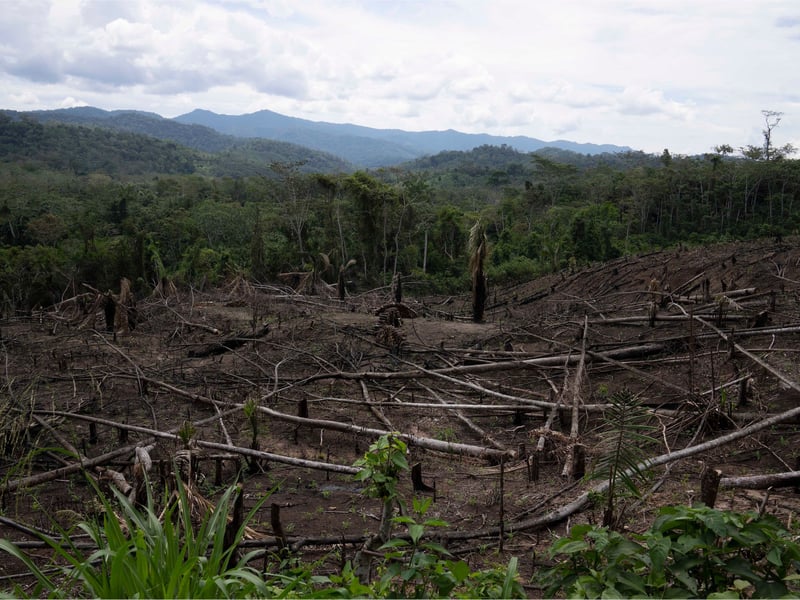
Officials say the decline of ecosystems such as the Amazon rainforest, the Himalayas, boreal forests and Southeast Asia’s coral reefs, could drive conflict, migration and higher food prices that would hit the U.K. at home.
Officials call nature a core pillar of national security and say current trends put key regions “on a pathway to collapse” in a report published Jan. 21 by the Department for Environment, Food and Rural Affairs, known as Defra.
The 14-page document was written with the Joint Intelligence Committee, which oversees Britain’s security agencies.
“The decline in the health of nature around the world poses a threat to the U.K.’s security and prosperity,” the experts wrote, warning of “cascading risks” from ecosystem damage, including conflict, migration and competition for resources.
The assessment says ecosystem collapse would raise pandemic risks, fuel organized crime and increase the chance of conflict between and within states as groups compete for food, water and land. It also warns that damage to major food-producing regions would drive up global prices and restrict supply to the U.K.
The government said the findings would shape future policy.
The report’s release comes after months of delay. It was meant to be published in October 2025, but ministers blocked its release over concerns it was too negative.
A Defra spokesperson said: “The U.K. has a resilient food system and remains one of the most food-secure nations in the world.”
Seeking to assure the public, Defra said: “We have access through international trade to food products that cannot be produced here, which supplements domestic production and ensures that any disruption from risks such as adverse weather or disease do not affect the U.K.’s overall security of supply.”
Its publication also comes as the government faces claims it is stepping back from earlier pledges to protect wildlife and ecosystems.
At the COP30 climate summit in Brazil in November, the U.K. did not commit public money to Brazil’s Tropical Forests Forever Facility, a fund designed to protect rainforests.
Ministers said the economy was under strain but they would seek to contribute in the future and encourage private investment.
U.K. food system tied to fragile regions
Tim Benton, a professor of population ecology at the University of Leeds, said the report reflects how tied the U.K. is to a global food system under strain.
Britain imports about 40% of what it eats and relies on fragile regions for animal feed, fertilizer and fresh produce.
“The food system is embedded in a complex, global socio-political system which is increasingly volatile and fragile,” Benton said, pointing to the shift toward nationalist politics.
The demand for natural resources is growing in an era where national security is at the forefront, which we are seeing in relation to Greenland.
“On top of that is the specter of climate change and biodiversity loss,” Benton added, making agricultural yields volatile.
“I am not so worried about a breadbasket failure, per se, but things happening together to jointly disrupt international trade,” he said, such as a war coinciding with climate damage in a bad harvest year.
“In that way, demand can outstrip supply, markets spike and prices and local availability crash, leading to food insecurity and cost-of-living crises,” he said.
Benton thinks current policy does not do enough to lower those risks.
“The U.K. remains too exposed,” he said, adding that reliance on global markets leaves poorer households most at risk when prices rise.
Experts question reliance on tech
The government report leans in part on technology, from artificial intelligence to lab-grown meat, as a way to soften the blow of ecosystem loss.
Sian Sullivan, a professor of environment and culture at Bath Spa University, questioned that approach.
She said framing biodiversity loss as a security threat adds urgency but may not change how people value nature.
“Nature is a foundation of national security,” the government wrote in the report, but Sullivan warned that such language can leave living systems in the background.
“Framing biodiversity loss and climate change as a national security threat definitely implies urgency, but I’m not sure how exactly this will help us to care for and relate better with species, ecologies and ecosystems,” she said.
Sullivan was also skeptical of high-tech fixes.
She said tools like AI use large amounts of energy and that lab-grown protein echoes the techno-optimism of past movements that promised to decouple human development from environmental impacts.
For Benton, change may come whether governments plan for it or not.
“As the world becomes more volatile, the muscular politics of today means powerful nations will protect their interests first and middle powers will be squeezed,” he said.
The belief that food supplies will be stabilized through technology is likely to be insufficient, according to Benton. “Agricultural change will be inevitable, as will change in diets partly driven by changing availability,” he said.
By tying forests, reefs and farms to national security, the government has elevated the importance of nature. But in doing do, it has also put its own record under sharper scrutiny.
Courthouse News reporter James Francis Whitehead is based in England.
 Follow @jayfranklinlive
Subscribe to our free newsletters
Our weekly newsletter Closing Arguments offers the latest about ongoing trials, major litigation and rulings in courthouses around the U.S. and the world, while the monthly Under the Lights dishes the legal dirt from Hollywood, sports, Big Tech and the arts.