
 Search Articles


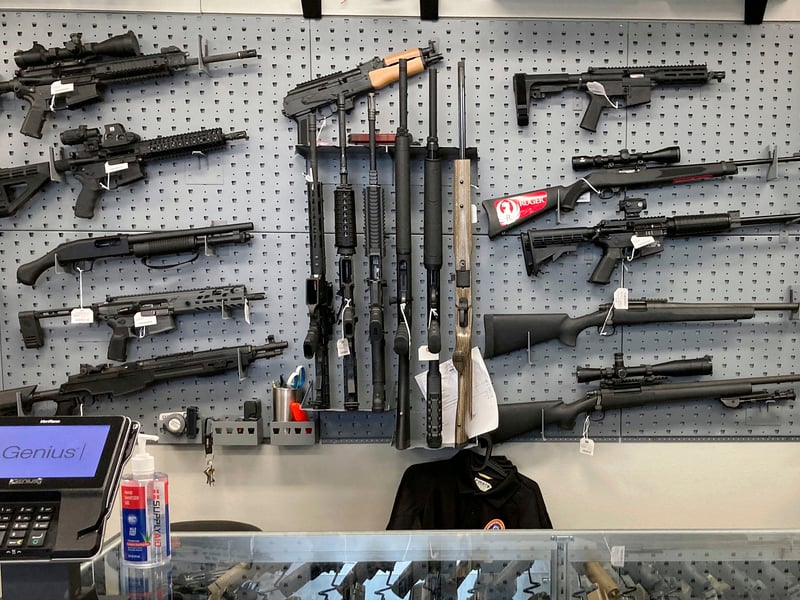
WASHINGTON (CN) — The Supreme Court agreed Friday to review Mexico’s lawsuit seeking to hold U.S. gun manufacturers liable for selling weapons to cartel-linked traffickers.
U.S. firearms industry giants led by Smith & Wesson asked the court to review if the production and sale of their weapons in the United States can be linked to cartel violence harming the Mexican government.
“Absent this court’s intervention, Mexico’s multi-billion-dollar suit will hang over the American firearms industry for years, inflicting costly and intrusive discovery at the hands of a foreign sovereign that is trying to bully the industry into adopting a host of gun-control measures that have been repeatedly rejected by American voters,” the gunmakers wrote in their petition.
The gunmakers warned that the lawsuit filed in Massachusetts federal court could result in billions of dollars in damages, plus regulations like assault weapons bans and universal background checks that could reshape the industry. They claim allowing it to move forward encouraged other foreign governments to bring similar claims, “all seeking to distract from their own political failings by laying the blame for criminal violence at the feet of the American firearms industry.”
Facing strict gun laws at home, Mexico says cartels turned to the neighboring U.S. to buy weapons. Nearly half of all firearms recovered at crime scenes are manufactured by U.S. gun companies, and an estimated 342,000 to 597,000 U.S. firearms enter the county every year, Mexico claims.
Cartels use straw purchasers to buy guns from federally licensed firearms dealers. Firearms companies are protected by the Protection of Lawful Commerce in Arms Act, which restricts liability claims against gun makers from the downstream criminal misuse of their products. Still, Mexico claims third-party sales to cartels are no accident.
In its lawsuit, Mexico says U.S. gun manufacturers made deliberate choices to supply their products to bad actors and marketed their products intending to increase cartel demand. The country says 90% of guns used in crimes are sold by a certain subset of dealers. “And the crime-gun pipeline could be curtailed if those dealers were not supplied and were required to sell guns safely.”
“Mexico is not seeking to hold petitioners liable for mere passive indifference to the trafficking of their firearms, but for their affirmative and intentional conduct that increases their profits by enabling and facilitating unlawful firearms sales to cartel-linked traffickers,” the country wrote.
After a lower court dismissed it, the First Circuit revived Mexico’s lawsuit. The appeals court said the complaint fell into an exception to the Protection of Lawful Commerce in Arms Act because it accused gunmakers of knowingly violating firearm laws.
Similar domestic lawsuits against firearms manufacturers have been unsuccessful at holding the companies liable for gun violence. So far, courts have ruled that the connection between weapons companies and a shooting or other act of violence is too attenuated to establish a proximate cause.
At the Supreme Court, the companies said Mexico’s lawsuit should face a similar fate.
“Mexico’s suit involves a parade of bad actors — straw purchasers, cross-border smugglers, illegal foreign sellers, foreign cartel members, and many more,” the manufacturers wrote. “There is no sound way to apportion fault across this far-reaching chain of actors, especially since even the complaint admits that the majority of illegal firearms in Mexico were not made or sold by defendants.”
While the gunmakers framed the case before the court as dire, Mexico said the furor was artificial.
“Petitioners try to bolster this case’s importance by arguing that the decision below ‘upends’ ‘basic norms of American law,’ exposing (apparently) every American business to wide-ranging liability,” Mexico wrote. “Petitioners’ flotilla of amici offer much the same rhetoric.”
Mexico said the law on proximate cause and aiding and abetting liability didn’t change with the First Circuit’s ruling. “The sky did not fall when these courts issued their decisions.”
This lawsuit will be far from resolved after the Supreme Court’s review. The appeals court ruling only allowed Mexico to continue its lawsuit. The District of Massachusetts still has many motions to resolve, including jurisdiction, and likely will field discovery and summary judgment motions if Mexico’s claims survive.
Per custom, the court did not explain its decision to grant the petition. The Supreme Court will hear arguments in the case early next year.
 Follow @KelseyReichmann
 Follow @kelseyreichmann.bsky.social
Subscribe to our free newsletters
Our weekly newsletter Closing Arguments offers the latest about ongoing trials, major litigation and rulings in courthouses around the U.S. and the world, while the monthly Under the Lights dishes the legal dirt from Hollywood, sports, Big Tech and the arts.