
 Search Articles


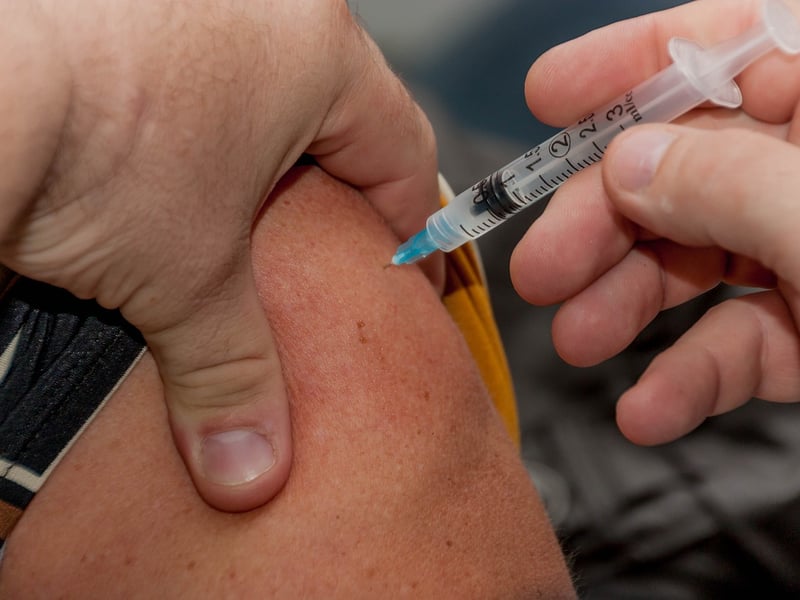
(CN) — A vaccination, a cascade of unexplained symptoms and years of legal back-and-forth came to a head Thursday, as Europe’s top court clarified when the clock starts ticking for injury claims and how long patients really have to act.
A French woman, identified as LF, took vaccine maker Sanofi Pasteur to court after receiving a diphtheria, tetanus and polio shot in 2003 and falling ill in the years that followed. By the following year, she was dealing with a string of symptoms, from persistent pain and infections to extreme fatigue, before medical examinations in 2008 identified macrophagic myofasciitis, indicating the presence of aluminum residues.
She first brought her case in 2015 before a medical compensation board, which rejected her claim, and later turned to civil courts in 2020 seeking compensation, arguing the vaccine was unsafe and that the company failed to act despite known risks. French courts initially dismissed her claims as time-barred before the case was reopened on appeal, eventually reaching Luxembourg after a French appeals court asked the Court of Justice of the European Union to clarify how EU product liability rules apply to time limits in cases involving progressive illnesses.
In its ruling, the court said she can pursue both lines of argument but made clear that strict time limits still apply to when those claims can be filed.
Victims are not limited to a single way of bringing a claim. Even though EU law sets out a dedicated system for defective products, it “must be interpreted as not precluding a person injured by a defective product from seeking compensation for that damage from the producer on the basis of the general fault-based liability system,” the judges wrote.
In practice, that means two parallel routes. One allows compensation based on the product being unsafe, without needing to prove fault. The other requires showing the company acted wrongfully, for example by failing to monitor risks or leaving a dangerous product on the market.
The bigger fight, however, was about time.
EU law sets a three-year deadline to bring claims, starting when the victim becomes aware of the damage, the defect and who caused it. French courts had taken a different view in cases involving progressive illnesses, linking the deadline to when a condition stabilizes. The EU judges rejected that approach.
The clock starts earlier than many patients might expect. The deadline begins once the damage is clear and can be linked to a product, even if the illness continues to evolve.
The court warned that tying the deadline to stabilization would undermine legal certainty, noting that in progressive diseases “the date on which the damage stabilizes, in the case of a progressive illness, is inherently uncertain and could moreover be the date of death of the injured person.” That, the judges signaled, would leave manufacturers exposed to claims indefinitely, with no clear point at which liability ends.
Alongside that rule sits an even stricter limit: A 10-year cutoff from when the product was put on the market. After that, claims under the EU’s defect-based system expire entirely, regardless of when symptoms appear.
LF argues that this long-stop rule unfairly blocks victims of slow-developing illnesses from ever reaching court. But the judges upheld it, finding no violation of the right to effective judicial protection.
They said victims still have a meaningful window to act, as the harm will usually become apparent within that 10-year period, allowing claims to be filed in time. Once proceedings start, national rules can also allow additional compensation as the condition evolves.
That reading drew criticism from consumer advocates. Urs Buscke, a senior legal officer at BEUC, a Brussels-based European consumer umbrella group, said: “Unfortunately, the court has interpreted the limitation period in Product Liability Directive in a very strict way, which will require consumers who suffer from progressive illness caused by defective products to initiate legal proceedings for compensation before their conditions may even have stabilized.”
For LF, the outcome is mixed. She can pursue both a defective product claim and a fault-based claim against vaccine manufacturer Sanofi Pasteur, keeping her case alive after French courts initially dismissed it as time-barred, but the two paths do not stand on equal footing.
Any claim based on defective product liability appears to run into the EU’s 10-year cutoff, given that the vaccine was administered in 2003 while proceedings were only brought years later, leaving the fault-based route, governed by French law and subject to a five-year limitation period, as the more realistic path forward, especially as the link between her condition and the vaccine remained uncertain for years and was not confirmed in later expert findings, potentially placing her 2020 claim within that time frame.
Her lawyer, Marie Leroux, described the ruling as a significant development, saying it clarifies that producers may be pursued on the basis of fault for any breach of their obligations, while also pointing to a more flexible reading of the three-year limitation period, though she cautioned the implications of the 10-year cutoff will require closer analysis.
Sanofi Pasteur did not respond to a request for comment.
Nothing is decided on the merits. The ruling does not determine whether the vaccine caused her illness or whether Sanofi Pasteur acted negligently, but sends the case back for the French court to decide, with timing now the key issue in determining whether her 2020 claim can proceed or is time-barred.
Courthouse News reporter Eunseo Hong is based in the Netherlands.
Subscribe to our free newsletters
Our weekly newsletter Closing Arguments offers the latest about ongoing trials, major litigation and rulings in courthouses around the U.S. and the world, while the monthly Under the Lights dishes the legal dirt from Hollywood, sports, Big Tech and the arts.