
 Search Articles


ROSKILDE, Denmark (CN) — Viking-related subjects are having a moment. Just last year, five so-called Viking ring fortresses were inducted into UNESCO’s World Heritage List, the U.N. agency’s registry of culturally significant places and practices.
The 10th-century fortresses — Aggersborg, Borgring, Fyrkat, Nonnebakken and Trelleborg, all of them in Denmark — are just some of the latest Viking sites and lifeways to receive international recognition. The new listings in April inspired Norwegian officials to begin the process of nominating seven ship burial mounds from the Viking Age into the prestigious catalog.
Across the border from Denmark in the northern German state of Schleswig-Holstein, there’s also the Viking trading town of Hedeby. The town is partially enclosed by the Danevirke, a fortification line that separated Denmark’s Jutland Peninsula from the rest of the European continent.
During the Viking Age, this trading hub helped connect merchants on the European mainland with those in Scandinavia. It’s also on the World Heritage List after receiving UNESCO recognition in 2018.
To better understand the current Vikingmania, I recently paid a visit to the Viking Ship Museum in Roskilde, a city some 30 kilometers or about 18.6 miles outside the Danish capital of Copenhagen.
I met museum spokesperson Rikke Johansen in front of the museum’s main attraction: a collection of five 1000-year-old Viking ships in the center of the museum’s exhibition hall. The space was bright and airy, with a massive glass wall providing what might be some of the best views of Roskilde Fjord.
These ships draw about 170,000 visitors a year to the Viking Ship Museum — but it’s not the ships themselves that have attracted the attention of archivists at groups like UNESCO. Rather, it’s the specialized techniques used to build them, which UNESCO in 2021 deemed to be part of the intangible cultural heritage of humanity.
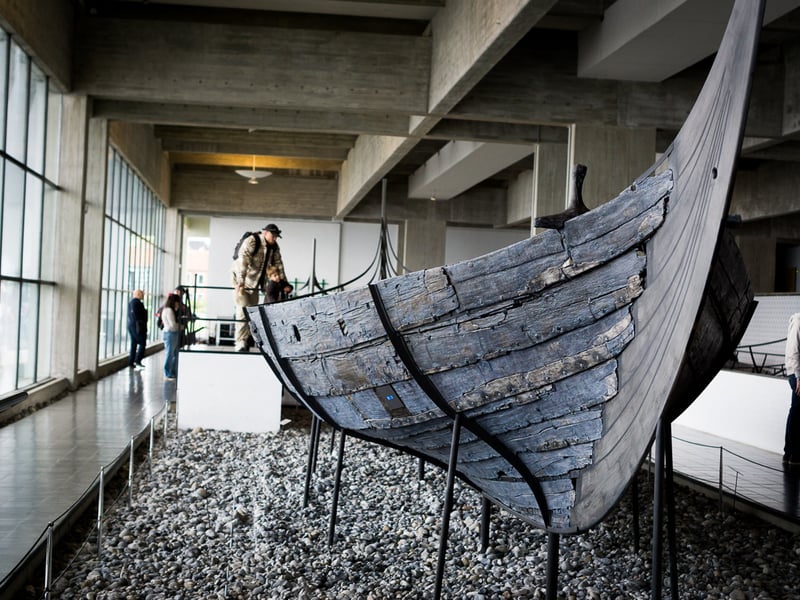
Known as clinker boats, these five- to ten-meter-long open wooden boats have been crafted in the Nordic region for almost two millennia, using the same basic techniques that enabled Vikings to conquer the seas.
Their keels and stems are covered by thin overlapping wooden planks, which are themselves fastened together with metal rivets, treenails or ropes. In Viking times, it could take a shipbuilder up to 10 years to learn the technique.
Has the clinker ships’ inclusion on the UNESCO’s World Heritage List helped bring more tourists to the Viking Ship Museum? Johansen was ambivalent. “It’s a bit cheeky, but I’m going to say it anyway: Sometimes I feel like we are the ones telling others about the existence of UNESCO’s List of Intangible Cultural Heritage, rather than it’s a brand talking about us,” she said.
While politicians and museum directors might celebrate the honor of a UNESCO listing, having one does not automatically bring in the tourists.
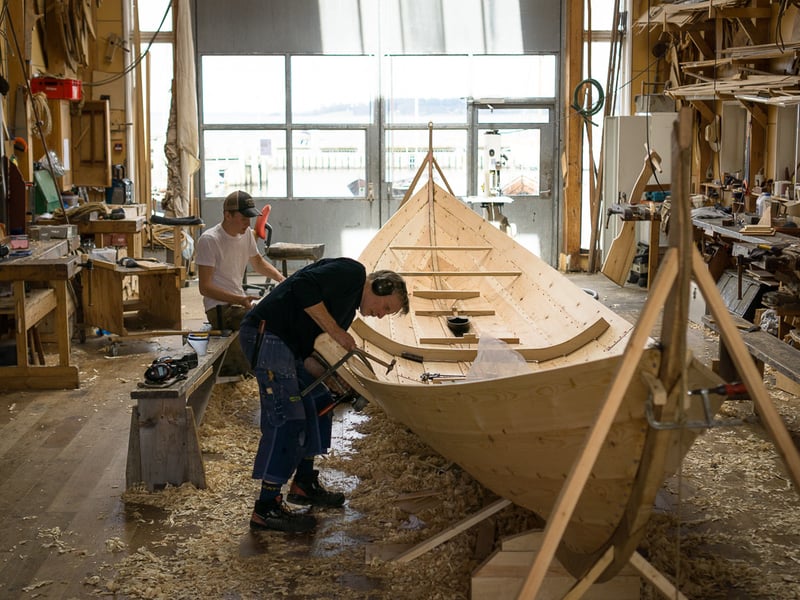
For that, one needs good marketing. One of the Viking Ship Museum’s main draws is its harbor, where visitors can experience in person the craft of clinker ship-building. At a boatyard about a five-minute walk from the main exhibition hall, guests can watch craftsmen build the vessels using only UNESCO-acknowledged Nordic clinker boat traditions.
The boatyard smelled of freshly cut wood. Against the sounds of knives and hammers at work, master clinker-boat craftsmen pitched visitors on why these boats have intangible cultural worth to all of humanity.
“There’s no doubt that this UNESCO recognition means something for all the people involved in this trade,” said Søren Nielsen, a shipbuilder and researcher at the museum. He started working at the museum over three decades ago, beginning as a boat builder before eventually leading multiple projects, including the boatyard.
Nielsen played a key role in the UNESCO application submitted by Denmark, Finland, Iceland, Norway and Sweden.
“This was a common Nordic application,” Nielsen said. “It means something when UNESCO recognizes this as an important element in Scandinavian identity and finds our craft worthy of being cultural heritage of humanity.” The label gives a boost to the clinker-boat industry, he added, helping ensure the survival of the craft.
As if offering a trip back in time, the UNESCO label helps maintain techniques that have been passed on for generations. “When we reconstruct ships, we without a doubt gain an understanding of the challenges our ancestors faced,” Nielsen said. “It starts with searching for the right wood in the forest — and that by itself places you in the shoes of the craftsmen building the boats just 200 or even 1000 years ago.”
 Follow @LasseSrensen13
Subscribe to our free newsletters
Our weekly newsletter Closing Arguments offers the latest about ongoing trials, major litigation and rulings in courthouses around the U.S. and the world, while the monthly Under the Lights dishes the legal dirt from Hollywood, sports, Big Tech and the arts.