Search Articles


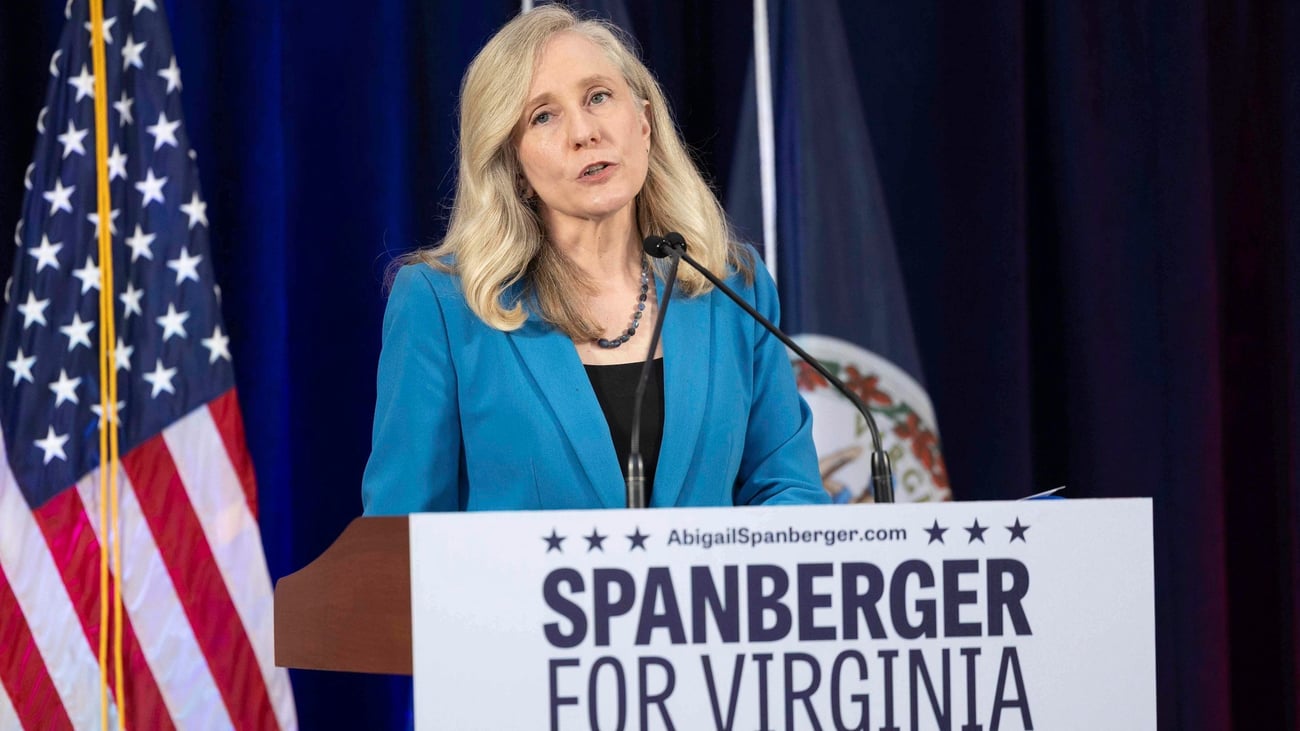
RICHMOND, Va. (CN) —Leaders from six Virginia localities are urging Democratic Governor Abigail Spanberger to sign a state and local government collective bargaining bill they say will improve employee morale and retention.
The officials sent a letter late Monday, after the General Assembly on April 22 rejected sweeping amendments from Spanberger that labor unions argue weakened the bill. The original version removes a requirement that would have forced local governments or schools to vote to allow employees to unionize. The bill also creates a Public Employee Relations Board and codifies employees’ right to negotiate on certain issues — including staffing, working conditions and benefits.
Spanberger had offered over a dozen amendments, including seeking to delay the implementation of collective-bargaining rights for local government employees from 2028 to 2030.
She also wanted to give governor-appointed members of the Public Employee Relations Board a much larger role in negotiations and remove language requiring the board to include at least two union representatives. Spanberger sought clarification that government employers are not waiving sovereign immunity — a move that would likely leave employees unable to seek monetary damages for violations.
Those amendments are now off the table; the governor has until May 22 to sign the bill as it initially passed, let it become law without her signature or veto a party priority.
In the letter, local elected officials in Albermarle, Fairfax, Prince William and Loudoun counties and several cities and towns that have approved collective bargaining urge passage of the bill as it stands.
“All together, we represent more than a million Virginians in localities that have opted to allow our public service workers to have the freedom to bargain collectively for fair wages, benefits and working conditions,” the officials said. “As pioneering localities, we can speak firsthand to the benefits that collective bargaining has afforded our communities.”
The officials claim that collective bargaining has improved employee morale.
“This past year has created a lot of uncertainty and chaos due to the attacks on public sector workers at the federal level, leading to increased unemployment and economic uncertainty in our commonwealth,” the officials said. “Thanks to collective bargaining, our local workers know that they are not only valued but also heard.”
The officials say collective bargaining has helped local governments prioritize the most-needed changes.
“Previously, local leaders struggled to get a sense of the top priorities of our workforce because we lacked a formal structure and clear guidelines to ensure we have a civil and realistic conversation about what workers needed and how our local governments could meet their needs. Our workers did not seek premium salary and benefits packages. They asked for clearer workplace safety standards, paid family and medical leave, reasonable working hours, and cost-of-living adjustments,” the leaders wrote.
The 28 officials, who include the chair of the Prince William County Board of Supervisors and the vice mayor of Roanoke, offered to work with the governor.
Spanberger cited local concerns as the reason for her amendments and her hesitancy to sign the bill, speaking to a local TV affiliate.
“I support public sector collective bargaining, but importantly, as governor and head of the executive branch, I will also be tasked with implementing whatever the General Assembly passes and what I sign into law,” Spanberger said. “The onus has been on me, and it’s a responsibility I take very seriously to make sure that we’re hearing all of the voices who will be impacted.”
Spanberger’s chief of staff, Bonnie Krenz-Schnurman, is married to Michael Schnurman, who worked in intergovernmental relations for Henrico County as of May 2025, a locality without collective bargaining.
“I am pleased there are some local governments that are looking to be collaborative in the legislative process instead of merely being obstructionist,” State Senate Majority Leader Scott Surovell, a patron of the bill, said in a statement to Courthouse News. “Hopefully, the governor will not give the same weight to local governments that have no interest in participating in collective bargaining."
Richmond Mayor Danny Avula, however, sent a letter to Spanberger in April voicing concerns about the bill’s implementation.
““We are so grateful that pro-worker local lawmakers, representing over 2.5 million Virginians, sent a letter to Governor Spanberger to call on her to sign the historic collective bargaining bill that is currently in front of her,” SEIU Virginia 512 President LaNoral Thomas said. “These champions understand that when public sector workers have a meaningful voice on the job to fight for fair wages and working conditions, our communities are stronger. Virginians rely on home care workers, teachers, and firefighters each and every day. It is only right for Governor Spanberger to honor their hard work by reinstating their right to collectively bargain and repealing one of the remaining legacies of the Jim Crow South.”
Subscribe to our free newsletters
Our weekly newsletter Closing Arguments offers the latest about ongoing trials, major litigation and rulings in courthouses around the U.S. and the world, while the monthly Under the Lights dishes the legal dirt from Hollywood, sports, Big Tech and the arts.