
 Search Articles


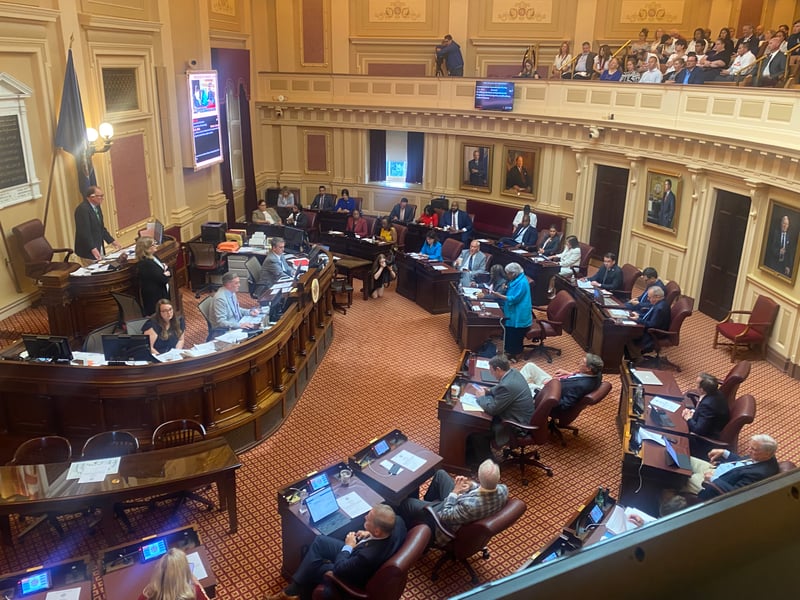
RICHMOND, Va. (CN) — Virginia lawmakers reconvened once again on a muggy Thursday to repeal changes to a tuition-waiver program for military dependents and their spouses.
“Whenever there’s a disagreement, there can never be a simple disagreement,” Senate Democratic Caucus Chair Mamie Locke said on the floor.
It took a handful of costly trips paid for by taxpayers back to the Capitol for legislators, but the program is back to its original form after outcry from the veteran community about cuts slipped into the state’s budget. Virginia’s Democratic-controlled legislature and GOP Governor Glenn Youngkin agreed to the cuts when Youngkin signed the budget in May.
The Virginia Military Survivors and Dependents Education Program provides education benefits to the spouses and children of veterans who the Department of Veteran Affairs has rated as at least 90% permanently disabled due to military service. Family members of veterans killed, missing in action or taken prisoner can also receive the subsidies.
The changes aimed at lowering participation included re-enacting a domicile requirement, limiting awards to first undergraduate degrees, requiring the completion of the FAFSA and restoring a satisfactory academic progress requirement. Under the changes, only dependents of service members injured or killed in combat could apply.
Budget negotiators argued the cuts were needed to keep the growing subsidy program financially viable. According to the state’s Department of Planning and Budget, program participation rose from 1,387 students in 2019 to 6,125 students in 2023 — though veterans dispute those figures. Public universities, which bear the cost of the waivers, say the subsidies lead to higher tuition fees for other students.
Youngkin and other state lawmakers changed course after veterans from around the Commonwealth voiced their displeasure with the proposed changes. The Senate delayed the process multiple times because it couldn’t agree on a path forward for who would pay for the program.
“I just want to remind everybody that the reason the taxpayers had to spend all this extra money to solve this problem is because people wouldn’t cooperate,” Senator Stuart Surovell, a Democrat, said on the floor. “Secondly, there’s not a single person on this side of the aisle that’s said veterans are too expensive."
Democrat Louise Lucas, the Senate President Pro Tempore, shouldered a considerable amount of blame from the veteran community after she used her authority to delay a vote to repeal the changes.
Along with Locke, Lucas initially didn’t support a full repeal of the cuts but instead hoped to delay implementation until July 2025, giving policymakers further time to study ways to offset the program’s rising cost.
“If I want to see some adjustments made to the VMSDEP program, then I assuredly must be against veterans,” Locke said. “That’s the picture that was painted for anyone who wanted to adjust a program that’s been growing exponentially to simply make it more sustainable and work to the best benefit of veterans and their families.”
Lucas patroned Thursday’s legislation, which allocates $90 million in surplus revenues to support the program until 2026. The measures received full bipartisan support with a unanimous vote, but partisanship still ruled the day as lawmakers took turns shooting shots at one another.
Lucas claims Youngkin brought the cuts, but both parties blame the other. Tempers flared in a recent study group hearing aimed at taking input from the veteran community when a public speaker called Lucas a bitch.
“I was taken back by how fast our working relationship between both parties broke down,” Senator Aaron Rouse, a Democrat, said on the floor. “The senator from Portsmouth carried the weight of disdain on this issue from people in this chamber that should have known better, from people that disregarded her record of supporting Virginia’s families and military personnel and their families her entire public career.”
Republican Senator Tara Durant took advantage of a packed audience Thursday to stir up national culture war issues.
“You’ve got DEI departments, and they say they can’t afford Virginia’s veterans,” Durant said on the floor. “We have those that are undocumented, and they are getting millions from the Commonwealth."
Kayla Owen, founder of Friends of VMSDEP and the wife of a disabled veteran, has been among the stakeholders leading the charge to repeal the cuts. She told reporters that she hopes legislating through the budget will end as the public had no opportunity to speak on the cuts as a budget item rather than a bill.
“This should not happen for benefits that people are financially dependent on that disappeared overnight,” Owen said. “We have no problem working through the regular legislative process."
Working through the budget rather than legislation makes it harder to hold one person accountable for the proposed changes, she said.
“It happens under the cloak of darkness,” Owen said. “Everybody’s blaming each other.”
Youngkin signed the legislation into law at a closed press event attended by families who benefit from the program. Owen said she and the veteran community are prepared to return in 2025 to defend the program from further cuts.
“I think we’re going to have to continue to fight for it, but I think we’re also hoping that there’s going to be some kind of transparent mechanism because right now, we have colleges and universities that basically get a huge cash grab,” Owen said.
Subscribe to our free newsletters
Our weekly newsletter Closing Arguments offers the latest about ongoing trials, major litigation and rulings in courthouses around the U.S. and the world, while the monthly Under the Lights dishes the legal dirt from Hollywood, sports, Big Tech and the arts.