Search Articles


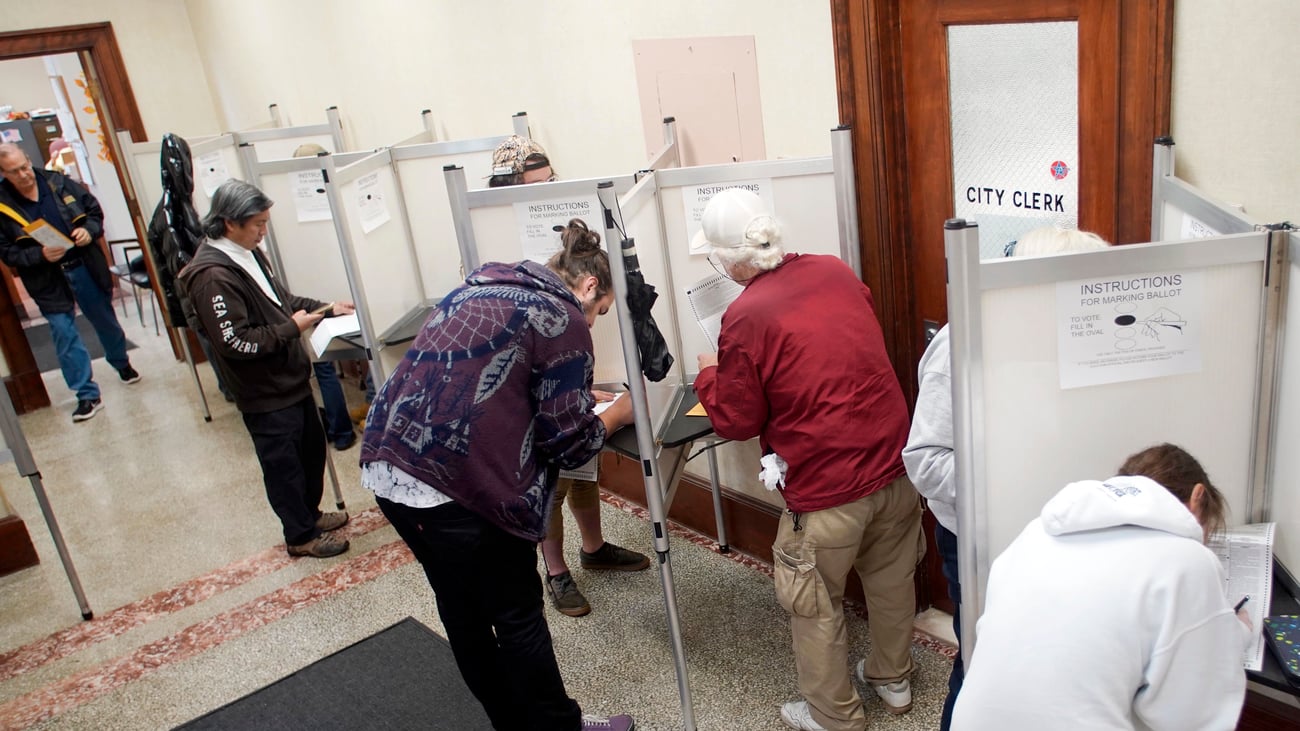
(CN) — Massachusetts’ high court on Monday greenlit a ballot proposal that, if passed by the state’s voters, could radically shake up its primary elections.
In a 26-page order, the Massachusetts Supreme Judicial Court approved a ballot proposal from the state attorney general that would create a “jungle primary,” in which all candidates for a given office appear on a primary election ballot, regardless of party affiliation. The top two vote-getters would advance to the general election ballot.
But a group of voters sued to stop the measure from hitting state ballots, claiming the “jungle primary” violates the Massachusetts Constitution.
The court disagreed.
“We conclude that the challenged petition does not significantly interfere with the constitutionally protected right to vote or the interrelated right of individuals to seek elected office,” the court ruled Monday.
The voters specifically took issue with having only two candidates advance to the general election. They argued this “curtails voter choice” by reducing the field of candidates available and excluding candidates who could have advanced to the general through party nomination or by submitting nomination papers.
They also claimed the proposed change would place too much emphasis on primary elections, where voter turnout is historically lower than in general elections.
But the court sided with the attorney general in finding the ballot proposal “in no way” disenfranchises voters and holds all candidates to the same standard.
“Under the proposal, every qualified voter would be able to participate in both the all-party primary and the general election,” it ruled. “The proposed system would allow all voters to vote for any candidate in the primary, regardless of the voter’s party affiliation.”
Additionally, voters have the opportunity to write in a candidate of their choice on the general election ballot if their preferred option isn’t one of the top two. The suing voters had claimed this was insufficient since the write-in candidates wouldn’t actually “appear” on the ballot.
“The all-party primary system does not discriminate against any party or idea, nor does it unfairly advantage one type of candidate,” the court concluded. “The petition gives major party, minor party, and nonparty candidates the same opportunity to advance to the general election by requiring that all candidates demonstrate the same base level of support to gain access to the primary — the number of signatures required for the elected office sought — and imposing the same threshold on all candidates to advance to the general election.”
The court’s Monday ruling does not automatically enact the election changes; it merely approves the attorney general’s bid to get it on the state’s ballot in November. Massachusetts voters will ultimately decide whether to swap to an all-party primary.
“We are pleased the court agreed that our office properly certified this initiative petition in accordance with state law,” a spokesperson for Massachusetts Attorney General Andrea Joy Campbell said in a statement. “We remain committed to carrying out our responsibilities in the ballot initiative process under the state constitution.”
An attorney for the suing voters declined to comment on the ruling.
The Supreme Judicial Court heard arguments on this issue in May, and several justices expressed some skepticism of the voters’ claims. Justice Dalia Wendlandt pushed back on their argument that the Massachusetts Constitution “has enshrined the current way we do elections and primaries.”
“The Constitution doesn’t require us to follow longstanding tradition,” she said.
The U.S. Supreme Court upheld all-party primaries under the U.S. Constitution in 2008.
Jungle primaries currently exist in California and Washington, while Alaska has a similar primary system in which the top four candidates advance to the general. California’s gubernatorial race thrust the system into controversy earlier this year, however, amid fears that the large number of Democratic candidates could split the vote in the heavily blue state and allow two Republicans to advance to the general.
In the end, one candidate from each party wound up advancing after votes were cast this month: Democrat Xavier Becerra with roughly 28% of the vote and Republican Steve Hilton at about 25%.
 Follow @Uebey
 Follow @uebey.bsky.social
Subscribe to our free newsletters
Our weekly newsletter Closing Arguments offers the latest about ongoing trials, major litigation and rulings in courthouses around the U.S. and the world, while the monthly Under the Lights dishes the legal dirt from Hollywood, sports, Big Tech and the arts.