
 Search Articles


MANHATTAN (CN) — Markets did not move much this week, with early gains mostly wiped off the board by renewed tariff concerns and the rumor that President Donald Trump would soon fire the head of the Federal Reserve.
By the closing bell on Friday, the Dow Jones Industrial Average lost 29 points, shedding 142 points on Friday following a Financial Times report Trump was considering an across-the-board 15% to 20% tariff on all goods from the European Union. The S&P 500 and Nasdaq, the former with fresh highs earlier this week, settled up 37 points and 310 points for the week, respectively.
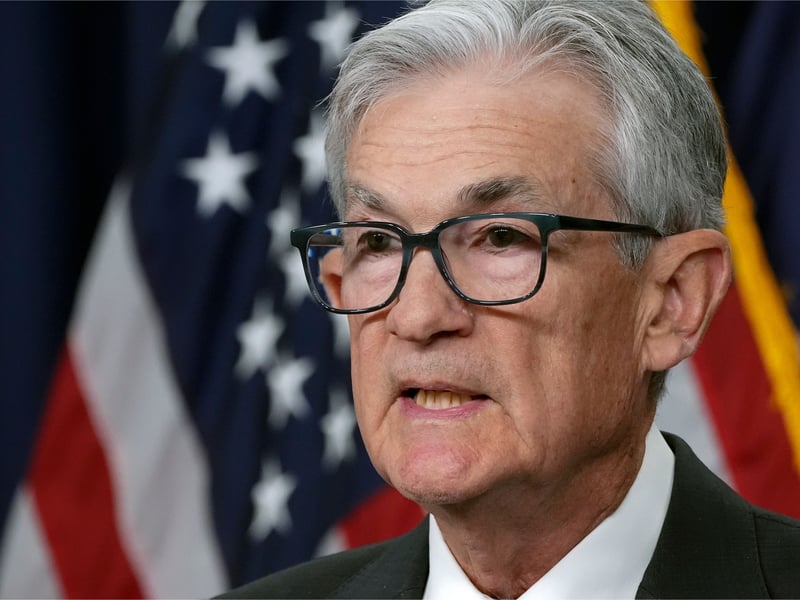
Markets also were rattled in the middle of the week by rumors that Federal Reserve Chair Jerome Powell could soon be out of a job due to friction with the president.
On Thursday, Powell responded to questions from the White House about expensive renovations to the Fed’s building — reportedly the issue that Trump wanted to use as justification to oust Powell — but the news had upended markets largely happy with the latest raft of inflation data.
Even that latest inflation data is not necessarily as positive as it could be. According to the U.S. Bureau of Labor Statistics, the consumer price index registered a 0.3% increase for June, about what was expected, though the year-over-year CPI hit 2.7% last month after reaching 2.4% in May. Core CPI also has been creeping upward, gaining 0.1% from a month ago.
The big increase in the CPI came from energy prices, which increased nearly a whole percentage point, though analysts chalked that up to the Israel-Iran conflict. Vehicle prices saw the most notable decrease, with new cars and trucks decreasing 0.3% in price and used autos falling 0.7%.
Bradley Saunders, North America economist at Capital Economics, wrote in an investor’s note that “we still anticipate more marked price increases later this year, as firms work through pre-tariff inventory stockpiles and finally have to admit that tariffs are here to stay.”
On the producer side, June’s inflation came in better than expected, with a 0.27% month-over-month increase over May’s prices, undershooting analyst predictions.
Among the increases were energy prices, which rose 0.6%, as well as the 0.2% increase in food prices. Durable consumer goods prices have increased 0.7% in June, and its two-month increase in prices matches a similar increase in such prices seen in mid-2022.
Saunders noted “we are not out of the woods yet” on tariff-related inflation since Trump’s August deadline for new reciprocal tariffs could further increase prices.
The latest economic survey by the Fed, known as the Beige Book, found that all but two of the central bank’s 12 districts predict economic activity to flatline or contract in the coming months. The report also noted that many employers are growing hesitant to hire and that consumer spending is weakening.
As a result, analysts are split on whether the Federal Reserve will start cutting interest rates in September, with many now saying the central bank will punt to its December meeting.
“We expect the peak impact of tariffs on inflation to occur this quarter, although the Trump administration’s tendency to extend the deadlines for implementation of tariffs increases the risk the peak impact … comes later,” wrote Nancy Vanden Houten, economist at Oxford Economics.
 Follow @NickRummell
Subscribe to our free newsletters
Our weekly newsletter Closing Arguments offers the latest about ongoing trials, major litigation and rulings in courthouses around the U.S. and the world, while the monthly Under the Lights dishes the legal dirt from Hollywood, sports, Big Tech and the arts.