Search Articles


MANHATTAN (CN) — Howard Rubin, a retired financier who’s accused of brutalizing and raping women in a BDSM dungeon in his Manhattan penthouse, asked an appeals court on Monday to grant him bail after a federal judge rejected his multimillion-dollar bail package.
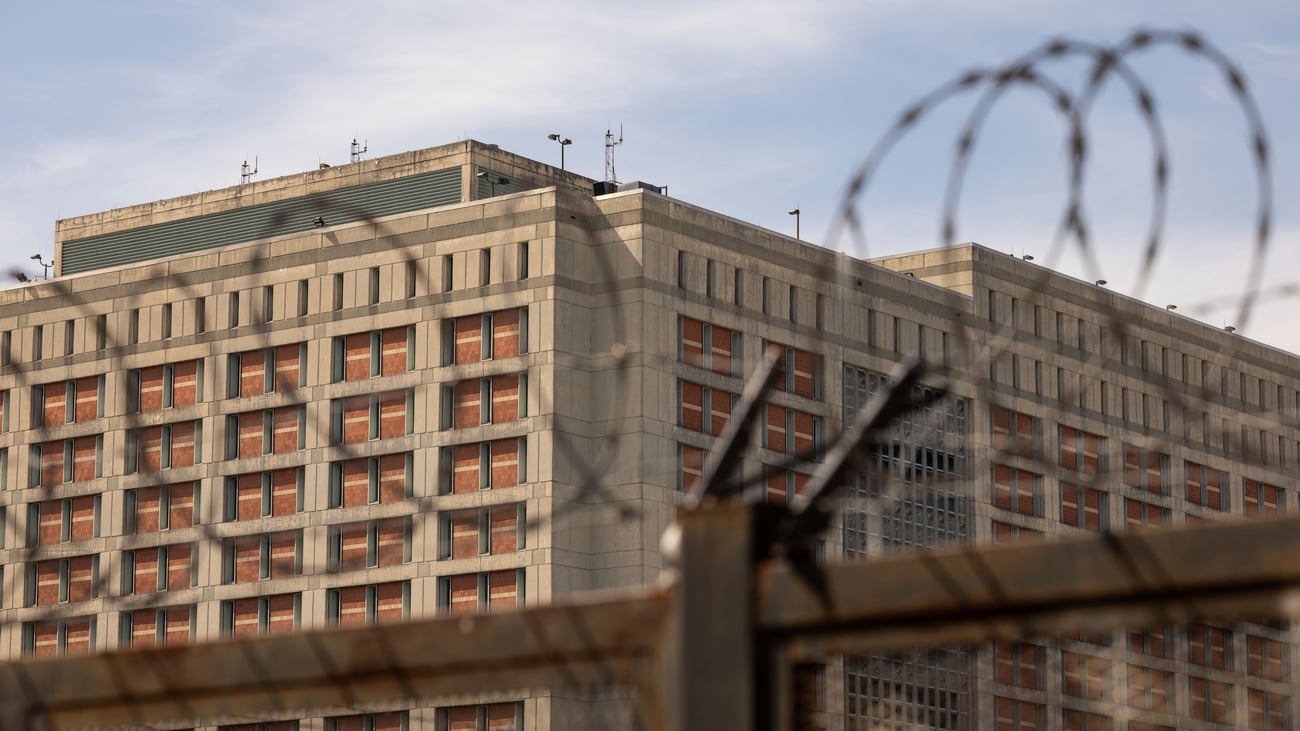
Rubin, 71, a former Bear Stearns trader, has been held at the Metropolitan Detention Center in Brooklyn since his arrest last September at his Fairfield, Connecticut, home. Magistrate judges repeatedly denied his escalating bail proposals, which began at $25 million with electronic monitoring and later increased to $75 million with armed guards stationed outside his residence.
Federal prosecutors charged Rubin with sex trafficking and transporting women across state lines for sex acts. The 10-count indictment also accuses him of falsely telling a bank he was not involved in litigation despite facing a lawsuit brought by women who say he abused them. Rubin was previously ordered to pay $3.85 million to victims in related civil litigation.
From 2009 to 2019, prosecutors accused Rubin and her personal assistant, Jennifer Powers, of recruiting 10 women to engage in sex acts where “Rubin brutalized women’s bodies, causing them to fear for their safety and/or resulting in significant pain or injuries, which at times required women to seek medical attention.”
Given the severity of the charges, Rubin’s wealth, ability to travel and history of obstructing justice, prosecutors have strongly opposed his release. His attorney argued Monday before the Second Circuit that the lower court misapplied the Bail Reform Act.
Defense attorney Michael Gilbert of Sheppard, Mullin, Richter & Hampton said the proposed release conditions would make it impossible for Rubin to obstruct justice or commit sex crimes.
“It’s not gonna happen when he’s in 24/7 surveillance, armed guards, in his house … it’s impossible that that activity will occur and therefore the standard is satisfied,” Gilbert told a three-judge panel, referring to the Bail Reform Act standards.
Prosecutors have pointed to several factors they say show Rubin is a flight risk, including his refusal to disclose the location of his passport at the time of his arrest. Investigators also found at least seven cell phones at his home, including two still in their boxes and another stored with a tent. Prosecutors further noted that Rubin reported a Cayman Islands account as holding $35 million, despite valuing it at $75 million on his 2024 tax return.
At Rubin’s arraignment, Assistant U.S. Attorney Tara McGrath argued, “It would cause him no hardship at all to pick up and flee to a country that does not extradite.”
Gilbert rejected the notion that Rubin would flee without access to his assets. As for his client’s refusal to answer questions about the passport, Gilbert said Rubin was exercising his constitutional rights. “He had the right not to answer the question and he didn’t do it,” the attorney said.
Gilbert faced questions from the panel, including U.S. Circuit Judge Sarah A. L. Merriam’s probe into the standards for the risk of danger and flight as opposed to the standards that would apply to a less serious offense, under which he could be detained if there’s a serious risk of obstructing or threatening to obstruct justice.
If it were a bank fraud case, for example, it would be “pretty easy” to satisfy that requirement, the judge said.
“The record is replete with the risk of obstruction, I think,” said Merriam, a Joe Biden appointee.
Assistant U.S. Attorney Kayla Bensing, arguing for Rubin’s continued detention, pointed to a history of “legal and financial coercion … to intimidate and dissuade victims from reporting him.”
She focused on Rubin’s “access to wealth … which is clearly what the magistrate judge was interested in,” noting that he initially claimed to have only one life insurance policy while he was getting millions of dollars from another policy he had access to.
There was also an incident, Bensing said, “that can only be characterized by an attempted bribe.” In a Sept. 30, 2025, phone call, Howard Rubin told his wife, Mary Rubin, “There’s a guy here who can get me on a quiet floor, but it’s gonna cost 800 bucks.” Mary Rubin then sent a Zelle payment with a note about changing her husband’s floor.
Earlier in his argument, Gilbert referenced that event himself, using it to bolster his argument that any third-party request to change his client’s floor would, too, be rendered impossible if the court grants his release.
Joining Merriam on the bench were Senior U.S. Circuit Judge Guido Calabresi, a Bill Clinton appointee, and U.S. Circuit Judge Steven Menashi, a Donald Trump appointee. The panel reserved ruling.
 Follow @NinaPullano
 Follow @ninapullano.bsky.social
Subscribe to our free newsletters
Our weekly newsletter Closing Arguments offers the latest about ongoing trials, major litigation and rulings in courthouses around the U.S. and the world, while the monthly Under the Lights dishes the legal dirt from Hollywood, sports, Big Tech and the arts.
Additional Reads

 SCOTUS won’t review role of race in police stops June 22, 2026