Search Articles


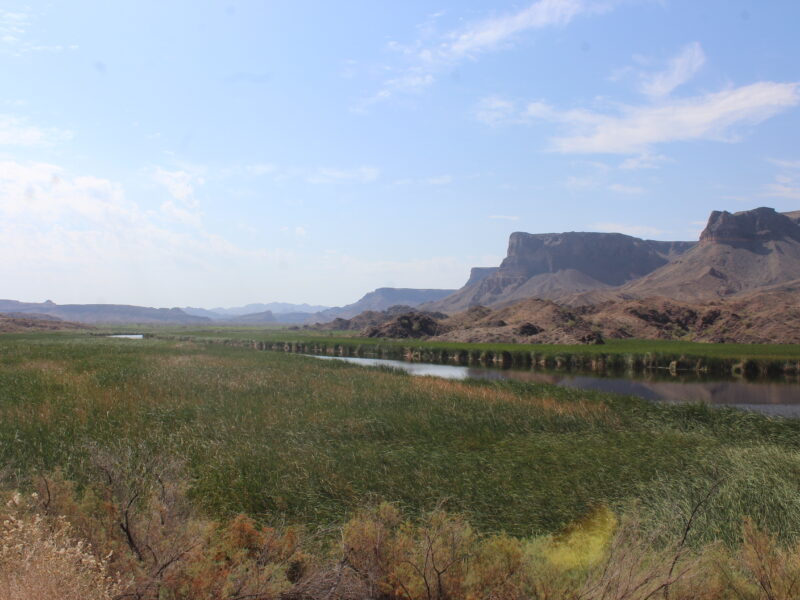
WASHINGTON (CN) — The Supreme Court advanced a fight for water access between Nebraska and Colorado on Monday, appointing a negotiator as the states duel over construction on a canal to nowhere.
Water from the South Platte River is shared between Nebraska and Colorado by terms laid out in a 1926 compact. However, the century-old agreement didn’t account for technological advances in groundwater pumping.
Nebraska says Colorado’s upstream growth has left its farmers, ranchers, industries and residents short on water, vowing to build a canal to secure access to the resources it was promised.
The Cornhusker State filed a bill of complaint — the first step in interstate litigation at the Supreme Court — last year after plans for its Perkins County Canal stalled. Nebraska Governor Jim Pillen described the move as putting “our gloves on” to fight for every drop of water.
Colorado acknowledges Nebraska’s right to build the canal. But the Centennial State says there’s a good reason the waterway remains unbuilt a century after the states’ initial agreement.
The project has been coined the “canal to nowhere” because it doesn’t seem to have an immediate user. And Colorado said significant technical and financial risks could mean the canal wouldn’t yield enough water to make it worthwhile.
Under the compact, Colorado must shut down water access to its users when Nebraska isn’t receiving 120 cubic feet per second of water flow during the summer irrigation season. Nebraska accused Colorado of not abiding by the deal by allowing “junior” users to violate Nebraska’s “senior” rights.
Colorado has allowed the pumping of hydrologically connected groundwater on its side of the border, resulting in reduced flow on Nebraska’s banks. The South Platte River Compact, like others of the time, doesn’t explicitly mention groundwater, leaving the states at loggerheads over the resource.
Nebraska’s lawsuit is among the rare cases that fall under the Supreme Court’s original jurisdiction, meaning that the case comes to the justices without any review from the lower courts. Disputes between states always fall in this category.
The court can accept or deny a state’s request to file a complaint, marking the first step in the litigation. Then the justices typically appoint a special master to act as a trial court judge in the dispute. Sometimes, the special master can negotiate a settlement between the parties; if not, they gather information and build a case for the high court to review.
The process is often arduous and time-consuming, with experts saying the process usually takes a minimum of six years but often as long as 15. But these battles are increasingly common as states fight for dwindling water resources and apply modern technology to antiquated rules.
In late May, Solicitor General John Sauer filed an amicus brief in support of allowing Nebraska’s case to proceed, asserting that Colorado’s dismissal of the Cornhusker State’s concerns “reflect an unduly parsimonious reading of the complaint.”
Taking aim at Colorado’s claims that its own water augmentation plans operate as intended to protect downstream users like Nebraska, Sauer called such claims insufficient to deny Nebraska further litigation.
“Nebraska squarely alleges a causal link between Colorado’s actions and low water flows,” Sauer wrote. “The states’ unsurprising disagreement on that key factual question is a reason to permit this plausible claim to proceed past the pleading stage, not to deny Nebraska’s motion to file.”
Once Nebraska files its bill of complaint, Colorado will have 30 days to submit its answer in opposition.
“Colorado is complying with the South Platte River Compact and not interfering with Nebraska’s efforts to build the Perkins County Canal,” Colorado Attorney General Phil Weiser said in a statement. “Today’s court decision merely opens the door for Nebraska to bring its claims against Colorado. Nebraska’s burden to prove those claims is incredibly high and we will vigorously defend Colorado’s full entitlements under the compact.”
 Follow @JacksonHeals
Subscribe to our free newsletters
Our weekly newsletter Closing Arguments offers the latest about ongoing trials, major litigation and rulings in courthouses around the U.S. and the world, while the monthly Under the Lights dishes the legal dirt from Hollywood, sports, Big Tech and the arts.