
 Search Articles


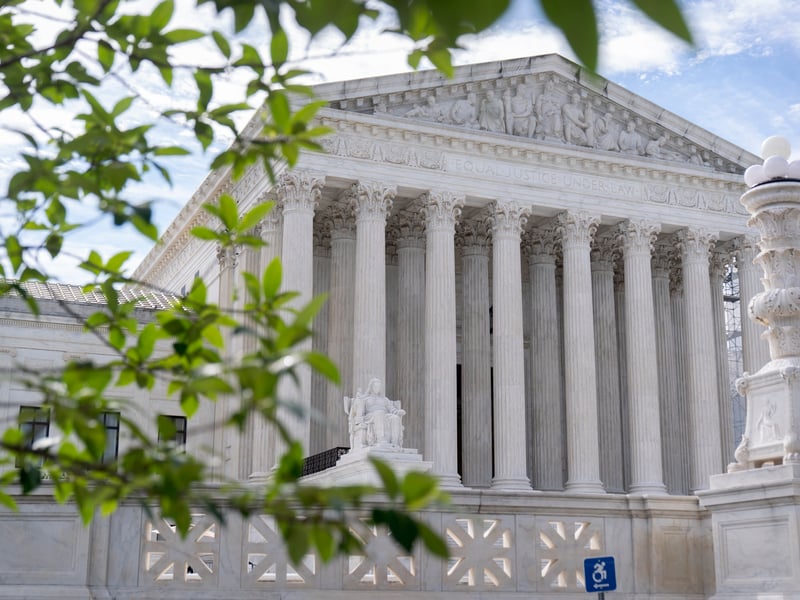
WASHINGTON (CN) — A Wisconsin telecommunications company must face whistleblower fraud claims for overcharging rural schools and libraries for internet services, the Supreme Court ruled on Friday.
Richard Tood Heath sued Wisconsin Bell for misusing funds under the Schools and Libraries Universal Service Support program. The so-called E-Rate program provides affordable telecommunication services to rural and economically disadvantaged communities.
In return for providing services to these customers at the lowest rates available, telecom carriers get reimbursed through the Universal Services Fund, which collects a percentage of telecommunication revenues for programs expanding affordable phone and internet access.
Heath sued Wisconsin Bell under the False Claims Act, saying it overcharged hundreds of Indiana schools and libraries. Wisconsin Bell asked the Supreme Court to find that Heath’s suit was illegitimate because the law applies only to federal funds, and the E-Rate reimbursements came from private funding.
During oral arguments in November, Wisconsin Bell claimed that Congress intentionally made the E-Rate program privately funded to insulate it from the political branches. Heath disputed that claim, arguing that carriers paid into the fund at the government’s direction, using money the government collects and controls to use for a government program.
The court unanimously ruled that since the government contributed at least some of the E-rate money, the subsidies could be considered government funds subject to the False Claims Act.
“The government transferred more than $100 million from the Treasury into the pool of funds used to pay E-Rate subsidies,” Justice Elena Kagan, a Barack Obama appointee, wrote for the court. “That is enough to create a ‘claim’ under the Act, and to allow a suit alleging fraud to go forward.”
Under federal law, reimbursement requests can qualify as claims if the government provided any portion of the money requested. According to the ordinary dictionary meaning, Kagan said “provide” means to supply or furnish.
Wisconsin Bell and Heath disagreed on whether all of the E-rate funds were provided through the government’s regulatory authority over the program. They also disagreed on whether the Treasury’s transfer funds for program subsidies qualified as E-rate money.
Kagan said Heath only had to win one of the two disputes because the False Claims Act says that providing some funds is just as good as providing all of them.
“It is then immaterial whether the government, by exercising regulatory control, provides all the money so used,” Kagan wrote. “Even supposing not, the reimbursement requests are ‘claims’ for payment, and Heath’s suit for fraud can go forward.”
The justices avoided answering whether all of the E-rate funds can be considered government money — an issue that Kagan said will likely resurface if Heath prevails on the merits. However, since arguments about damages were not before the justices, the court reserved judgment on that question.
In a concurring opinion, Justice Clarence Thomas doubted that the entire fund could be considered government money just because companies were compelled to contribute. The George H.W. Bush appointee warned that the government’s broad theory could apply to other statues like the Affordable Care Act.
“If we were to accept the government’s broad theory of what it means to provide money for purposes of the FCA, I am not sure why the FCA would not cover at least some false or fraudulent requests for money made to private health insurance companies whose customers purchased health insurance because of the individual mandate,” Thomas wrote.
Thomas’ opinion was joined by Justice Brett Kavanaugh, a Donald Trump appointee, and Justice Samuel Alito, appointed by George W. Bush.
 Follow @KelseyReichmann
 Follow @kelseyreichmann.bsky.social
Subscribe to our free newsletters
Our weekly newsletter Closing Arguments offers the latest about ongoing trials, major litigation and rulings in courthouses around the U.S. and the world, while the monthly Under the Lights dishes the legal dirt from Hollywood, sports, Big Tech and the arts.