
 Search Articles


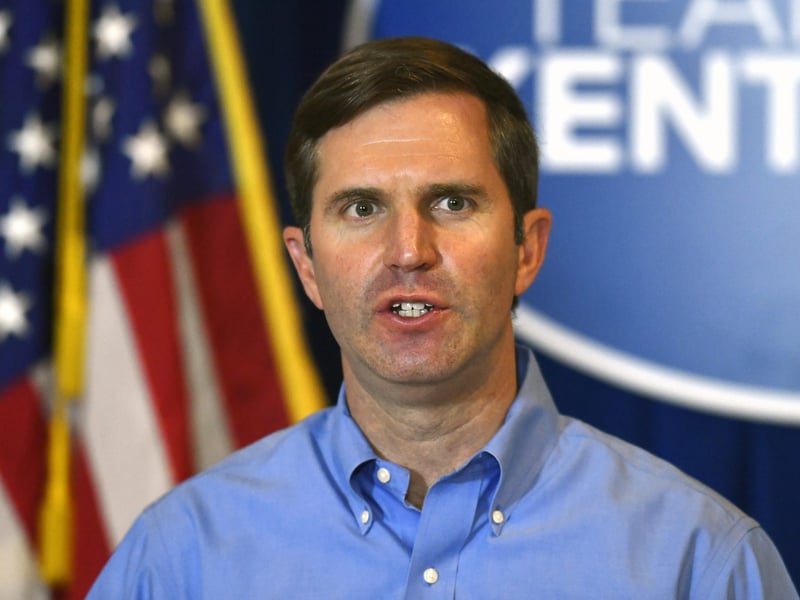
WASHINGTON (CN) — It’s been less than a week since Vice President Kamala Harris took President Joe Biden’s place at the top of Democrats’ presidential ticket. But in the weeks before the party is slated to lock in its contenders to challenge Donald Trump in November, Harris’ yet-unannounced running mate has become a hot topic among Washington politicos.
The veepstakes have proven to be a fluid environment so far. The online rumor mill has churned out a handful of Democratic party sweethearts as possible contenders, including Michigan Governor Gretchen Whitmer and Transportation Secretary Pete Buttigieg.
At this stage, though, the top candidates for the Harris campaign’s No. 2 slot may enjoy marginally less national name recognition. But experts say that one of these vice presidential hopefuls — largely governors from battleground states — could have what it takes to balance out the Democratic ticket.
Here’s who is leading the veep royale:
North Carolina Governor Roy Cooper
Cooper has seen marked electoral success as head of North Carolina’s state government. Formerly the Tar Heel State’s attorney general, he defeated incumbent Governor Pat McCrory in the 2016 election. North Carolinians reelected Cooper in 2020, rejecting Republican challenger and former lieutenant governor Dan Forest.
While in office, Cooper oversaw the rollback of the state’s Public Facilities Privacy and Security Act, commonly known as North Carolina’s “bathroom bill,” which barred trans and nonbinary people from using public bathrooms that correspond with their gender identity — in the face of a Republican-controlled legislature.
In 2017, Cooper was tapped to join former President Donald Trump’s Commission on Combating Drug Addiction and the Opioid Crisis. He was also elected in 2019 as co-chair of the Appalachian Regional Commission, an economic development partnership between Appalachian states.
A middle-of-the-road Democrat, Cooper appeals to voters who are not traditionally part of the party coalition, said Jason Roberts, a professor of political science at the University of North Carolina at Chapel Hill.
“He’s very easygoing, nonthreatening — he’s just a reasonable, nice guy with a Southern accent,” Roberts said in an interview, adding that Cooper has a “Mr. Rogers-like quality.”
That avuncular nature has given the governor the edge to win handily in North Carolina, a competitive state, and has supplied him with the political purchase for policies like a Medicaid expansion and a salary hike for teachers. And given that the Tar Heel State could be a valuable prize for the Harris campaign, putting its popular Democratic governor on the ballot could be a solid strategy, Roberts said.
Another thing that could set Cooper apart from other top contenders for the vice presidency: his personal relationship with Harris.
“He served as attorney general when Kamala Harris was attorney general of California,” Roberts observed. “They got to know each other during that time period.”
If Cooper is tapped for the Harris ticket, Democrats also wouldn’t take on any new risk of ceding a governorship to Republicans. The governor has reached his limit of two terms in office, teeing up a brand-new gubernatorial race in November.
Arizona Senator Mark Kelly
Senator Mark Kelly, former astronaut and current junior senator from Arizona, is the only current member of Congress on the shortlist for the Democratic ticket. First elected in 2020, Kelly retained his seat in 2022 by trouncing Republican challenger Blake Masters.
Kelly has staked out a position as a political moderate, siding with Democrats on issues such as abortion and climate change action while criticizing the Biden administration for its handling of border security. The senator is also a staunch advocate for gun control — his wife, former Representative Gabby Giffords, was shot during an Arizona constituent meeting in 2011.
If Harris taps Kelly as her running mate, it may signal the campaign’s desire to prioritize winning Sun Belt states like Nevada and Arizona over East Coast battlegrounds said Matthew Foster, a professor at the American University’s School of Public Affairs.
Foster pointed out that losing both states could severely hurt Democrats’ chances of victory in November.
“This gives her the ability to attack the Sun Belt,” he said in an interview, adding that Kelly, a Navy veteran, would also bring a beneficial narrative to the Harris campaign.
The Arizona senator also enjoys a personal relationship with the presumptive Democratic nominee. Foster noted that Kelly and Harris had worked together on legislation while the current vice president was a California senator.
The main drawback to putting Kelly on the ticket, however, is that he occupies a competitive seat in a closely divided Senate. With Republicans looking to wrest control of the upper chamber in the fall, Democrats may need to assess their priorities.
“The big worry is … that’s a lost Senate seat,” said Foster. “That’s very worrisome.”
Though Arizona’s Democratic governor, Katie Hobbs, would appoint a friendly replacement in the event Kelly is made vice president, the campaign would likely consider the ramifications of removing a popular senator from such a valuable seat, he contended.
Pennsylvania Governor Josh Shapiro
One of the newest lawmakers among the contenders, Pennsylvania Governor Josh Shapiro has also emerged as perhaps the foremost candidate to join Harris on the Democratic ticket.
Shapiro, who was the Keystone State’s attorney general until he was elected governor in 2022, defeated the far-right Doug Mastriano in the race for the governor’s mansion. As Pennsylvania’s top politician, he has sworn to defend abortion rights and has proposed raising the state minimum wage from $7.25 per hour.
But Shapiro has also taken some positions that could prove controversial to Democrats and progressives. He has previously expressed support for a GOP-led “school choice” program that would use state funds for private school tuition assistance, allowing families to avoid the public school system. Facing Democratic opposition, though, he has since walked back that proposal.
Shapiro has also been a vocal supporter of Israel throughout its war in Gaza, saying in December that the country has “a responsibility” to defeat Hamas. He was also critical of University of Pennsylvania President Liz Magill’s handling of pro-Palestine protests on the university campus and her responses to lawmakers during a House hearing on the issue. Magill later resigned from her position.
But as a vice presidential pick, Shapiro may make the most sense, Foster said. He pointed out that Pennsylvania, a veritable swing state with 20 electoral votes, would likely be the “wall” in any Democratic strategy.
“Unless you’re capitulating, unless you’re giving it up, that wall has to be Pennsylvania,” he said. “Pennsylvania is the biggest, and that’s why Shapiro makes sense.”
Polling published by Emerson College and The Hill this week has former President Trump ahead of Harris in Pennsylvania by just two points, well within the margin of error and with 7% of voters undecided.
Kentucky Governor Andy Beshear
Rounding out the shortlist is Kentucky Governor Andy Beshear, another Democratic governor from a conservative state. The Bluegrass State’s former attorney general, Beshear narrowly defeated incumbent Governor Matt Bevin in 2019 but sailed to reelection in 2023.
Contending with a Republican majority in the Kentucky legislature, Beshear has nonetheless used his tenure as governor to back abortion rights and expand access to health care, among other things. His administration relaunched Kentucky’s state health insurance marketplace, shut down in 2017 by then-Governor Matt Bevin.
Beshear has also blocked legislation that would have banned gender-affirming care for transgender youth in the state — though his move was overridden by GOP legislators.
He has also been molded by crisis, said Stephen Voss, an associate professor at the University of Kentucky. Voss noted Beshear began his tenure at the beginning of the Covid-19 pandemic and over the course of his first term managed the response to destructive flooding in eastern Kentucky and devastating tornadoes in the state’s western reaches.
And Beshear’s leadership through those crises is what solidified his support among Kentucky voters, including many who traditionally vote Republican.
“Having that calm hand on the tiller in the middle of a storm was reassuring enough to Kentucky voters that a lot of people who normally don’t back a Democrat opted to keep him,” Voss said.
Beshear has also proven adept at toeing the line between moderate policies and the mainstream Democratic platform, Voss said. For example, while the governor has taken a decidedly favorable view of the coal industry — almost a prerequisite in Kentucky — he has also emphasized renewable energy and green technology while advocating for increased business investment in his state.
Similarly, Beshear has backed abortion rights without using aggressively pro-choice language, Voss said, a strategy aimed at addressing concerns of voters following the rollback of Roe v. Wade while placating Kentucky’s religious voter base.
“Beshear knows how to sell relatively Democratic policy positions to what normally would be an unfriendly audience,” he contended.
Much of what Beshear knows about building consensus he learned from his father Steve, who was head of the state from 2007 to 2015. The ability to sell progressive policies to a conservative electorate is part of the “Beshear brand,” Voss quipped.
But contrary to the observations of some experts, Voss said putting Beshear on the ticket would not necessarily be done to ensure that Democrats lock down Kentucky in November. The evidence that a running mate gains a home state advantage, and that campaigns make these selections to secure an electoral boost, is “nonexistent,” he said.
Rather, a running mate plays an important role in amplifying a particular message or issue that a campaign wants to show voters it plans to prioritize.
“It’s a unique opportunity to message about what kind of president Harris is going to be, what kind of administration she’s going to run, what matters most to her,” Voss said.
The message Beshear would bring to the ticket, he argued, is a focus on issues over ideology.
“We’re talking about crisis solving, using government practically, to get past ideology and focus on things that don’t have partisanship — drinkable water and stable housing," Voss said.
And elevating Beshear to the national stage would not cost Democrats a governorship. His lieutenant governor, Jaqueline Coleman, would take his slot and could run again at the end of her term.
Voss, who noted that he was not a “Beshear cheerleader” and that he had advocated in the past against some of his policies, nonetheless said the governor is the best pick for the vice presidency.
“I think if you’re measuring overall impact, moving the Democratic pieces around the board, he’s the only choice that could go off to be vice president and it’s a net gain for the Democratic party,” he said.
 Follow @BenjaminSWeiss
Subscribe to our free newsletters
Our weekly newsletter Closing Arguments offers the latest about ongoing trials, major litigation and rulings in courthouses around the U.S. and the world, while the monthly Under the Lights dishes the legal dirt from Hollywood, sports, Big Tech and the arts.