
 Search Articles


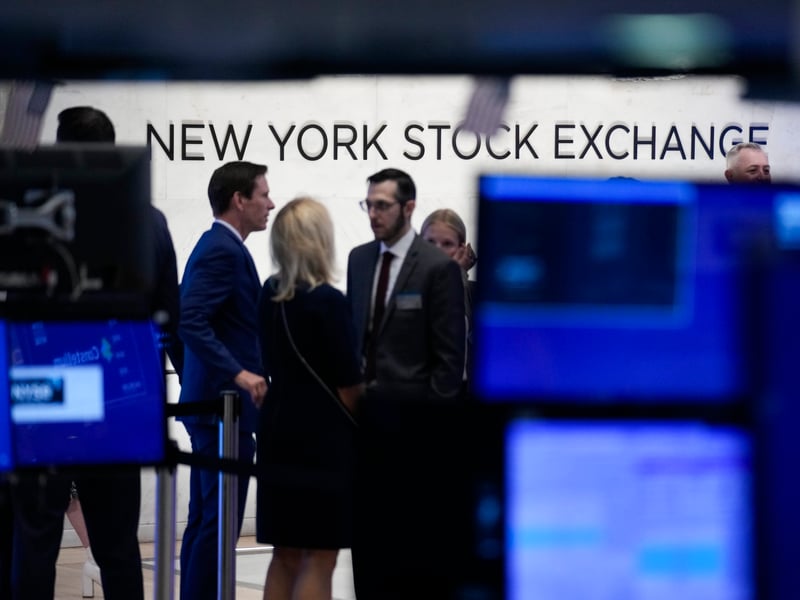
MANHATTAN (CN) — Following the attempted assassination of former President Trump, Wall Street had a tempestuous week. But experts say investors’ main concerns remain economic and not political.
The Nasdaq, which is down more than 7% since its peak in early July, experienced the most losses this week as investors worry about renewed economic tensions with China. Midweek the index fell 2.8%, its largest drop since 2022, and in total it lost 672 points for the week.
The Dow Jones Industrial Average initially looked primed for a great week, hitting a new record high on Wednesday, though it gained just 287 points by the closing bell on Friday. The S&P 500 followed the Nasdaq and shed 110 points for the week.
“This downturn was primarily driven by weakness in big tech stocks, particularly in the semiconductor sector, due to concerns about potential stricter U.S. trade restrictions on China,” wrote Christopher Gildea at Tower Bridge Advisors. He added the upcoming presidential election “may be contributing to uncertainty and negatively impacting consumer expectations for the economy.”
The economic data for the week was largely positive. On Tuesday, the U.S. Census Bureau’s monthly report on retail sales surprised experts, showing a flatline in sales last month of $704 billion instead of the 0.4% decline most had forecast.
Prior months’ retail sales also were revised upward, with May being changed from a 0.1% increase to a 0.3% increase. Even better, the headline print belayed the 0.9% month-over-month rise in control group sales, which excludes volatile segments like energy or food.
The biggest drop in the report was in gasoline sales, which fell 3%, though even that is somewhat good news since it shows a decline in gas prices. Auto sales also saw a notable decline, falling 2.3% in June.
“Gas station sales were a big drag on spending in the month, but lower spending at gas stations is good news for the broader economy,” said Bill Adams, chief economist at Comerica Bank. “While the economy has downshifted from the strong growth seen in the second half of 2023, this doesn’t look like a recession.”
Many economists now predict growth to slow notably — but not disastrously — over the following months. “Consumers have become increasingly cautious with their spending as they feel the pinch from higher prices and borrowing costs, but latest report shows no signs of consumer retrenchment,” said EY Parthenon Senior Economist Lydia Boussour. She now forecasts growth to slow to 2.1% for this year and 1.7% in 2025.
On Wednesday, the Federal Reserve’s Beige Book showed soft growth and expectations that it would become softer later this year, though seven of the 12 districts still reported an increase in economic activity.
The report also noted only a couple of Fed districts reported slight increases in inflation, and there was “little to no change” in consumer spending among most of the districts. Overall, the report was on target for those hoping for a soft landing. The manufacturing surveys released this week released by the Federal Reserve banks in Philadelphia and New York were mixed, with the former showing a significant rebound from its previous low point and the latter coming in slightly lower than anticipated at -6.6%.
 Follow @NickRummell
Subscribe to our free newsletters
Our weekly newsletter Closing Arguments offers the latest about ongoing trials, major litigation and rulings in courthouses around the U.S. and the world, while the monthly Under the Lights dishes the legal dirt from Hollywood, sports, Big Tech and the arts.